

Most people assume that making an adult film is just about cameras and actors. But behind every shot lies a complex web of legal obligations that can make or break a production company. If you are stepping into this industry as a producer, director, or even a performer, understanding the health and safety regulations isn't just good practice-it’s the law in many jurisdictions. Get it wrong, and you don’t just risk a fine; you risk shutting down your operation entirely.
The landscape has shifted dramatically over the last decade. What used to be a gray area with minimal oversight is now heavily regulated, particularly regarding infectious disease control and workplace safety. This guide breaks down exactly what the law requires, where the traps lie, and how to keep your production compliant without losing creative momentum.
The Federal Baseline: OSHA and General Workplace Safety
Before we get into the specific adult-industry rules, you have to understand the foundation: the Occupational Safety and Health Administration (OSHA). In the United States, adult film productions are considered workplaces. This means the same standards that apply to a construction site or a factory apply to your set. Yes, really.
OSHA doesn’t have a specific "adult film" rulebook, but its general duty clause requires employers to provide a workplace free from recognized hazards likely to cause death or serious physical harm. For adult productions, this translates into several concrete requirements:
- Physical Hazards: Sets often involve props, lighting rigs, and tight spaces. You need regular inspections to ensure no equipment is faulty. A falling light stand is an OSHA violation, regardless of who is on camera.
- Heat Stress: Studios can get hot, especially under lights. OSHA guidelines suggest providing water and rest breaks if temperatures exceed certain thresholds. Ignoring this can lead to heat exhaustion claims.
- Ergonomics: Long takes and awkward positions can lead to repetitive strain injuries. Documenting proper warm-up routines and rotation schedules helps prove due diligence if a worker claims injury.
The key here is documentation. If an actor slips on a wet floor or gets injured by a prop, your defense isn't just "it was an accident." It's showing you had safety protocols in place. Keep logs of equipment checks, safety briefings, and incident reports. These papers are your shield in a lawsuit.
STI Testing Laws: The Biggest Compliance Trap
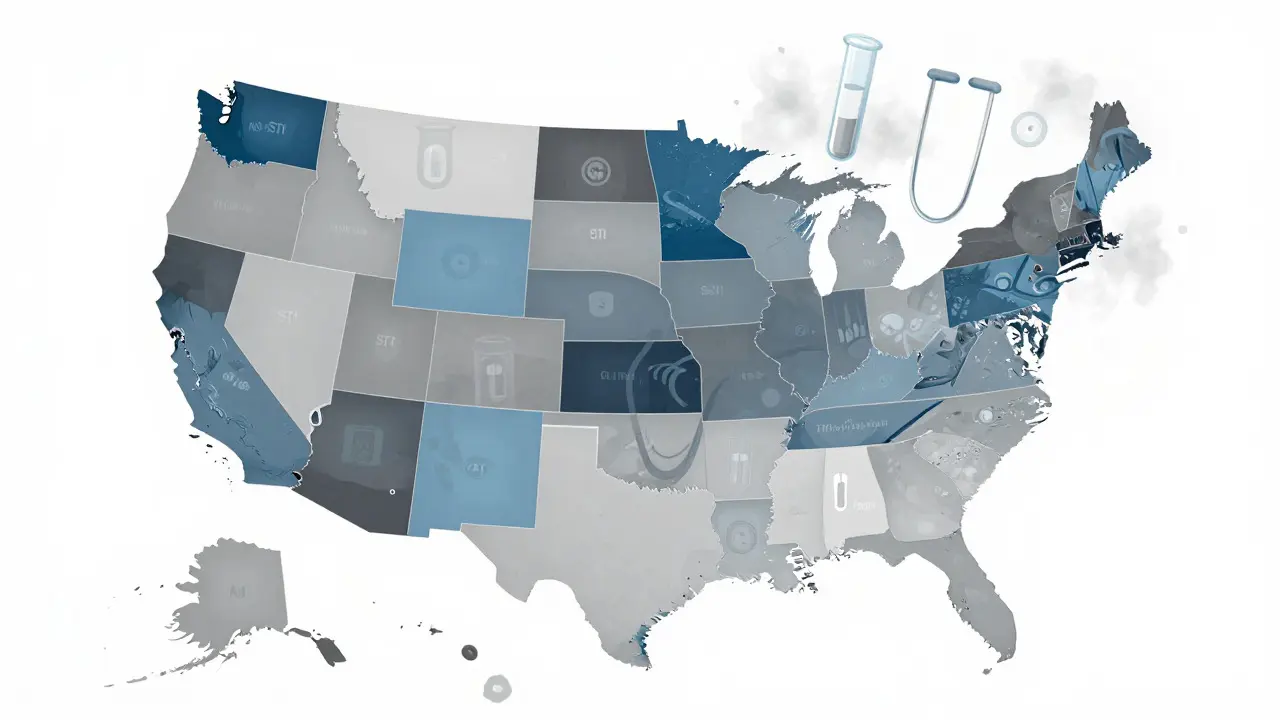
This is where most new producers get burned. State and local laws vary wildly regarding sexually transmitted infection (STI) testing. There is no single federal law mandating specific tests for all adult performers. Instead, you are playing a game of geographic patchwork.
In California, for example, the law is strict. Performers must undergo STI testing at least once every 14 days if they are working in commercial adult films. The tests typically include screenings for HIV, chlamydia, gonorrhea, and syphilis. The results must be kept confidential, and the testing must be done by a licensed medical provider.
However, not all states follow this model. Some states have no mandatory testing laws, relying instead on informed consent and contract clauses. Others have proposed bills that would require testing but haven't passed them yet. This creates a nightmare scenario for multi-state productions. If you shoot in Nevada one week and move to Texas the next, your compliance strategy needs to change accordingly.
| Region/State | Mandatory Testing? | Frequency | Required Tests |
|---|---|---|---|
| California | Yes | Every 14 days | HIV, Chlamydia, Gonorrhea, Syphilis |
| Nevada | No (Local ordinances may apply) | N/A | Varies by city |
| Texas | No | N/A | Contractual agreement |
| New York | No | N/A | Contractual agreement |
The biggest mistake producers make is assuming that because a state doesn't mandate testing, they don't need to care. Wrong. Even in non-mandatory states, failing to test can lead to civil lawsuits if a performer contracts an STI and claims negligence. The standard of care is still expected. You might not be breaking a statute, but you are breaking the implied promise of a safe working environment.
Consent, Contracts, and Minor Protection
Health and safety aren't just about germs. They are also about psychological and legal safety. The most critical legal requirement in adult production is valid, documented consent. This goes beyond a simple signature. Courts look for evidence that the performer understood the scope of the work, the potential risks, and their right to withdraw.
Your contracts should explicitly outline:
- Scope of Work: Exactly what acts will be performed. No surprises on set.
- Compensation Structure: Clear payment terms, including residuals if applicable.
- Insurance Coverage: Who pays for medical bills if an injury occurs? Does the production carry workers' comp or professional liability insurance?
- Confidentiality: How will the performer's identity be protected off-camera?
For minors, the rules are even stricter. While child labor laws allow minors to appear in adult films in some jurisdictions, they require a guardian's consent, a chaperone on set, and often a court order or specific license. Getting this wrong can turn a civil matter into a criminal one. Always verify the age of every performer using reliable ID verification services, not just a quick glance.
Insurance: Your Financial Safety Net
Laws tell you what you must do; insurance tells you what happens when things go wrong. Adult film productions face unique risks that standard business insurance often excludes. You need specialized coverage.
Here are the three types of insurance you cannot afford to skip:
- General Liability Insurance: Covers third-party bodily injury or property damage. If a fan trips over a cable at a premiere, this policy pays.
- Professional Liability (E&O): Errors and Omissions insurance covers claims of negligence. Did you forget to test for STIs? Did you fail to secure proper consent? This is your backup.
- Workers' Compensation: Required in most states if you have employees. It covers medical costs and lost wages if a performer is injured on the job.
Many insurers view adult productions as high-risk. To get favorable rates, you need to show you have robust safety protocols. This circles back to why keeping detailed records of STI tests and safety briefings is so important. It proves to the insurer-and the court-that you were acting reasonably.
Common Pitfalls and How to Avoid Them
Even experienced producers slip up. Here are the most common compliance errors I see in the industry:
- Ignoring Local Ordinances: Just because the state doesn't require testing doesn't mean the city doesn't. Check municipal codes, especially in major hubs like Los Angeles or New York City.
- Verbal Agreements: Never rely on a handshake deal. If it isn't written down, it didn't happen. Every aspect of health and safety expectations should be in the contract.
- Outdated Records: Keeping old STI test results from six months ago is useless. Ensure your testing schedule is automated and tracked digitally.
- Assuming "Private" Means "Unregulated": Many producers think that because the content is private or niche, they can skip regulations. If you are hiring employees or contractors, labor laws apply.
The cost of compliance is far less than the cost of litigation. A single lawsuit can bankrupt a small production house. By building a culture of safety and documentation, you protect your assets, your talent, and your reputation.
Frequently Asked Questions
Do I need to test performers for STIs if I shoot in a state with no mandatory testing law?
While not legally required by statute in some states, it is highly recommended. Failure to test can lead to civil negligence claims if a performer contracts an infection. Most professional networks expect testing as a standard of care.
How often should STI tests be conducted in California?
In California, performers must be tested at least once every 14 days for commercial adult films. The tests should cover HIV, chlamydia, gonorrhea, and syphilis.
What insurance is mandatory for adult film productions?
Workers' compensation is mandatory in most states if you have employees. General liability and professional liability insurance are not always legally required but are essential for protecting against financial ruin from lawsuits.
Can I use verbal consent for minor performers?
No. Minors require written consent from a legal guardian, a chaperone present on set, and often specific licensing depending on the jurisdiction. Verbal agreements are rarely sufficient for legal protection.
Does OSHA inspect adult film sets?
Yes, OSHA can inspect any workplace, including adult film sets, especially after a reported injury or complaint. They focus on general safety hazards like electrical safety, fire exits, and ergonomics rather than specific adult-industry practices.