

Imagine you’re the head of legal at a growing video-sharing site. One Tuesday morning, your inbox is full of cease-and-desist letters, not from copyright trolls, but from state attorneys general asking why you haven’t verified the ages of users posting explicit clips. This isn't science fiction; it’s the new reality for platforms hosting user-generated adult content (UGCAC). The legal landscape has shifted dramatically since the early days of the internet, where "if it's on the web, it's free" was the unspoken rule. Today, that mindset can bankrupt a company.
The core tension lies between protecting creators' speech and protecting viewers-especially minors-from unwanted exposure. For years, Section 230 of the Communications Decent Act served as the shield for most online publishers. It stated that platforms were not liable for what their users posted. However, recent legislative waves in the United States and Europe are chipping away at this protection specifically for adult media. If you run or invest in such a platform, understanding these nuances is no longer optional-it’s existential.
The Erosion of Immunity: Why Section 230 Isn't Enough
Section 230 remains powerful, but its application to adult content is under scrutiny. Courts have begun to distinguish between general social media posts and specialized adult content, arguing that the latter carries a higher duty of care regarding age restriction. In 2024, several state-level bills proposed that platforms failing to implement robust age verification systems could be held directly liable for distributing obscenity to minors.
This creates a paradox. To comply with age verification laws, platforms must collect personal data. But collecting data triggers compliance requirements under the California Consumer Privacy Act (CCPA) and the European Union's General Data Protection Regulation (GDPR). So, while trying to avoid liability for content, you might trigger liability for privacy violations. The sweet spot? Using third-party, privacy-focused verification tools that prove age without storing biometric data indefinitely.
Copyleft vs. Copyright: The Licensing Trap
Many founders assume that because users upload their own content, they own the rights. Not necessarily. A significant portion of UGCAC involves remixes, fan edits, or clips from other sources. If a user uploads a 10-second clip of a mainstream movie into an adult context, you face two distinct legal threats:
- Copyright Infringement: The original studio sues for unauthorized use.
- Defamation: If the clip depicts a recognizable actor in a false light, the actor can sue the platform if moderation was negligent.
To mitigate this, implement a strict "original content only" policy during onboarding. Require creators to attest to ownership via digital signatures. While this doesn't guarantee immunity, it shifts the burden of proof back to the uploader, which is crucial in small claims courts.
Digital Labor Laws: The New Frontier
In 2023, California passed AB 2809, often called the "Fair Pay for Creators Act." This law requires platforms to pay creators a share of ad revenue when their content drives significant traffic. Previously, many UGC platforms argued that creators were independent contractors who voluntarily shared content for exposure. Now, if your algorithm promotes a specific creator’s adult clip to thousands of non-subscribers, you may owe them a percentage of the ad spend generated by that view.
Other states like New York and Illinois are drafting similar legislation. The key metric here is "monetization." If you display ads next to user content, you are likely monetizing that user's labor. Ignoring this can lead to class-action lawsuits that dwarf individual copyright claims.
Comparing Risk Vectors: Where Does Your Money Go?
Not all legal risks are created equal. Some are high-frequency/low-cost, while others are low-frequency/high-cost. Understanding the distribution helps you allocate your legal budget effectively.
| Risk Category | Likelihood | Potential Cost | Mitigation Strategy |
|---|---|---|---|
| Age Verification Failure | High (due to new laws) | Medium-High (Regulatory fines) | Implement ID verification APIs |
| Copyright Trolls | Very High | Low-Medium (Settlements) | DMCA takedown process + Originality checks |
| Creator Wage Claims | Medium (Rising) | High (Class actions) | Transparent revenue sharing models |
| Data Privacy Breaches | Low-Medium | Very High (GDPR/CCPA fines) | Data minimization + Encryption |
Navigating Global Compliance: US vs. EU
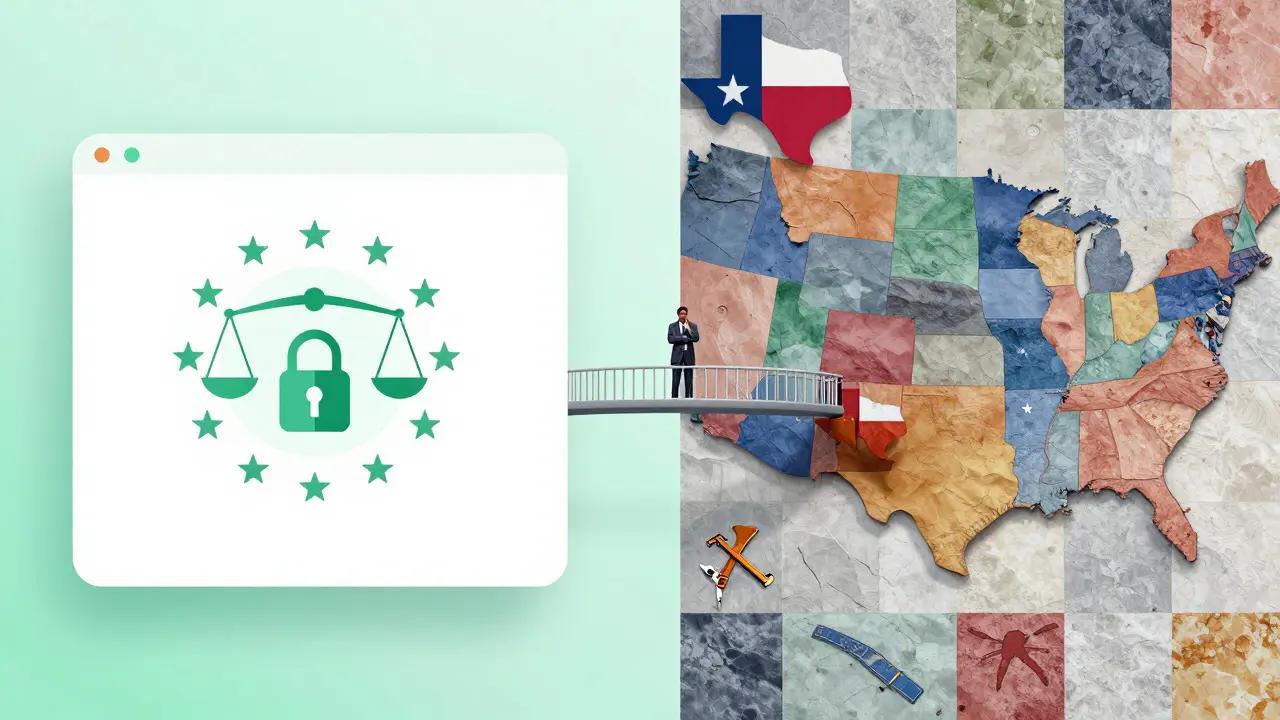
If your platform serves a global audience, you are subject to the strictest rules among your jurisdictions. The EU’s Digital Services Act (DSA) imposes transparency obligations on large online platforms. You must disclose how your recommendation algorithms work. For adult content, this means explaining why certain videos are shown to specific users. Failure to provide this clarity can result in fines up to 6% of global turnover.
In contrast, US regulation is more fragmented. Texas and Florida have enacted different standards for age verification. This patchwork makes a single global strategy difficult. The best approach is modular architecture: build a compliance layer that can toggle features based on the user's geolocation. If a user is in Germany, enforce GDPR-compliant age checks. If they are in Texas, apply Texas-specific ID rules. This technical flexibility is now a business requirement, not just a legal one.
Practical Steps for Platform Owners
You don't need a law degree to start fixing these issues, but you do need a checklist. Here is the immediate action plan for any UGCAC platform launching or scaling in 2026:
- Audit Your Onboarding Flow: Do you verify age before or after upload? It must be before. Store the verification token securely, separate from the content database.
- Update Terms of Service: Explicitly state that users grant a license for ad-supported viewing. Include a clause about potential revenue sharing for top performers.
- Implement Automated Moderation: Use AI tools to flag potential copyright infringement or missing metadata. Human review should be reserved for borderline cases to keep costs down.
- Create a DMCA Portal: Make it easy for rights holders to issue takedowns. Slow response times increase statutory damages in copyright suits.
- Monitor State Legislation: Subscribe to legal updates from states with large populations (CA, NY, TX, FL). Changes in one state often signal trends for others.
Finally, consider the reputational risk. In the adult industry, trust is currency. A major lawsuit or regulatory fine doesn't just cost money; it signals instability to investors and advertisers. Proactive compliance is cheaper than reactive litigation. By treating legal risks as product features rather than burdens, you build a more resilient business model that can withstand the shifting sands of digital regulation.
Does Section 230 still protect adult content platforms?
Yes, but with narrowing exceptions. Section 230 generally protects platforms from liability for user speech. However, for adult content, courts and legislatures are increasingly finding that failure to verify age constitutes negligence, which falls outside Section 230's protection. Always consult local counsel for jurisdiction-specific advice.
What is the biggest financial risk for small UGC platforms?
For smaller platforms, the biggest risk is often class-action wage claims from creators. Unlike copyright trolls who target big names, wage claim aggregators look for patterns across many small platforms. Implementing clear revenue-sharing terms early prevents this.
How does the EU Digital Services Act affect adult sites?
The DSA requires large platforms to explain their recommendation algorithms and allow users to opt out of profile-based recommendations. For adult sites, this means providing clear disclosures about how age-gated content is served and ensuring users can easily change their settings.
Is AI moderation legally sufficient for adult content?
AI moderation is a tool, not a shield. Regulators expect a "human-in-the-loop" for final decisions on controversial cases. Relying solely on AI can be seen as negligent if the algorithm systematically fails to catch obvious violations. Use AI for first-pass filtering, but maintain human oversight.
What should I do if a creator sues for unpaid ad revenue?
First, check your Terms of Service. If they explicitly waived ad revenue sharing, you have a strong defense. If the terms are silent, settle quickly if possible. Litigation costs usually exceed the payout for individual claims. Update your terms immediately to prevent future ambiguity.