

Why Traditional Therapy Often Falls Short
Most mental health professionals are trained in general populations. While they mean well, many lack the context of the adult industry's specific pressures. Imagine trying to discuss the anxiety of a leaked private video or the complex dynamics of a parasocial relationship with a fan to someone who doesn't understand how OnlyFans or Fanvue works. This creates a 'stigma gap.' The worker spends half the session educating the therapist instead of receiving help. Moreover, there is the fear of judgment. Even in 'progressive' spaces, there's a lingering bias against sex work. This can lead to a feeling of alienation, where the person seeking help feels they must sanitize their life to be deemed 'worthy' of care. Peer networks eliminate this because the baseline is already established: everyone in the room understands the industry. This shared vocabulary removes the need for explanations and allows the focus to shift immediately to healing and coping strategies.The Core Components of Effective Peer Support
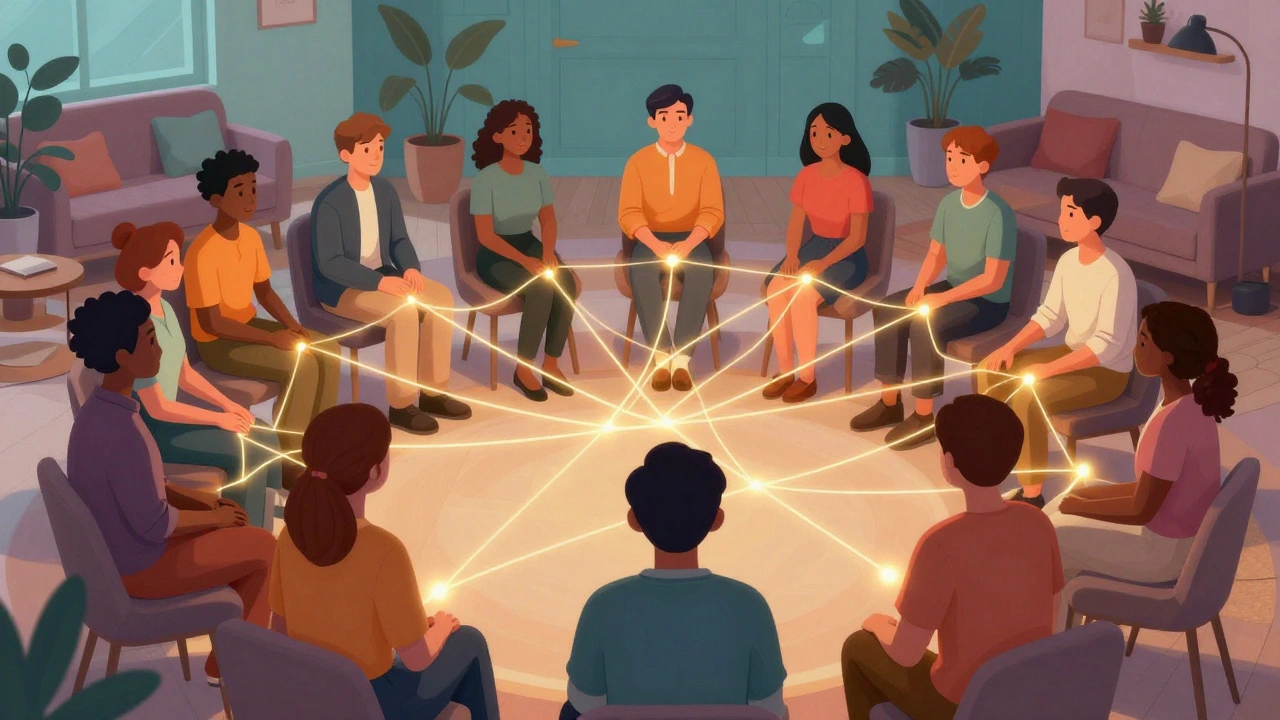
Not all groups are created equal. A random Twitter thread isn't a support network; it's a forum. True Mutual Aid networks in the adult space usually have a few key pillars that make them work. First, there is the concept of 'safe containers.' This means the group has clear rules about confidentiality and respect. In an industry where doxing is a constant threat, anonymity and trust aren't just preferences-they are safety requirements. Second, these networks often employ a 'facilitator' model. While it's not clinical, a trained peer facilitator ensures that one person doesn't dominate the conversation and that the group doesn't spiral into a 'trauma dump' without a way to recover. Third, there is a focus on resource sharing. This might be a vetted list of Sex-Positive Therapists (practitioners who acknowledge the validity of sex work) or tips on how to handle a sudden surge of online harassment.| Feature | Clinical Therapy | Peer Support Networks |
|---|---|---|
| Power Dynamic | Expert $\rightarrow$ Patient | Equal $\rightarrow$ Equal |
| Primary Value | Diagnosis & Treatment | Empathy & Shared Experience |
| Barrier to Entry | Cost / Insurance / Vetting | Lived Experience / Trust |
| Context | Generalist | Industry-Specific |
Navigating the 'Trauma Loop' and Setting Boundaries
One of the biggest risks in peer support is the 'trauma loop.' This happens when a group becomes so focused on shared pain that it reinforces a negative identity rather than facilitating growth. If every meeting is just a list of the worst things that have happened this week, the group can inadvertently trigger Secondary Traumatic Stress in its members. To avoid this, healthy networks implement strict boundaries. They might use a 'check-in/check-out' system where members start by stating their current emotional state and end by sharing one positive thing or a goal for the next week. This anchors the conversation in the present and prevents the group from becoming a vacuum of negativity. Learning to say, "I can't hold space for this right now," is a critical skill that peer networks teach. It's a lesson in self-preservation that many adult workers struggle with because their job often requires them to be emotionally available to others 24/7.Digital Safe Spaces and the Role of Encryption
Because of the high risk of surveillance and leaks, the infrastructure of these networks matters. Relying on Facebook Groups or public forums is a recipe for disaster. Most high-functioning peer networks have migrated to Signal or Telegram, utilizing end-to-end encryption to protect member identities. Beyond the tech, these spaces often use 'vouching' systems. To join a high-trust circle, a new member must be vouched for by an existing member. While this can seem exclusionary, it's a necessary defense mechanism against 'bad actors' or people attempting to infiltrate the group for the purpose of harassment. These digital sanctuaries provide a place where creators can drop the performance and be their authentic selves without worrying about a screenshot ending up on a gossip board.
Integrating Peer Support with Professional Care
Peer support isn't meant to replace a psychiatrist or a licensed counselor-it's meant to complement them. The ideal setup is a 'hybrid' model. A creator might use a peer network for daily emotional regulation, venting, and practical advice, while seeing a Psychologist for deep-seated trauma or clinical depression. When peer support is working correctly, it actually makes professional therapy more effective. The network provides the confidence and the vocabulary for the creator to advocate for themselves in the clinic. For example, a peer group might help a member realize that their reaction to a specific boundary violation is a common industry response, not a personal failing. This insight allows the member to go to their therapist and say, "I'm experiencing this specific industry-related stressor," rather than struggling to describe a vague feeling of anxiety.Building Your Own Support System from Scratch
If you can't find an existing network, building one requires intention. Don't just start a group chat; define the purpose. Are you looking for a 'venting' space, a professional mastermind, or a deep emotional support group? Start small-maybe two or three people you trust implicitly. Establish a 'Community Agreement' early on. This document should outline what happens if a conflict arises, how privacy is handled, and what the expectations are for participation. A simple agreement might state: "What is said in the circle stays in the circle," and "We prioritize the safety of the most marginalized among us." This foundation prevents the group from collapsing under the weight of misunderstood intentions as it grows. Focus on quality over quantity; a small group of five people who truly have each other's backs is infinitely more valuable than a group of fifty strangers.Is peer support the same as a group chat with other creators?
Not exactly. While a group chat can provide social connection, a peer support network is intentional. It usually involves a shared goal of wellness, structured boundaries to prevent burnout, and a focus on mutual aid rather than just chatting about industry news or gossip.
How do I find a therapist who won't judge my work in the adult industry?
Look for providers who explicitly list 'sex-positive' or 'kink-aware' in their bios. You can also ask a peer support network for recommendations. When interviewing a therapist, ask them directly: "What is your experience working with people in the adult industry?" Their reaction to that question will tell you more than their credentials.
What if a peer support group becomes too draining?
This is known as compassion fatigue. If you feel exhausted after a session, it's time to set a boundary. You can step back from the group for a week or suggest a 'no-trauma' session where the group focuses solely on wins and positive updates. If the group doesn't respect those boundaries, it may no longer be a safe space for you.
Can these networks help with legal or financial stress?
Yes, many networks double as resource hubs. They often share lists of banks that don't freeze accounts of adult workers, accountants who understand the industry's tax nuances, and lawyers who specialize in digital rights and copyright infringement.
Do these groups work for people who are new to the industry?
Absolutely. In fact, they are most critical for beginners. New creators are often overwhelmed by the technical and emotional demands of the job. Having a peer network allows them to learn 'invisible' industry rules and safety tips that aren't written in any manual.