

Imagine a subscriber logging into their favorite niche streaming site, only to find their credit card details exposed in a public breach database. For adult platforms, this isn't just an inconvenience; it's an existential threat. Unlike mainstream tech giants that can weather a data leak with a PR team and a stock dip, smaller adult businesses often face immediate churn, legal liability, and reputational ruin. The stakes are higher because the audience is sensitive, the payments are frequent, and the regulatory landscape is shifting fast.
You don't need a PhD in cybersecurity to protect your users, but you do need to stop treating security as an afterthought. It’s not about buying the most expensive firewall. It’s about implementing three non-negotiable pillars: robust encryption, strict multi-factor authentication (MFA), and granular access controls. These tools form the backbone of trust in an industry where privacy is the product itself.
Why Standard Security Fails Adult Platforms
The adult industry operates under unique pressures. Users often use disposable emails or secondary accounts, making them harder to reach if something goes wrong. Payment processors frequently flag these transactions, requiring extra layers of verification that standard e-commerce sites don’t need. When you add the fact that many creators operate solo or with small teams, the attack surface becomes wide open.
Most breaches in this sector don’t come from sophisticated state actors. They come from simple mistakes: unpatched plugins, weak admin passwords, or third-party apps with excessive permissions. A single compromised moderator account can expose thousands of private messages. This is why generic "security best practices" often fall short. You need a strategy tailored to high-privacy, low-trust environments.
Encryption: More Than Just HTTPS
Many platform owners think they’re safe because they have an SSL certificate. While HTTPS protects data in transit between the user’s browser and your server, it does nothing once the data hits your database. If a hacker gains physical access to your server room or exploits a SQL injection vulnerability, your user emails, passwords, and payment tokens are readable text without end-to-end protection.
AES-256 is the industry-standard symmetric encryption algorithm used to secure data at rest. It is computationally infeasible to crack with current technology. Your database should store all sensitive fields-usernames, email addresses, and especially password hashes-using AES-256. But there’s a catch: keys must be managed separately from the data. If the key and the encrypted data sit on the same server, a full server compromise renders the encryption useless.
Consider using a Key Management Service (KMS) provided by cloud providers like AWS or Azure. These services store encryption keys in hardware security modules (HSMs) that never leave the provider’s perimeter. For smaller platforms, even a local HSM or a dedicated key vault adds a layer of defense that makes brute-force attacks nearly impossible.
Multi-Factor Authentication: The Last Line of Defense
Passwords are dead. Or at least, they’re no longer sufficient. In the adult industry, where creator accounts hold significant financial value, password reuse is common. One leaked credential from a forum signup can unlock a creator’s entire revenue dashboard.
Multi-factor authentication (MFA) requires a second form of verification beyond the password. Think of it as two locks on one door. The first lock is what you know (password). The second is what you have (a phone or hardware token) or what you are (biometrics).
- Authenticator Apps: Apps like Google Authenticator or Authy generate time-based one-time passwords (TOTPs). They are free, offline-capable, and resistant to SIM swapping.
- Hardware Keys: Devices like YubiKeys offer the highest level of security. They require a physical touch to log in, making remote phishing almost ineffective.
- SMS Codes: Convenient, but less secure. SIM swapping remains a real risk for high-value targets.
For platform admins and power users, MFA shouldn’t be optional. Make it mandatory for anyone with write access to the database or billing settings. It’s a small friction point for the user but a massive barrier for attackers.

Access Controls: Least Privilege in Practice
How many people on your team actually need access to the raw customer database? Probably fewer than you think. Access control follows the principle of least privilege: give every user only the permissions they absolutely need to do their job, and nothing more.
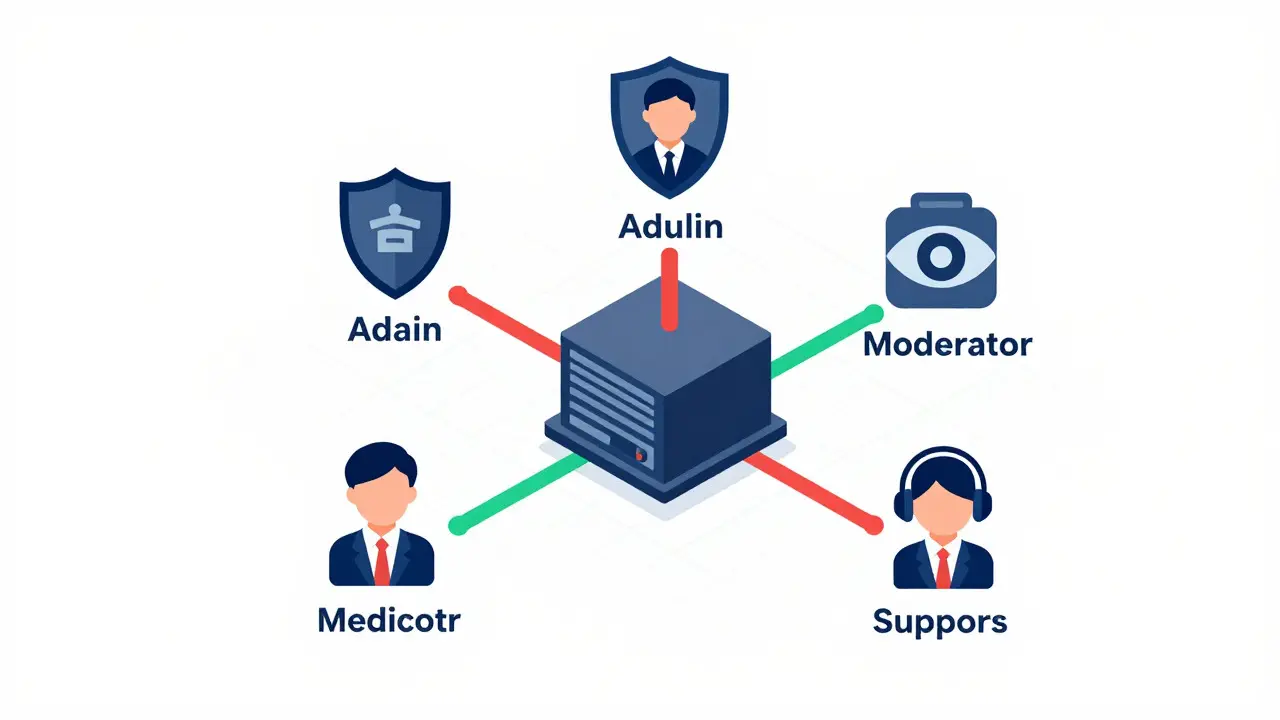
Role-Based Access Control (RBAC) is the standard way to implement this. Instead of assigning permissions individually, you create roles. Here’s how a typical adult platform might structure its roles:
| Role | Database Access | Billing Access | User Content Moderation | Risk Level |
|---|---|---|---|---|
| Super Admin | Full Read/Write | Full Control | Full Control | Critical |
| Moderator | Read Only | No Access | Edit/Delete Posts | Medium |
| Support Agent | Masked View | Refund Only | View Tickets | Low |
| Creator | Own Data Only | Payouts Only | Own Content | Low |
Notice the "Masked View" for support agents. They need to see user issues, but they don’t need to see full credit card numbers or home addresses. Masking data reduces the impact of insider threats. If a support agent gets phished, the attacker only sees partial information, not a goldmine.
Implementing These Layers Without Breaking the Bank
You don’t need to hire a CISO to get started. Cloud infrastructure has made enterprise-grade security accessible to small teams. Here is a practical roadmap:
- Audit Current State: List all systems storing PII (Personally Identifiable Information). Check if encryption is enabled at the database level.
- Enforce MFA: Start with admins. Then roll it out to creators with high earnings. Use SSO (Single Sign-On) providers that support MFA natively.
- Define RBAC Roles: Map out who needs what. Remove legacy accounts. Assign roles based on function, not seniority.
- Automate Monitoring: Set up alerts for unusual login attempts or bulk data exports. Tools like SIEM (Security Information and Event Management) can be overkill for small sites, but basic logging is essential.
The goal isn’t perfection. It’s resilience. Even if one layer fails, the others should hold. If MFA is bypassed, encryption keeps data unreadable. If encryption is broken, access controls limit the damage to specific departments.
Common Pitfalls to Avoid
Many platform owners make the same mistakes repeatedly. Watch out for these:
- Third-Party Blind Spots: Your analytics tool might have access to user IDs. Ensure they sign a Data Processing Agreement (DPA) and limit their API scopes.
- Session Timeout Negligence: If an admin leaves their laptop unlocked in a co-working space, a long session timeout is a gift to an attacker. Set idle timeouts to 15 minutes for sensitive dashboards.
- Ignoring Mobile App Security: If you have a mobile app, ensure local storage doesn’t cache sensitive tokens in plain text. Use secure enclaves or keychains.
The Future of Privacy in Niche Markets
As regulations like GDPR and CCPA tighten, compliance is no longer just a legal checkbox; it’s a marketing advantage. Users in the adult industry actively seek out platforms that respect their privacy. Highlighting your security measures-like "AES-256 Encrypted" or "MFA Enabled"-on your landing page can increase conversion rates among privacy-conscious subscribers.
Security is not a cost center. It’s the foundation of trust. In an industry built on discretion, protecting that discretion is your primary business model. Get the basics right, and you’ll sleep better knowing your users’ data is truly theirs.
Is SSL enough to secure an adult platform?
No. SSL (or TLS) only encrypts data while it travels between the user and the server. Once data reaches your database, it needs additional encryption at rest, such as AES-256, to protect against server compromises or insider threats.
What is the best type of MFA for high-value creator accounts?
Hardware security keys (like YubiKey) are considered the most secure option because they are resistant to phishing and SIM swapping. Authenticator apps are a good middle ground, while SMS codes are convenient but less secure.
How does Role-Based Access Control (RBAC) help prevent leaks?
RBAC limits data exposure by granting users only the minimum permissions needed for their role. For example, a support agent might see masked customer data, reducing the risk if their account is compromised compared to a super admin with full access.
Do small adult platforms need a dedicated CISO?
Not necessarily. Many small platforms can achieve strong security by leveraging cloud-native tools, managed KMS services, and automated monitoring. However, having a designated person responsible for security policies is crucial for maintaining consistency.
How often should access rights be reviewed?
Access rights should be reviewed quarterly or whenever there are significant changes in staff roles. Regular audits help identify "permission creep," where employees accumulate unnecessary access over time.