

Working nights while performing in front of a camera is uniquely draining. You’re not just fighting fatigue; you’re managing a biological clock that wants to be asleep at 2 AM while your audience is online at peak hours. For many adult performers professionals who work irregular hours, often overnight, requiring high energy and focus during shifts, this mismatch leads to chronic sleep debt, mood swings, and decreased job satisfaction. The good news? It’s fixable with targeted science-based strategies.
Quick Summary / Key Takeaways
- Circadian rhythm disruption is the core issue, not just lack of sleep duration.
- Light exposure timing matters more than total sleep hours for night-shift workers.
- Melatonin supplements should be timed precisely to signal “sleep” to your brain, not taken as a sedative.
- Consistency in sleep/wake times-even on days off-is critical for long-term health.
- Strategic napping (20 minutes max) can boost alertness without causing grogginess.
Understanding the Biological Challenge
Your body runs on an internal master clock called the circadian rhythm a ~24-hour physiological cycle regulated by light exposure, controlling sleep-wake cycles, hormone release, and body temperature. This system is primarily driven by light hitting your eyes. When you work nights, you’re essentially asking your biology to function like it’s daytime when it’s biologically night. This causes circadian misalignment a state where internal body clocks are out of sync with external schedule, leading to fatigue and impaired performance.
For performers, this isn’t just about feeling tired. Studies from the National Institute for Occupational Safety and Health (NIOSH) show that shift workers have a 30% higher risk of cardiovascular disease and metabolic issues compared to day-shift workers. Your cortisol levels-your stress hormone-peak in the morning and dip at night. Working at 3 AM means you’re operating against your natural hormonal flow, which makes staying alert and emotionally balanced much harder.
Mastering Light Exposure
Light is your most powerful tool. If you want to stay awake during your night shift, you need bright light. If you want to sleep after your shift, you need darkness. Here’s how to manipulate it:
- During Shift: Use full-spectrum LED lights or bright white bulbs (5000K color temperature). Aim for 10,000 lux if possible. Wear blue-light-blocking glasses only if you find screens too stimulating, but generally, bright light is your friend here.
- Commute Home: Wear dark sunglasses immediately after your shift ends. This prevents sunlight from resetting your clock back to day mode.
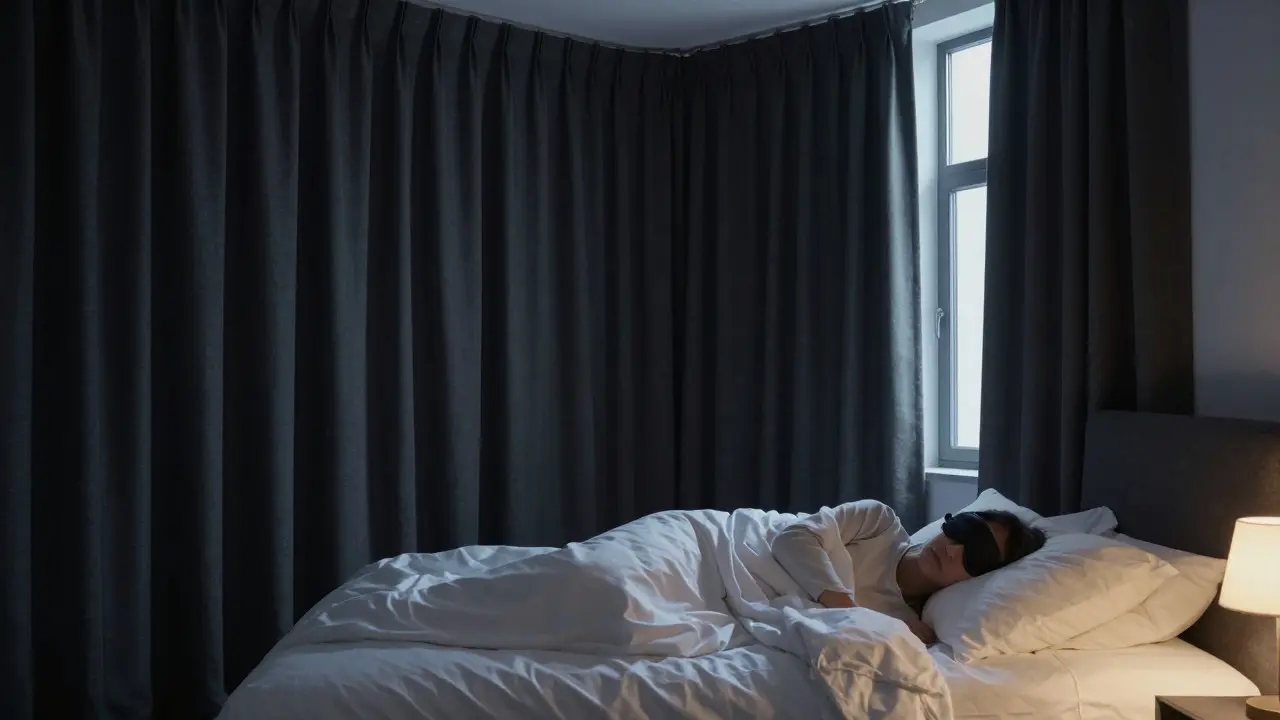
- At Home: Create a “cave.” Blackout curtains are non-negotiable. Add eye masks and earplugs if needed. Keep room temperature cool (around 65°F or 18°C), as your body temperature needs to drop for deep sleep.
Think of light as a command. Bright light says “wake up,” darkness says “prepare for sleep.” If you ignore these signals, your brain gets confused, leading to fragmented sleep even if you lie in bed for eight hours.
The Role of Melatonin and Supplements
Melatonin a hormone produced by the pineal gland in response to darkness, signaling the body to prepare for sleep is not a sleeping pill. It’s a time signal. Many people take it wrong, popping a dose right before bed regardless of their schedule. For night-shift workers, timing is everything.
- To Sleep After Work: Take low-dose melatonin (0.5mg - 1mg) 1-2 hours before your intended bedtime. This tells your brain it’s “night” even if it’s early afternoon.
- To Stay Awake During Work: Avoid melatonin during your shift. Instead, use caffeine strategically.
Don’t rely on high doses (5mg+). Research suggests lower doses are more effective for shifting rhythms without causing next-day grogginess. Always consult a healthcare provider before starting any supplement regimen, especially if you have underlying health conditions.
Strategic Napping and Caffeine Use
Naps are a double-edged sword. A short nap can rescue your alertness, but a long one can make you feel worse. The golden rule is the power nap a brief sleep period, typically 10-20 minutes, designed to restore alertness without entering deep sleep stages.
- Pre-Shift Nap: Take a 90-minute nap before your shift starts. This allows you to complete one full sleep cycle, reducing sleep inertia upon waking.
- Mid-Shift Nap: If possible, take a 20-minute nap mid-shift. Set an alarm! Waking up from deep sleep (after 30+ minutes) leaves you groggy and disoriented.
Caffeine works best when timed correctly. Drink coffee or tea 30-60 minutes before you need peak alertness. Avoid caffeine within 6-8 hours of your main sleep block, or you’ll struggle to fall asleep. Decaf options are great for the latter half of your shift if you still want the ritual without the jitters.
Building a Consistent Routine
Inconsistency is the enemy. If you work nights Monday-Wednesday and sleep at normal times Thursday-Sunday, your body never settles into a stable rhythm. Try to keep your sleep window consistent, even on days off. If you sleep from 7 AM to 3 PM on work days, try to sleep from 8 AM to 4 PM on days off-a one-hour shift is manageable; a four-hour shift is disruptive.
Create a “wind-down” routine. Spend the last 30 minutes before bed doing low-stimulation activities: reading, stretching, or meditating. Avoid heavy meals within 3 hours of bedtime, as digestion raises body temperature and interferes with sleep onset. Alcohol might help you fall asleep faster, but it fragments REM sleep, leaving you less rested. Limit intake to one drink or less, and avoid it within 4 hours of bed.
Comparing Sleep Strategies for Night Workers
| Strategy | Primary Benefit | Key Risk | Best For |
|---|---|---|---|
| Bright Light Therapy | Enhances alertness during shift | Can cause headaches if overdone | Performers struggling with mid-shift drowsiness |
| Low-Dose Melatonin | Resets circadian phase | Vivid dreams or grogginess if mistimed | Those with significant circadian misalignment |
| Power Naps (20 min) | Quick alertness boost | Sleep inertia if exceeded | Short breaks during long shifts |
| Consistent Sleep Schedule | Long-term health stability | Social isolation on days off | All night-shift workers for sustainable health |
Frequently Asked Questions
How long should I sleep after a night shift?
Aim for 7-9 hours of uninterrupted sleep. Quality matters more than quantity. Ensure your environment is dark, quiet, and cool to maximize deep sleep phases.
Is it bad to sleep during the day?
Not inherently, but it requires effort. Daylight suppresses melatonin naturally, making it harder to fall asleep. Using blackout curtains and avoiding screens helps mitigate this effect.
What foods help with night-shift energy?
Focus on complex carbohydrates and lean proteins for sustained energy. Avoid sugary snacks that cause spikes and crashes. Hydrate consistently, as dehydration worsens fatigue.
Can I switch between day and night shifts safely?
Frequent switching is difficult. If you must, rotate forward (day → evening → night) rather than backward. Allow at least 3-4 days to adjust to a new schedule before switching again.
Do I need a doctor’s prescription for melatonin?
In the US, melatonin is available over-the-counter. However, consult a doctor if you have heart conditions, diabetes, or take blood thinners, as interactions can occur.