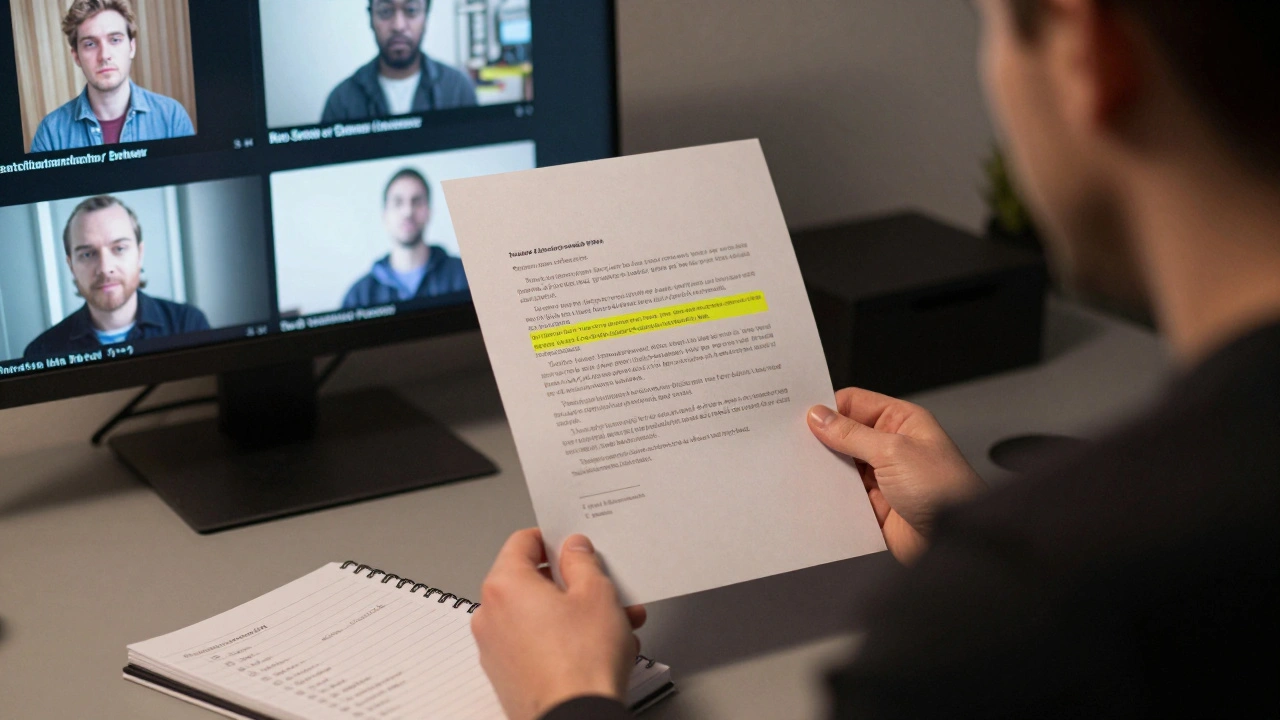

If you're an adult performer and an adult producer has gone back on what was agreed in your scene terms, you're not alone-and you're not powerless. This happens more often than people admit. A producer might claim the edit was "just a tweak," or say the footage was "for internal use only," when your contract clearly said otherwise. Maybe they used your scene in a different genre than agreed, or shared it on a platform you explicitly banned. When trust breaks down like this, your first instinct might be to stay quiet. But silence doesn’t protect you-it lets it happen again.
Review Your Contract Before Anything Else
Start by pulling out your signed agreement. Not the email exchange. Not the text message where they said "don’t worry." The actual contract. It should list every detail: scene type, camera angles, specific acts, distribution platforms, exclusivity terms, and whether you retain rights to your performance. Many performers assume verbal agreements are enough. They’re not. In adult entertainment, written terms are your only legal shield.Check for clauses like "right of approval," "usage limitations," or "termination upon breach." These aren’t just filler-they’re your leverage. If the producer used your scene in a fetish category you didn’t approve, or uploaded it to a site you specifically rejected (like a free tube site), that’s a clear violation. Document every deviation. Take screenshots. Save links. Note timestamps. This isn’t paranoia-it’s evidence.
Reach Out, But Don’t Argue
Don’t send a rant. Don’t post on social media yet. Send a calm, factual email or message. State the facts: "On February 12, we agreed that Scene #47 would only be distributed on [Platform X] and not used in compilations. It was uploaded to [Platform Y] on February 20. This violates Section 3.2 of our contract. Please remove it immediately and confirm in writing."Keep it professional. You’re not begging. You’re enforcing a binding agreement. Most producers will respond quickly if they know you’ve done your homework. Some will apologize and fix it. Others will stall, blame their editor, or claim "it was an accident." Don’t accept that. An accident doesn’t erase a contract.
Use Industry Tools to Track and Report
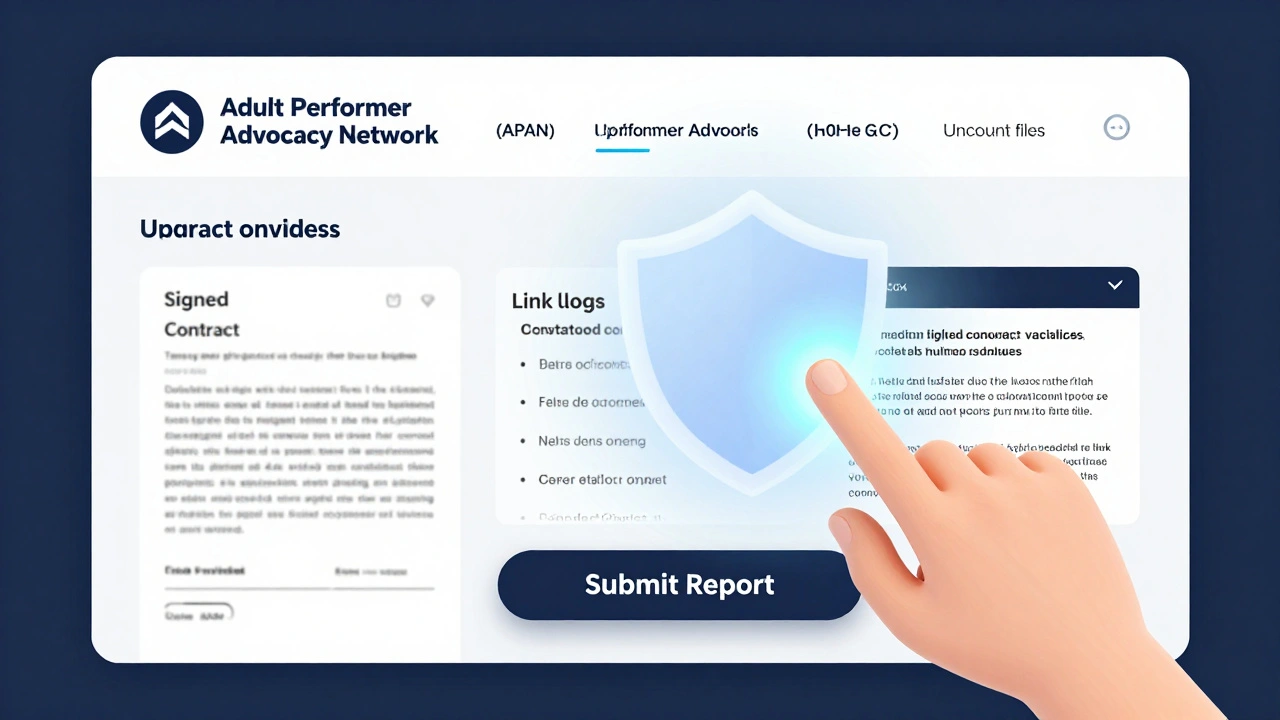
There are tools built for this exact situation. The Adult Performer Advocacy Network (APAN) is a nonprofit that helps performers document violations, connect with legal counsel, and file formal complaints. They have a secure portal where you can upload contracts, links to unauthorized content, and communication logs.Another tool is the Performer Rights Database, a community-driven registry where performers log producers who have violated terms. It’s not public-facing, but if a producer is flagged by three or more performers, APAN will initiate a formal review. This isn’t revenge-it’s accountability.
If the content is on a major platform like OnlyFans, Pornhub, or ManyVids, file a DMCA takedown request. You own the rights to your likeness. You don’t need the producer’s permission to remove unauthorized use. ManyVids, for example, has a direct performer takedown form that requires only your ID and the link to the infringing content. They process these in under 72 hours.
Know When to Escalate Legally
If the producer ignores you, deletes your content but reposts it elsewhere, or threatens you, it’s time to involve a lawyer. You don’t need a big firm. Look for someone who specializes in entertainment law and has handled adult industry cases. The SAG-AFTRA Adult Performer Guild offers free legal referrals to registered performers. They’ve helped people recover damages for unauthorized use, breach of contract, and emotional distress.Many performers worry about cost. But if the violation involved commercial use (like selling the clip or using it in a pay-per-view bundle), you may be owed royalties. Some cases have resulted in settlements between $5,000 and $25,000, depending on usage and reach. Even if you don’t sue, a lawyer’s letter often gets results. A single email from legal counsel can make a producer remove content, pay damages, and sign a non-disparagement agreement.
Prevent Future Violations
After this, change how you work. Always use a standardized contract. The Performer Contract Template from APAN is free, legally reviewed, and covers every common violation point: usage limits, platform bans, editing rights, and post-production controls. Don’t sign anything without it.Also, record every interaction. Use apps like Tape or Otter.ai to record calls and meetings. If a producer says, "We’ll never use this on free sites," get it on tape. That’s your backup.
And finally, don’t work with producers who refuse to sign contracts. That’s not a red flag-it’s a full stop. There are hundreds of ethical producers out there who respect boundaries. You don’t need to work with the ones who don’t.
What You Can’t Control
Some things are out of your hands. If a producer uploads to a small, unregulated site in another country, legal action might not help. But you can still report it. APAN and other groups track these sites. If enough performers report the same producer, they get blacklisted from industry networks. That hurts more than you think.Also, don’t expect every platform to act fast. Some take weeks. Others ignore you. That’s why documentation matters. Keep copies of every takedown request, every email, every screenshot. You never know when you’ll need to prove a pattern.
What This Is Really About
This isn’t just about one scene. It’s about power. The adult industry has a long history of performers being silenced. But that’s changing. More performers are speaking up. More platforms are enforcing rules. More lawyers are taking these cases.When you stand up for your terms, you’re not just protecting yourself. You’re protecting everyone who comes after you. Because if you don’t, the next performer might not even know what rights they had.
What if the producer claims they didn’t read the contract?
Ignorance isn’t a legal defense. If you sent the contract, they signed it, and they used the content, they’re responsible. Courts and arbitration panels treat signed contracts as binding regardless of whether one party "read" them. Your job is to prove they received and agreed to the terms-not that they understood every word.
Can I sue if I didn’t get paid?
Yes. Non-payment and unauthorized use are two separate violations. You can file for breach of contract over the payment, and separately for copyright infringement over the misuse of your performance. Many performers combine both claims in one case to increase leverage.
Do I need to be a U.S. citizen to take legal action?
No. U.S. copyright law protects performers regardless of citizenship, as long as the content was distributed in the U.S. or through U.S.-based platforms. You can file a DMCA takedown or sue in U.S. courts if the producer operates here, even if you live abroad.
What if the producer is a friend or someone I trust?
Trust doesn’t override contracts. If they violated your terms, it’s still a violation. Handling it professionally-even with someone you know-protects your boundaries and prevents future issues. Many performers who let "friends" slide end up with repeated problems. Clear boundaries are the foundation of healthy professional relationships.
Is it worth reporting a small violation?
Yes. Small violations often lead to bigger ones. A producer who uses your scene on one unauthorized site might later use it in a compilation, a promotional video, or a paywall bypass. Reporting early stops the pattern before it grows. The industry’s accountability systems rely on consistent reporting.