

When AI starts generating images, videos, or text that depict adults in intimate situations, the line between innovation and harm gets blurry fast. Companies that build or use generative AI tools can’t just say, ‘We didn’t mean for this to happen.’ The reality is, these systems are being used - sometimes intentionally, sometimes accidentally - to create non-consensual, exploitative, or harmful adult content. That’s why clear, enforceable policies aren’t optional. They’re the minimum requirement.
What Counts as Adult Content in AI Systems?
Not all adult content is the same. An AI tool might generate a photo of someone in a swimsuit, a sensual painting, or a hyper-realistic video of a real person doing something they never agreed to. The difference matters. The first might be artistic. The third is abuse. Many platforms classify adult content into three buckets:
- Consensual adult content - nudity or sexual acts where all parties are real, consenting adults, and the content is clearly labeled.
- Simulated adult content - AI-generated depictions of adults in sexual situations, even if no real person was involved.
- Non-consensual deepfakes - AI-generated content that uses someone’s face or likeness without permission, often to simulate sexual acts.
Policy must treat these differently. Simulated content can still cause harm by normalizing exploitation. Non-consensual deepfakes are criminal acts in many countries. A policy that lumps them together fails at enforcement.
Guardrails That Actually Work
Most AI companies claim to have ‘safety filters.’ But filters alone don’t stop determined users. In 2024, researchers at Stanford tested five major text-to-image models. Four of them still produced explicit content when prompted with coded language like ‘sexy nurse’ or ‘bikini selfie, no clothes.’ The models didn’t block it - they just made it look more ‘realistic.’
Effective guardrails go beyond keyword blocking. They include:
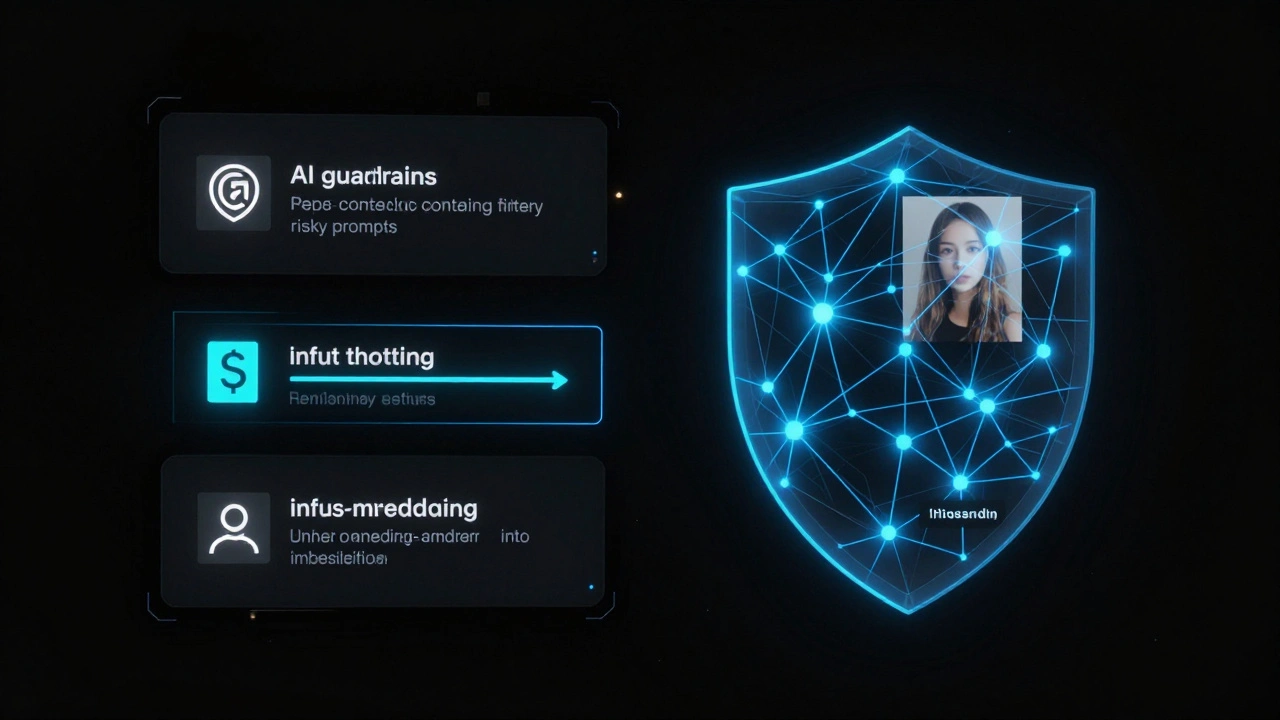
- Context-aware detection - AI that analyzes the intent behind a prompt, not just the words. For example, ‘a woman in a red dress’ is fine. ‘A woman in a red dress, naked, with her face from a celebrity photo’ triggers a red flag.
- Input throttling - If a user submits 20 similar prompts in 5 minutes, the system locks them out temporarily. This stops mass generation of abusive material.
- Watermarking and metadata - Every AI-generated image or video must carry invisible, verifiable tags that say it was made by AI. This helps platforms and law enforcement trace misuse.
- Opt-in consent for likeness use - If a model is trained on real people’s images, users must agree not to generate content resembling those individuals. This is already required under California’s AB 1875 law.
These aren’t theoretical. MidJourney added context-aware filters in late 2024 after internal audits found 17% of generated images violated their own policy. Stability AI now requires users to sign a digital agreement before generating any content that could resemble a real person. These steps aren’t perfect, but they’re moving the needle.
Who Reviews the Reviews?
Even the best guardrails rely on human review. But hiring moderators to look at AI-generated adult content is ethically risky. Many moderators report PTSD, anxiety, and burnout. One 2025 study from the University of Washington found that 68% of content moderators who reviewed AI-generated adult material developed symptoms of trauma within six months.
That’s why some companies are shifting to a hybrid model:
- AI does the first pass - flagging high-risk content.
- Only flagged content goes to human reviewers.
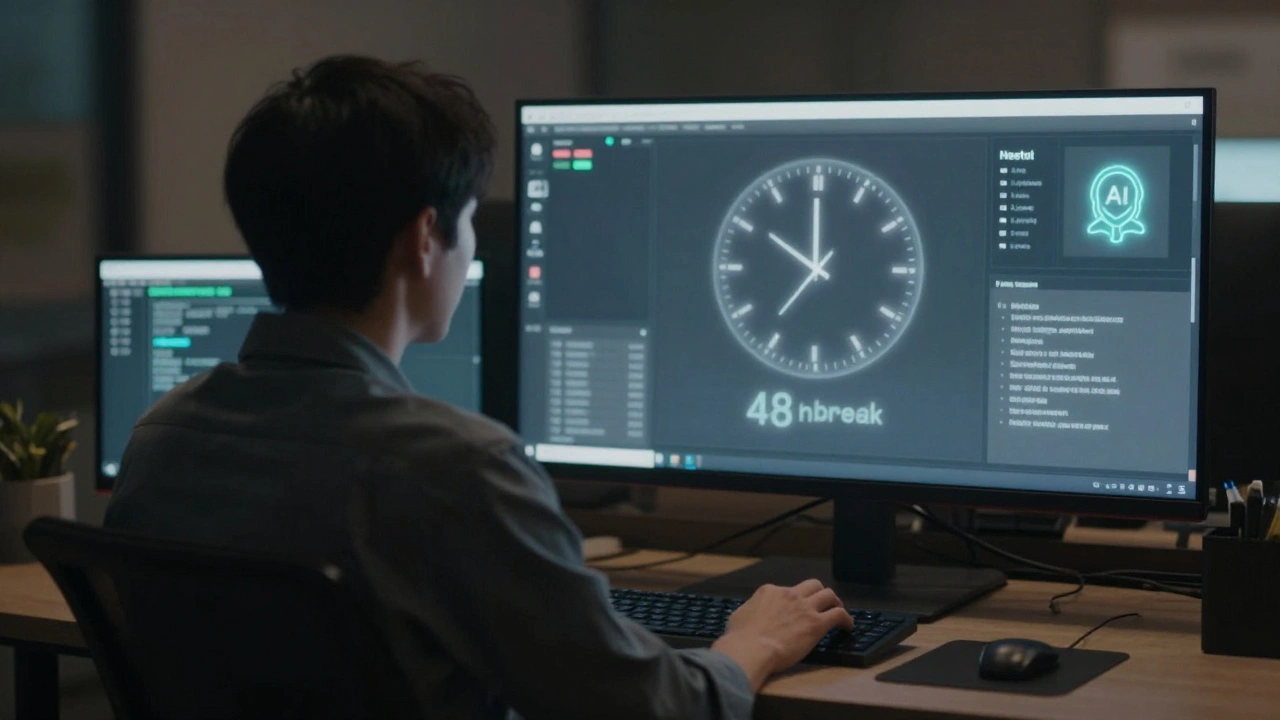
- Reviewers get mandatory mental health support and 48-hour mandatory breaks after every 100 reviews.
- Reviewers can’t see personal identifiers - no names, no social media profiles, no location data.
Companies like Anthropic and OpenAI now require third-party audits of their review processes. These audits check for bias, consistency, and psychological safety. It’s not enough to say ‘we have a team.’ You have to prove they’re protected.
What Happens When Policy Fails?
There’s no such thing as a foolproof system. In early 2025, a popular AI art platform was hacked. Attackers bypassed filters and generated over 12,000 non-consensual deepfakes in 72 hours. The platform didn’t detect it until users started reporting them on social media.
That’s when the real test began. Did they:
- Delete the content and say nothing?
- Blame the users?
- Release a public report with the number of incidents, how they were caught, and what they changed?
The company chose option three. They published a transparency report. It included the total number of violations, the average time between generation and detection, and the changes they made to their guardrails. They also created a public dashboard showing real-time moderation stats. That level of honesty built trust - even after a major failure.
How Users Can Protect Themselves
Policy isn’t just for companies. Users have power too. If you’re using an AI tool that lets you generate images:
- Check if the platform has a public policy document. If not, don’t use it.
- Look for clear opt-out options for likeness use. If you don’t see one, assume your face could be used without consent.
- Report anything that feels wrong. Even if it’s just a weird prompt - ‘woman with celebrity face, kissing’ - report it. Those reports train better filters.
- Use tools like Inverse AI or Deepware Scanner to check if an image you received was AI-generated. If it was, and it involves someone you know, alert them.
There’s no shame in walking away from a tool that doesn’t take this seriously. Your safety matters more than the convenience of a free generator.
The Future of AI and Adult Content
Regulation is catching up. The EU’s AI Act, effective in 2026, bans the generation of non-consensual deepfakes outright. In the U.S., the DEEPFAKES Accountability Act is moving through Congress. It would require all AI-generated adult content to carry visible watermarks and make it illegal to distribute without consent.
But laws can’t cover everything. The real change will come from companies that treat this as a core ethical issue - not a PR problem. The most responsible AI platforms now have:
- A public ethics board with external experts
- Annual transparency reports
- Independent audits of moderation practices
- Clear paths for users to appeal false positives
These aren’t marketing tactics. They’re accountability structures. And they’re the only way to prevent AI from becoming a tool for exploitation instead of creativity.
Can AI-generated adult content be legally banned?
Yes - but only in specific cases. Non-consensual deepfakes (using someone’s likeness without permission) are already illegal in over 20 countries, including the U.S., Canada, and all EU members. The EU’s AI Act, effective in 2026, bans the generation of any non-consensual sexual content. In the U.S., federal legislation is moving to require visible watermarks and criminalize distribution. However, simulated adult content (where no real person is involved) remains legally gray. Most policies treat it as a platform rule, not a crime - but that’s changing.
Why don’t AI companies just block all nudity?
Because not all nudity is harmful. Art, education, and medical contexts often involve nudity. A blanket ban would shut down legitimate uses - like AI-assisted dermatology tools, fashion design, or historical art restoration. The goal isn’t to remove all adult content. It’s to stop abuse. That’s why smart systems look at context, not just skin.
Do AI tools trained on real people’s photos have a responsibility?
Absolutely. If a model is trained on images scraped from social media, public websites, or stock photo sites, it’s using real people’s likenesses without permission. That’s why companies like Stability AI now require users to agree not to generate content resembling real individuals unless they have written consent. Some platforms even let people opt out of training data entirely. This isn’t optional anymore - it’s a legal and ethical baseline.
What should I do if I’m a victim of AI-generated deepfake?
First, document everything - screenshots, links, timestamps. Then report it to the platform that generated it. Most have a dedicated abuse form. Next, contact law enforcement - many jurisdictions treat this as a crime. Finally, use tools like Inverse AI or Google’s reverse image search to find where else the image has been posted. You’re not alone. Organizations like the Cyber Civil Rights Initiative offer free legal help for victims.
Are there AI tools that are safer for generating adult content?
Some are. Platforms like Leonardo AI and Ideogram now require users to verify identity and sign a consent agreement before generating any content that could resemble a real person. They also limit the number of generations per day and require visible AI watermarks. These aren’t perfect, but they’re designed with accountability in mind. Avoid tools that offer ‘no filter’ modes or don’t publish any policy documents.