

Adult workers are drowning in silence. Between rising rent, stagnant wages, and the constant pressure to be ‘always on,’ mental health struggles are no longer rare exceptions-they’re the norm. Yet, most don’t know where to turn. The good news? Community grants and nonprofits are stepping in, filling gaps that employers and insurance systems ignore. These aren’t flashy campaigns or corporate wellness apps. They’re real, ground-level support systems run by people who’ve been there.
How Community Grants Are Changing the Game
Community grants don’t come from big corporations. They’re funded by local governments, faith-based groups, and small foundations that understand neighborhood needs better than any national policy. In 2025, over $180 million in direct mental health grants flowed to local nonprofits across the U.S., with nearly 60% targeted specifically at working adults. That’s not a typo. It’s more than double what was allocated in 2020.
These grants fund things you won’t find on LinkedIn: free therapy sessions in public libraries, peer support groups in church basements, and transportation vouchers so someone can get to their appointment without choosing between gas and groceries. In Detroit, the Wayne County Mental Health Initiative is a nonprofit program funded by a $2.3 million community grant that provides up to 12 free counseling sessions per adult worker, no insurance required. In rural Oregon, the Rural Resilience Network uses grant money to pay for mobile mental health vans that visit factory parking lots after shifts.
Nonprofits That Actually Reach Working Adults
Most mental health nonprofits focus on teens or veterans. But a growing number are shifting their focus to adults who work full-time, often in low-wage or unstable jobs. These groups don’t wait for people to ask for help. They go where the workers are.
- The Blue Collar Therapy Project partners with union halls and warehouse centers to offer weekly 30-minute drop-in counseling. No appointment. No paperwork. Just a quiet room and a licensed therapist.
- WorkLife Support Collective in Minneapolis runs a text-based peer network. Workers text keywords like "stressed" or "overwhelmed" and get matched with someone who’s been there-no therapist needed, just human connection.
- Crisis to Calm in Atlanta provides emergency mental health stipends of $200 to workers who’ve lost a job, faced domestic violence, or experienced a sudden death in the family. The money can go toward therapy, medication, or even a night in a hotel to get off the streets.
These aren’t charities. They’re survival networks. And they’re working. A 2025 survey of 8,200 participants across 17 programs found that 74% reported reduced anxiety within four weeks of joining. Over 60% said they stayed in their jobs longer because of the support.
Who Qualifies? It’s Simpler Than You Think
You don’t need to be poor. You don’t need to be unemployed. You don’t even need a diagnosis. Most of these programs serve anyone who works and feels overwhelmed. Eligibility is often based on one simple question: Do you feel like you’re barely holding on?
Here’s what typically qualifies you:
- Working 20+ hours per week (full-time or multiple part-time jobs)
- Living in a county with a grant-funded program
- Not currently receiving mental health services through Medicaid or employer insurance
- Self-identifying as struggling with stress, anxiety, depression, or burnout
Some programs even accept people who are “too high-functioning” for traditional services. Think: the nurse who cries in her car after shifts. The warehouse worker who can’t sleep because of work trauma. The single parent who’s been told to "just breathe" one too many times.

How to Find Help in Your Area
Google won’t help. Most of these programs don’t have websites. They’re listed on community bulletin boards, posted in break rooms, or shared through word of mouth. Here’s how to find them:
- Call your local United Way (211 hotline). Ask: "What mental health programs do you fund for working adults?" They’ll give you a list.
- Visit your public library. Librarians often have printed flyers or contacts for local nonprofits. Many have dedicated community resource desks.
- Ask your union rep, if you have one. Union halls are hotspots for mental health outreach.
- Check with your city’s Department of Health. Look for "Community Behavioral Health Grants" on their website or call their public info line.
- Join local Facebook groups for workers in your industry. Someone will have been there.
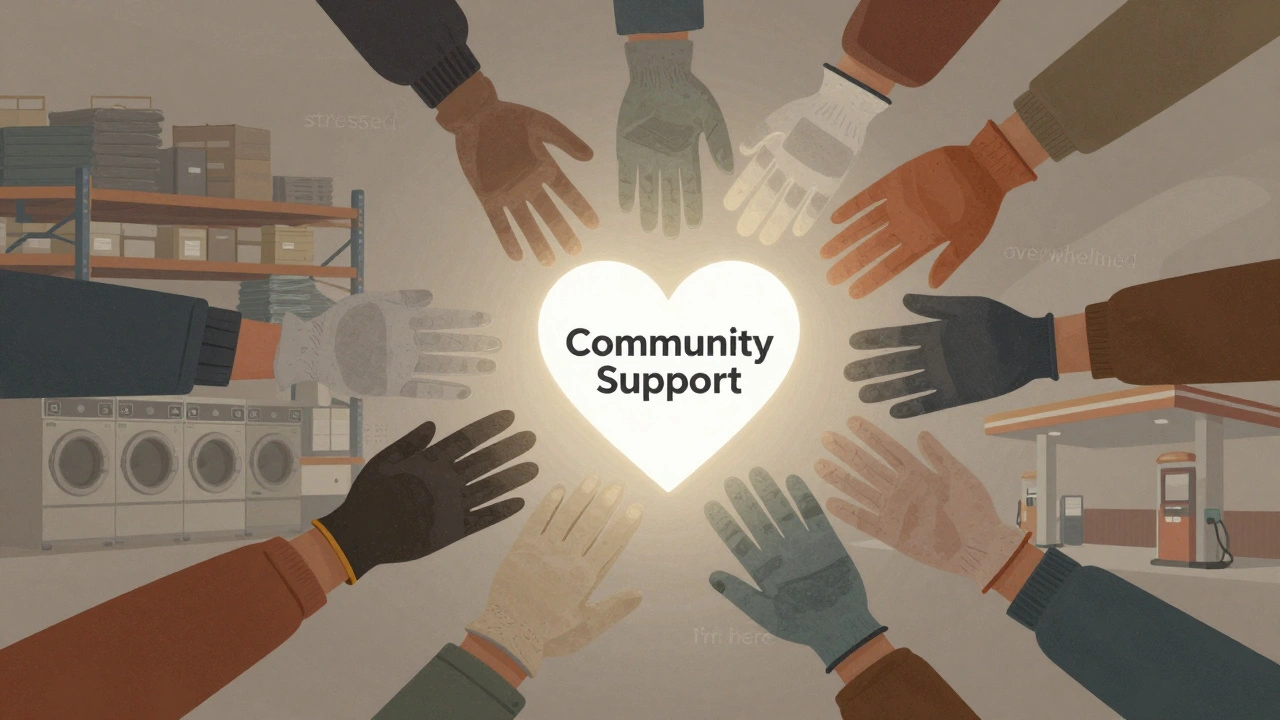
In Chicago, over 1,200 workers found support through a single flyer posted in a laundromat. In Houston, a mechanic learned about free counseling after seeing a sticker on a gas pump. These programs thrive on visibility-not marketing.
What These Programs Actually Offer
Forget long-term therapy. These programs are built for the real world:
| Service | Typical Offerings | Duration |
|---|---|---|
| Therapy Sessions | 12 free sessions with licensed clinicians; group or individual | 3-6 months |
| Peer Support | Weekly meetings led by trained peers (not therapists) | Ongoing |
| Crisis Stipends | $100-$500 for emergency needs (therapy, meds, housing) | One-time or monthly |
| Transportation Aid | Bus passes, gas cards, or rides to appointments | As needed |
| Workplace Advocacy | Help negotiating reduced hours, remote days, or time off | 1-3 sessions |
None of these require you to disclose your diagnosis. None require you to prove your income. Most don’t even ask for your Social Security number.
Why This Matters More Than Ever in 2026
The average adult worker now spends 52 hours a week on work-related tasks-including checking emails after midnight and answering Slack messages on vacation. Burnout isn’t a buzzword. It’s a public health crisis. The CDC reported in early 2026 that depression rates among employed adults jumped 38% since 2022. Suicide rates among men aged 30-49 rose by 22% in the same period.
Insurance companies won’t fix this. Employers are cutting mental health benefits to save money. But community programs? They’re built to adapt. A grant in Milwaukee added weekend therapy hours after workers said they couldn’t take time off. A program in Phoenix started offering Spanish and Vietnamese sessions after listening to feedback.
This isn’t about charity. It’s about dignity. It’s about recognizing that someone who works 60 hours a week to feed their family deserves support-not just a pep talk.
What’s Next? How You Can Help or Get Involved
If you’re receiving help: keep showing up. These programs live or die by participation. The more people use them, the more funding they attract.
If you’re not struggling but know someone who is: share this. Print out a flyer. Post it in your break room. Text a friend: "There’s a free therapy program at the community center. I think you should check it out."
If you’re a manager, union rep, or community leader: push for these programs. Contact your city council. Ask for a line item in the budget. These programs cost less than replacing one employee.
And if you’re wondering whether this is too good to be true? It’s not. These programs exist because real people-teachers, mechanics, nurses, cashiers-refused to let their neighbors suffer alone. They didn’t wait for permission. They just started.
Can I get mental health help if I have insurance?
Yes. Many community programs serve people with insurance who still can’t afford copays, don’t have mental health coverage, or have long waitlists. These programs are designed to fill gaps-not replace existing services.
Do I need to be unemployed to qualify?
No. Most programs specifically target employed adults. In fact, many require proof of work-like a pay stub or employer letter-to ensure they’re helping those who need it most.
Are these services confidential?
Yes. All licensed therapists follow HIPAA rules. Peer support groups operate under strict privacy guidelines. No information is shared with employers, insurers, or government agencies unless there’s an immediate safety risk.
Can I get help if I’m not a U.S. citizen?
In most cases, yes. Community grants do not require proof of citizenship. Many programs explicitly welcome undocumented workers. Language barriers are addressed with bilingual staff or interpreters.
How long does it take to get started?
It can be as fast as same-day. Some programs offer walk-in hours. Others may take a week to schedule your first session. Text-based or peer networks can connect you within hours. Don’t wait for perfection-start with what’s available now.
There’s no magic fix. But there is help. And it’s closer than you think.