
Every day, millions of people interact with adult content online. Some of it is consensual, legal, and created by people who chose to share it. But too much of it isn’t. Behind the screens, there are stories of coercion, exploitation, and trafficking-hidden in plain sight. If we want to make adult content spaces safer, we need more than just bans and filters. We need clear standards, real accountability, and a system that rewards ethics, not just views.
Why Current Moderation Isn’t Enough
Most platforms rely on automated tools to flag content. They scan for known illegal imagery, match fingerprints, or use AI to detect nudity. But these systems miss the real problem: context. A video might look consensual on the surface-no signs of force, no obvious distress-but the person behind it could be under pressure, trapped, or manipulated. Algorithms don’t read between the lines. Human moderators often don’t have the time, training, or authority to dig deeper.Take the case of a performer who signed a contract in 2023. They thought they were working independently. Six months later, they found out their agent had been selling their content to multiple platforms without their knowledge. The footage was still live. No one flagged it because the performer never reported it-fear of retaliation kept them silent. Automated systems didn’t catch it. Human reviewers didn’t see it. The system failed.
This isn’t rare. A 2025 report from the International Anti-Trafficking Network found that 37% of adult content posted on major platforms had no verifiable consent documentation. That’s nearly four in ten videos that could be linked to exploitation. We can’t rely on luck or last-minute takedowns. We need prevention built into the system.
What Certification Could Look Like
Imagine a simple, transparent certification system for adult content creators and platforms. Not a government mandate. Not a pay-to-play badge. A third-party, independent standard that anyone can earn-and be held accountable for.Here’s how it works:
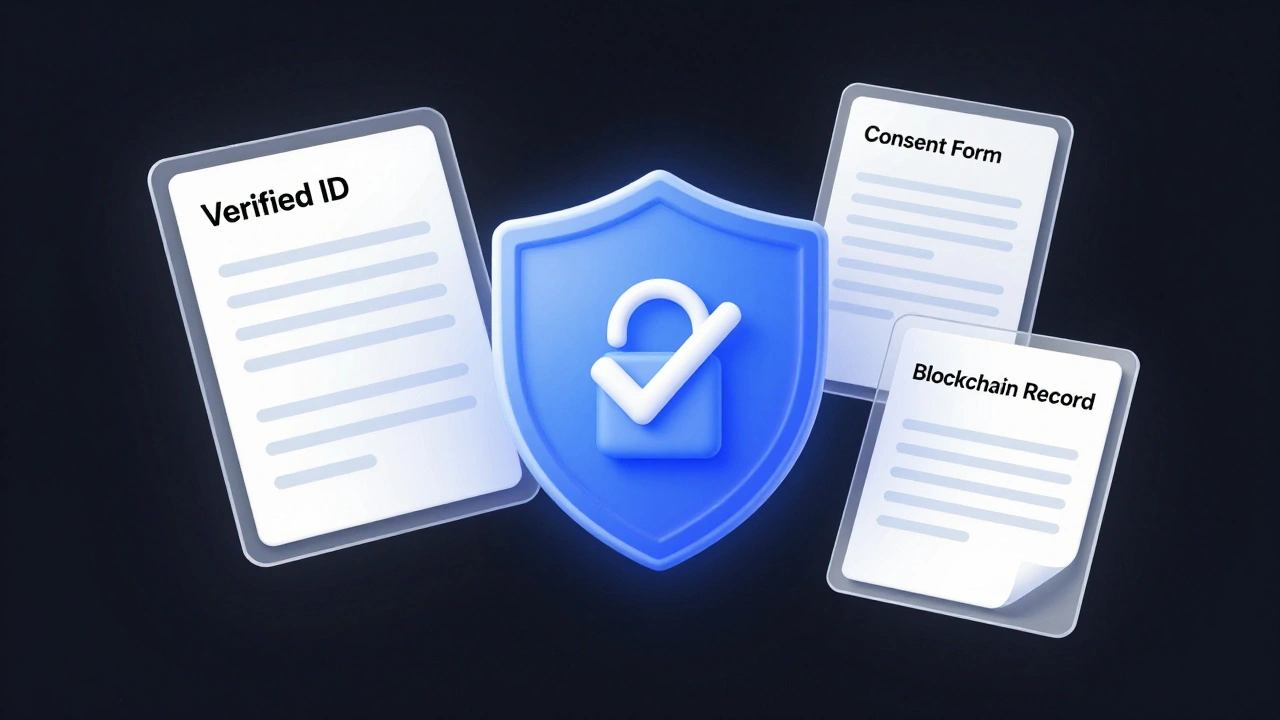
- Creators must provide verified ID, proof of age, and a signed, timestamped consent form that includes details like how the content will be used, who owns it, and how long it will remain available.
- Platforms that host this content must use encrypted, blockchain-backed storage for consent records-so they can’t be altered or deleted after the fact.
- Each piece of content gets a unique, public certification code. Anyone can look it up. Was the performer paid fairly? Did they have access to legal counsel? Was there a cooling-off period before filming? All of it’s visible.
This isn’t science fiction. The same model is used in the film industry for child actors in the U.S. and in the EU for documentary subjects. Why shouldn’t adult performers have the same protections?
Platforms that adopt this system would display a small, verifiable badge next to certified content. Think of it like the USDA Organic label-but for ethics. Users could filter searches to show only certified content. Creators who follow the rules get better visibility. Those who don’t? They’re not banned-they’re invisible.
Accreditation for Platforms
Certification alone doesn’t fix the problem. The platforms themselves need to be held to a higher standard. That’s where accreditation comes in.An independent nonprofit-let’s call it the Ethical Content Alliance (ECA)-would set the rules, audit platforms annually, and publish their results. No secrets. No lobbying. Just facts.
Accreditation criteria would include:
- Public reporting of takedown requests and response times
- 24/7 access to trained trauma-informed moderators who speak multiple languages
- Financial transparency: How much revenue goes to creators? What percentage is kept by the platform?
- Partnerships with anti-trafficking organizations to train staff and support victims
- A whistleblower protection policy that lets employees report abuse without fear of retaliation
Platforms that pass the audit get the ECA seal. Those that fail? They’re given 90 days to fix the issues. If they don’t, they’re removed from search results, payment processors, and advertising networks. No more hiding behind terms of service.
In 2024, a small platform in Germany called OpenNude became the first to earn ECA accreditation. Within six months, their user trust scores rose by 62%. Creators flocked to them. Traffic spiked-not because they were the biggest, but because they were the most trustworthy.
How This Stops Trafficking
Traffickers don’t want transparency. They thrive in the shadows. They use fake IDs, stolen footage, and manipulated consent forms. A certification system makes their job harder.Here’s how:
- Stolen content can’t be certified. No valid ID. No real consent record. It gets flagged automatically.
- Platforms that host uncertified content lose access to payment gateways like Stripe and PayPal. No money. No business.
- Search engines and app stores can prioritize accredited platforms. Google and Apple already do this for health and safety content. Why not here?
- Creators who are trafficked can report anonymously through ECA-affiliated hotlines. Their content gets removed. Their identity stays protected.
One woman in Romania escaped a trafficking ring in 2024. She had been forced to film content for two years. When she got out, she didn’t go to the police-she went to the ECA. They traced the footage back to three platforms. All three lost accreditation. The footage was deleted. The traffickers were prosecuted. This system didn’t just clean up content-it helped bring justice.

What Gets in the Way
Critics say this is too complicated. Too expensive. Too hard to enforce. But here’s the truth: the cost of doing nothing is higher.Platforms that ignore ethics lose users. Creators leave for safer spaces. Regulators step in with heavy-handed laws that hurt everyone. The EU’s Digital Services Act already requires platforms to take “reasonable steps” to prevent exploitation. This system isn’t an extra burden-it’s the easiest way to comply.
Some worry about privacy. But certification doesn’t require public exposure. It requires secure, encrypted records. Only authorized parties can access them. The goal isn’t to shame people-it’s to protect them.
Others say it’s impossible to verify consent in every case. True. But we don’t need perfection. We need progress. Right now, less than 5% of adult content has any verifiable consent trail. Imagine if that jumped to 70% in three years. That’s millions of people safer.
The Path Forward
Change won’t come from one law or one company. It will come from a coalition: creators, platforms, tech developers, NGOs, and users.Here’s what you can do:
- If you’re a creator: Demand certification. Only work with platforms that offer it.
- If you’re a platform: Start building your consent verification system now. Partner with ECA or a similar body.
- If you’re a user: Look for the certification badge. Search only for certified content. Tell others why it matters.
- If you’re a developer: Build tools that make consent tracking easy. Blockchain isn’t the only way-encrypted cloud logs work too.
This isn’t about censorship. It’s about clarity. It’s about giving power back to the people who create the content. And it’s about making sure no one is exploited in the name of profit.
The technology exists. The frameworks are proven. The demand is growing. What’s missing is the will to do it right. The next time you see adult content online, ask: Is this ethical? Is it certified? And if it’s not-why not?
What exactly is certified adult content?
Certified adult content comes from creators who have verified their identity, age, and consent through a trusted third-party system. Each piece of content has a unique code that links to a secure record showing how, when, and under what conditions it was produced. This includes proof of payment, access to legal advice, and a cooling-off period before filming. The certification doesn’t mean the content is "clean" or "moral"-it means it was made without coercion.
Can this system really stop trafficking?
It won’t stop all trafficking-but it removes the tools traffickers need to profit. Without certification, content can’t be monetized on major platforms. Payment processors won’t touch uncertified material. Search engines won’t rank it. Traffickers rely on anonymity and volume. Certification makes both impossible. It’s not a magic fix, but it’s the most effective barrier we have right now.
Is this just for big platforms?
No. Small creators and independent sites benefit the most. Certification gives them credibility. It helps them stand out from shady competitors. Many small platforms already use basic consent tools. The system just raises the bar and gives them a way to prove they’re doing it right. Accreditation is scalable-it works for one person or one million.
How do I know if a platform is accredited?
Accredited platforms display a visible, clickable badge-usually in the footer or on the creator’s profile. Clicking it takes you to the Ethical Content Alliance’s public registry, where you can see their audit results, compliance status, and contact info. If there’s no badge, assume they’re not accredited. Don’t assume they’re bad-but don’t assume they’re safe either.
What if a creator is pressured but still "consents"?
Consent under pressure isn’t real consent. The certification system requires more than a signature. It requires proof of autonomy: a private interview with a trained advocate, a 72-hour waiting period, and a signed statement that they weren’t coerced. If any of those are missing, the content isn’t certified-even if the person says "yes." The system is designed to protect people who can’t say "no."