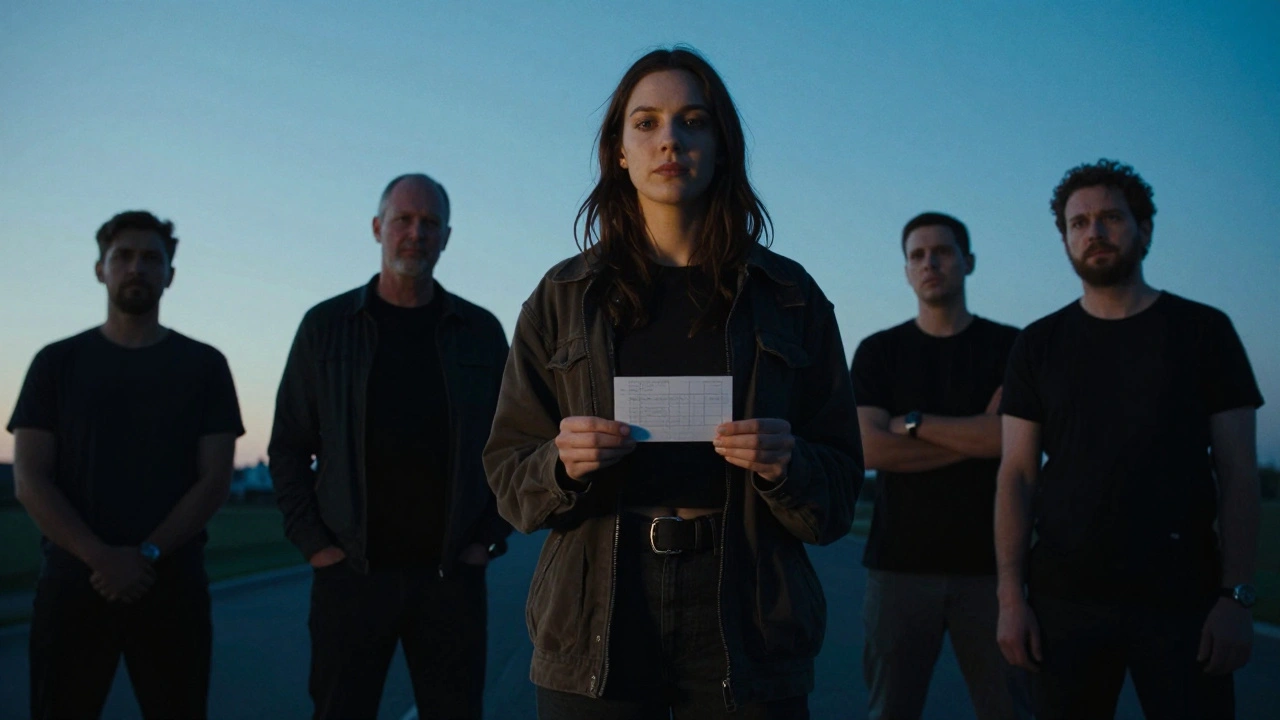

On an adult film set, the camera might roll in minutes, but the real work happens before the lights go on. It’s not just about performance-it’s about control, consent, and who holds the power. Too often, performers are expected to show up, do the job, and stay quiet. That’s changing. More performers are speaking up, demanding clear boundaries, and refusing to accept unsafe or exploitative conditions. This isn’t about censorship. It’s about survival.
Who Really Runs the Set?
Power on adult sets doesn’t always come from the director. Sometimes it’s the producer with the budget, the camera operator who controls the shot, or even the co-performer who’s been on the job longer. These invisible hierarchies shape what’s allowed, what’s ignored, and what’s punished. A performer might feel pressured to do something they didn’t agree to because saying no could mean losing the next gig-or worse, being blacklisted.
One performer in Los Angeles told me she was asked to perform a scene without a condom after signing a contract that said otherwise. When she refused, the producer said, "You’re lucky we even called you back." That’s not an exception. That’s the system.
Consent Isn’t a One-Time Signature
Signing a contract doesn’t mean giving up your right to change your mind. Real consent is ongoing. It’s not enough to say "yes" on paper. You need to say "yes" every time the scene changes, every time the mood shifts, every time someone asks for more.
Some sets now use a color-coded system: green means go, yellow means pause and check in, red means stop immediately. No questions asked. No explanations needed. This isn’t theater-it’s a safety protocol. And it’s working. Sets using this system report 68% fewer incidents of boundary violations, according to a 2025 survey by the Adult Performer Advocacy Group.
Clear Boundaries Start Before the Camera
Before you show up on set, you should know three things:
- What scenes are you actually signing up for? (Not what’s promised-what’s written.)
- Who has access to your medical records? (Answer: No one unless you say yes.)
- Who can change the script on the fly? (Answer: Nobody without your approval.)
Many performers now carry a personal boundary checklist. It includes physical limits (no anal, no facial, no kissing), emotional limits (no roleplay that triggers trauma), and logistical limits (no unsupervised scenes, no alcohol on set). Some even bring a trusted friend or advocate to the shoot. That’s not paranoia. That’s strategy.

Who Gets to Say "No"?
On many sets, the answer used to be: whoever has the money. Today, more performers are forming collectives. These groups negotiate contracts, share safety protocols, and call out abusive producers. In 2024, a group of 17 performers in Atlanta collectively refused to work with a studio that had been flagged for three violations in six months. The studio lost three major bookings. That’s power.
It’s not about being difficult. It’s about being respected. You don’t have to be loud to be heard. You just have to be consistent.
Tools That Actually Work
Here are three tools performers are using right now-with results:
- SafeOnSet App: A private app that lets performers log incidents, share warnings anonymously, and access verified safety ratings for studios. Used by over 8,000 performers in 2025.
- Boundary Cards: Physical cards you hand to crew members that list your limits. No talking. No arguing. Just show the card. Simple. Effective.
- Pre-Shoot Huddles: A 10-minute meeting before filming where everyone-director, camera, co-performers, even the makeup artist-goes over the plan, limits, and emergency signals. This is now standard on 42% of professional sets, up from 9% in 2022.

What Happens When You Speak Up?
Some performers get fired. Others get blacklisted. But more are getting hired.
After one performer publicly called out a producer for ignoring her red flag, she didn’t just lose work-she gained a following. Within three months, three new studios reached out. They didn’t want someone who would stay quiet. They wanted someone who knew how to protect herself. That’s the shift.
The industry is waking up. Not because it’s nice. Because it’s profitable. Studios that prioritize safety have lower turnover, fewer lawsuits, and better reputations. Performers aren’t asking for favors. They’re asking for standards.
It’s Not Just About Sex
Power dynamics on adult sets mirror those in every workplace: who gets to decide, who gets to disappear, who gets blamed when things go wrong. But here, the stakes are higher. Your body is the product. Your comfort is the currency.
When you walk onto a set, you’re not just an employee-you’re a person with a history, limits, and rights. No contract overrides that. No paycheck justifies it. And no one gets to decide what safety looks like for you except you.
What You Can Do Today
- Review every contract with a lawyer who specializes in performer rights-not a generalist.
- Carry a printed boundary card. Keep it in your wallet. Use it every time.
- Join a performer collective. Even if it’s just two people. Strength is in numbers.
- Document everything. Texts, emails, call logs. If something goes wrong, you’ll need proof.
- Know your legal rights. In California, Oregon, and Nevada, performers have explicit workplace protections under labor law. Ask for them.
You don’t need to be a star to demand safety. You just need to know your worth.
Can a performer be forced to do something they didn’t agree to in the contract?
No. Any change to the agreed-upon scenes must be approved in writing before filming. Verbal changes are not legally binding. If a producer pressures you to go beyond the contract, you have the right to walk away without penalty. In states like California and Oregon, this is protected under labor law. Document the request and report it to your union or collective.
What if I’m scared to speak up because I’ll lose work?
Fear is real. But silence is costlier. Performers who speak up often find they’re not alone. Many others have had the same experience. Joining a performer collective-even a small one-gives you backup. Some groups have legal funds to help with retaliation cases. Also, studios that value safety actively seek out performers who set boundaries. Your strength becomes your brand.
Are medical tests still required, and who pays for them?
Yes, STI testing is still standard-but now, performers have the right to choose their own testing facility, and the studio must pay for it. You can’t be forced to use a provider the studio picks. Testing records belong to you. No one can access them without your written consent. In 2025, a new rule in California made it illegal for studios to require testing more than once every 14 days without your approval.
Can I refuse a scene because it triggers trauma?
Absolutely. Emotional boundaries are just as valid as physical ones. If a scene involves roleplay, language, or scenarios that remind you of past trauma, you can refuse it without explanation. You don’t owe anyone your history. Many sets now include a trauma-informed coordinator who helps adjust scenes to respect emotional limits. Your mental safety is part of your right to work.
How do I know if a studio is safe before I work there?
Check the SafeOnSet app for verified ratings. Look for studios that use pre-shoot huddles, have a written safety policy, and allow performers to bring an advocate. Ask other performers in private groups. Avoid studios that refuse to answer questions about their protocols. A studio that won’t explain its safety rules shouldn’t be trusted. Reputation matters more than pay.
Every performer deserves to feel safe, respected, and in control. That’s not a luxury. It’s the baseline.