

Quick Wins for Your Production
- Set hard "off-clock" hours to stop burnout before it starts.
- Normalize mental health days as standard medical leave.
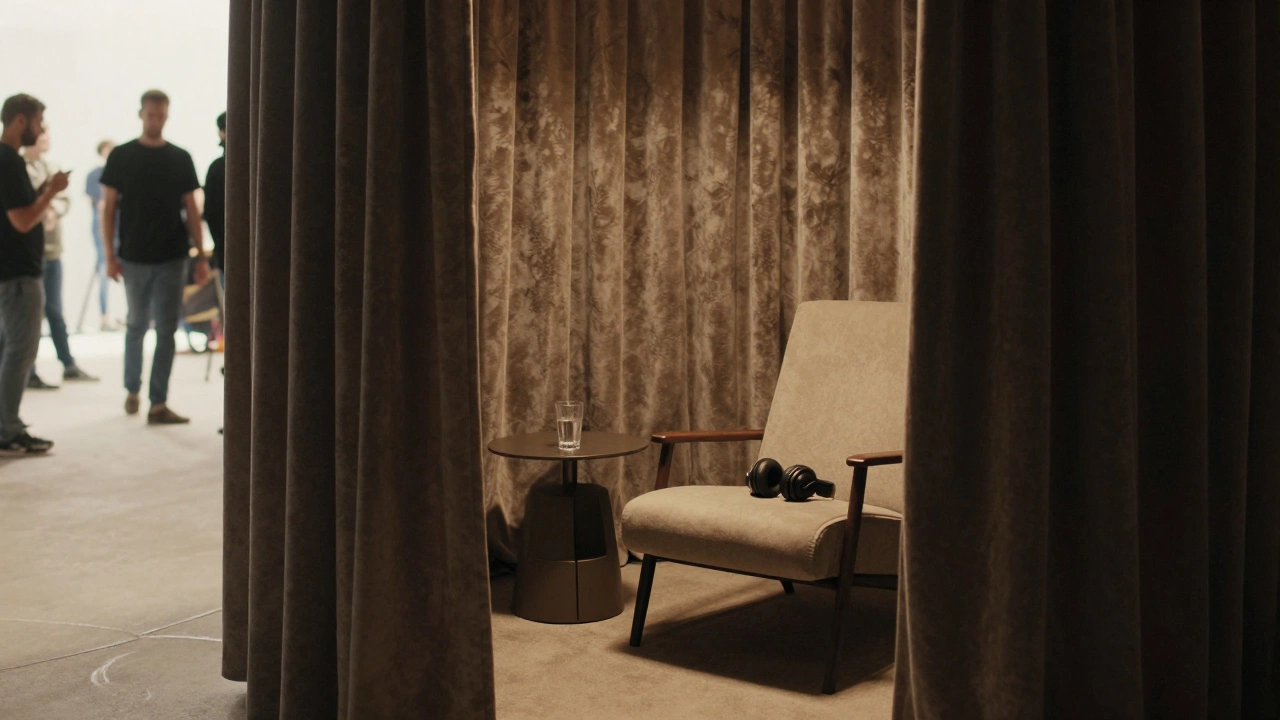
- Create a "quiet zone" on set or in the studio for sensory decompression.
- Implement a check-in system that asks about feelings, not just progress.
The Invisible Weight of the Spotlight
Performing isn't just about talent; it's about emotional regulation under extreme pressure. Performer Mental Health is the psychological and emotional well-being of artists, actors, and musicians who face unique stressors like public scrutiny and irregular income. For many, the line between their personal identity and their stage persona blurs. When a critic hates a performance, the artist doesn't just feel the work was bad-they feel they are bad.
This identity fusion makes performers vulnerable to Burnout, which is more than just being tired. It's a state of emotional, physical, and mental exhaustion caused by excessive and prolonged stress. In a typical production cycle, the pressure peaks during the "crunch" phase. If you're a producer, you might see a performer becoming irritable or withdrawn. Don't mistake this for a bad attitude; it's often a signal that their nervous system is overloaded. Have you ever noticed a talented person suddenly start making basic mistakes? That's usually the first sign that their mental capacity is hitting a wall.
Building a Safety Net into the Schedule
Most production schedules are designed for maximum output, not human sustainability. To support your team, you need to shift from a "grind culture" to a "performance culture." The difference is simple: grind culture asks how much you can squeeze out of someone; performance culture asks what the person needs to be at their best.
Start by auditing your calendar. Are you scheduling 14-hour days with only a 30-minute lunch? That's a recipe for a meltdown. Try implementing "buffer blocks." These are 15-to-30-minute windows between heavy scenes or recording sessions where performers are encouraged to disconnect. No phones, no script notes, no one asking them for a favor. Just silence.
| Feature | Traditional Management | Wellness-First Management |
|---|---|---|
| Break Times | Minimum required by law | Strategic decompression blocks |
| Communication | Instructional and critical | Collaborative and empathetic |
| Mental Health | Discussed only during crisis | Proactive and normalized |
| Feedback Loop | Top-down directions | Bi-directional check-ins |
The Art of the Empathetic Check-In
As a manager, you aren't expected to be a therapist. In fact, trying to play the therapist can actually be dangerous because you lack the clinical training to handle a crisis. Your job isn't to cure the person; it's to create an environment where they feel safe enough to seek professional help. This begins with how you talk to them.
Avoid the generic "How are you?" because the standard answer is always "I'm fine," even when the person is drowning. Instead, ask specific, low-pressure questions like, "How is your energy level today on a scale of 1 to 10?" or "What's one thing we can move off your plate this week to give you some breathing room?" These questions move the conversation from a vague emotional state to a concrete logistical problem you can actually help solve.
When a performer does open up about their struggles, resist the urge to "fix it" immediately with toxic positivity. Phrases like "Just stay positive" or "Think about how lucky you are to have this role" are dismissive. Instead, use active listening. Say, "That sounds incredibly exhausting, and I can see why you're feeling this way. What does support look like for you right now?" By giving them agency in their own recovery, you build a bridge of trust that makes them more loyal and more productive in the long run.
Managing the "High-Stakes" Pressure Cooker
There are moments in every project-like opening night or a final recording session-where the pressure is unavoidable. During these peaks, the risk of Anxiety spikes. This is where a producer's role as a "buffer" becomes critical. You are the shield between the external chaos (investors, critics, deadlines) and the creative process.
One effective technique is the "Information Diet." You don't need to tell the performer every single worry the studio has. If the investors are nervous about a specific scene, don't dump that stress on the actor. Instead, translate that stress into a clear, actionable goal. Instead of saying "The money people are panicking about this scene," say "Let's try a version of this scene that feels a bit more energetic." You're managing the outcome without compromising the performer's mental stability.
Additionally, consider integrating Psychological Safety-a concept popularized by Google's Project Aristotle-into your rehearsals. This is the belief that one will not be punished or humiliated for making a mistake. In a creative setting, if a performer is terrified of failing in front of the producer, they will stop taking risks. And without risks, the art becomes stale. Encourage "ugly versions" of a scene where the only goal is to fail spectacularly. When the fear of failure is removed, the stress levels drop, and the creativity actually increases.
Identifying Red Flags Before the Crash
You don't have to be a psychologist to spot a crisis coming. You just need to notice changes in a person's baseline behavior. Look for these specific indicators:
- Cognitive Slip: A usually sharp performer suddenly forgets simple cues or directions repeatedly.
- Emotional Volatility: Uncharacteristic outbursts, sudden crying spells, or extreme irritability over minor changes.
- Physical Withdrawal: Avoiding eye contact, isolating themselves during breaks, or a visible change in posture and hygiene.
- Hyper-Perfectionism: An obsessive need to redo a perfect take, indicating a spike in anxiety and a loss of confidence.
If you see these signs, it's time to step in. Don't wait for the performer to come to you; they are often too ashamed or overwhelmed to ask for help. A private, gentle conversation is the best approach. "I've noticed you've seemed a bit more stressed than usual lately. I want to make sure you're doing okay. Do we need to adjust the schedule or look into some resources?"

Resources and Professional Boundaries
The most helpful thing a manager can do is have a pre-vetted list of Mental Health Professionals who specialize in the arts. A general therapist might not understand the specific pressures of a touring musician or a method actor. Finding a professional who understands "industry trauma" is a game-changer.
However, you must maintain your own boundaries. If you become the only person a performer trusts, you risk becoming their sole emotional support system. This leads to "compassion fatigue" for you and unhealthy dependency for them. Encourage them to build a support network outside of the production-friends, family, or a therapist-so that their entire stability isn't tied to their professional relationship with you.
How do I handle a performer who refuses help but is clearly struggling?
You cannot force someone into therapy, but you can manage the environment. Focus on the behaviors and the impact on the work. Instead of saying "You need help," say "I've noticed your energy is low, and it's affecting the timing of the scenes. Let's figure out how to get you some rest so you can hit those marks." Often, when you frame it as a professional necessity, they are more open to accepting the support.
Isn't pushing a performer part of the "creative process"?
There is a massive difference between creative challenge and psychological distress. Pushing someone to find a new emotional depth in a scene is productive. Pushing someone through a panic attack or severe depression is counterproductive and dangerous. True artistic growth happens when a person feels safe enough to be vulnerable, not when they are in a state of survival.
What is a "quiet zone" and how does it work?
A quiet zone is a designated physical space on a set or in a studio where talking, phones, and production chatter are strictly forbidden. It can be as simple as a curtained-off corner with a comfortable chair and noise-canceling headphones. It allows performers to reset their sensory input, which is vital for those dealing with anxiety or sensory overload.
How can I balance a tight budget with wellness initiatives?
Most wellness supports cost nothing but time and intention. Changing the way you phrase feedback, implementing a 15-minute quiet break, and being flexible with a schedule don't require a budget. In fact, investing in mental health now saves money later by preventing costly delays caused by sudden breakdowns or last-minute replacements.
How do I tell an investor that we need to slow down for mental health reasons?
Frame it as risk management. Tell the investor, "To ensure the quality of the final product and avoid the risk of a lead performer burning out and delaying the project, we are implementing a sustainable pacing strategy." Investors care about the bottom line; show them how mental health support protects their investment from catastrophic failure.
Next Steps for Managers
If you're feeling overwhelmed by where to start, don't try to overhaul your entire culture overnight. Start with one small change: the next time you have a check-in, ask about energy levels instead of just the checklist of tasks. Once your performers see that you actually care about their internal state, the trust will start to build. From there, you can look into formalizing your wellness policies and building a network of professional resources. Remember, the best productions aren't the ones that push the hardest, but the ones that support their people the best.