
Running an independent adult studio isn’t just about content creation-it’s a real business with real costs, real income, and real taxes. Too many creators skip tracking their finances until it’s too late. By then, they’re surprised by tax bills, confused about what’s profitable, or stuck paying for tools they never used. A simple profit and loss (P&L) template changes all that. It turns guesswork into clear numbers so you know exactly where your money goes-and where it comes from.
Why Most Adult Studios Skip Tracking Profits
A lot of independent creators think they don’t need formal accounting. They believe their income is too irregular, or their expenses are too small to matter. Some even think tracking money is "too corporate" for a solo operation. But here’s the truth: if you’re making more than $10,000 a year from your studio, you’re already running a business. And the IRS treats it that way.Without a P&L, you can’t tell if that new camera was worth it. You won’t know if your subscription to a content platform is eating up 60% of your revenue. You won’t see that your biggest expense isn’t lighting gear-it’s payment processing fees. And when tax season hits, you’ll be scrambling to find receipts from six months ago.
A P&L isn’t about being fancy. It’s about being in control.
What a Profit and Loss Template Actually Tracks
A basic P&L for an adult studio has three core sections: revenue, expenses, and net profit. Each one is simple to track, even if you’re not an accountant.Revenue includes every dollar you earn from your studio. That means:
- Payments from subscription platforms (OnlyFans, FanCentro, ManyVids)
- One-time sales (digital downloads, custom content)
- Merchandise (T-shirts, prints, physical products)
- Donations and tips (especially from Patreon or Buy Me a Coffee)
- Brand sponsorships or affiliate commissions
Expenses cover everything you spend to make that money. Don’t skip the little stuff. Here’s what to include:
- Camera gear, lighting, tripods
- Software subscriptions (editing tools, watermark apps, analytics dashboards)
- Website hosting and domain fees
- Payment processing fees (Stripe, PayPal, etc.-often 3-5% per transaction)
- Marketing costs (ads on Twitter, Instagram, TikTok)
- Cost of goods sold (physical packaging, shipping, printing)
- Home office expenses (a portion of rent, electricity, internet)
- Professional services (accountant, lawyer, model releases)
Net Profit is just revenue minus expenses. That number tells you if your studio is making money-or just spending it.
How to Use the Template (Step by Step)
You don’t need Excel to make this work. Start with a free Google Sheet or even a notebook. Here’s how to set it up:
- Track every dollar in. Log each payment as soon as it hits your account. Note the source: "OnlyFans - March 5", "Custom Video Sale - Jan 12".
- Track every dollar out. Save receipts. Even if it’s a $12 cloud storage fee, write it down. Use a simple app like Wave or Zoho Expense if you want automation.
- Group expenses by category. Don’t list every single purchase. Instead, lump them: "Equipment," "Software," "Marketing." This makes patterns visible.
- Calculate monthly totals. At the end of each month, add up income and expenses. Subtract to get net profit.
- Review every 3 months. Look for spikes in costs or drops in revenue. Did your marketing spend go up but sales stay flat? Time to adjust.
Example: In January, your studio made $4,200. Your expenses were $1,800. That’s a net profit of $2,400. That’s not "lucky"-that’s a business that’s working.
What Most Studios Get Wrong
Here are the three biggest mistakes independent adult studios make with money:
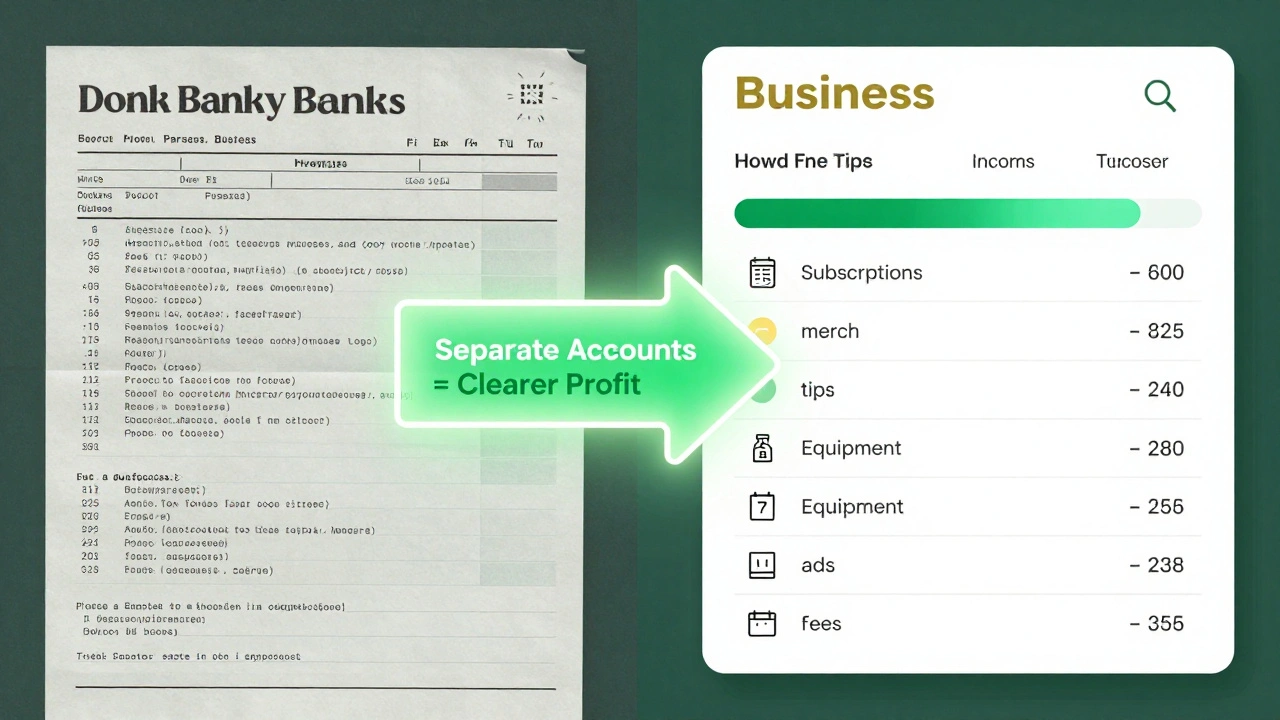
- Not separating personal and business money. If you’re using your personal bank account for studio income, you’re asking for trouble. Open a separate business account-even if it’s just a free one from Capital One or Chase. It makes tracking 10x easier.
- Ignoring payment fees. Many creators think they made $3,000 in sales. But after Stripe takes 3.5% + $0.30 per transaction, they actually net $2,780. That’s a 7% loss right there. Always calculate net income after fees.
- Thinking "more content = more profit." If you’re posting 10 videos a week but spending 30 hours editing them, you’re not scaling-you’re burning out. Track your time. If you’re making $15/hour after expenses, you’re better off outsourcing editing or cutting back.
Real-World Example: Sarah’s Studio
Sarah runs a solo adult studio. In Q4 2025, she tracked her numbers using a simple P&L. Here’s what she found:
| Category | October | November | December |
|---|---|---|---|
| Revenue | $3,800 | $4,100 | $5,200 |
| Payment Fees | $145 | $158 | $195 |
| Software Subscriptions | $85 | $85 | $85 |
| Marketing Ads | $300 | $250 | $400 |
| Equipment Depreciation | $60 | $60 | $60 |
| Home Office | $120 | $120 | $120 |
| Total Expenses | $710 | $673 | $860 |
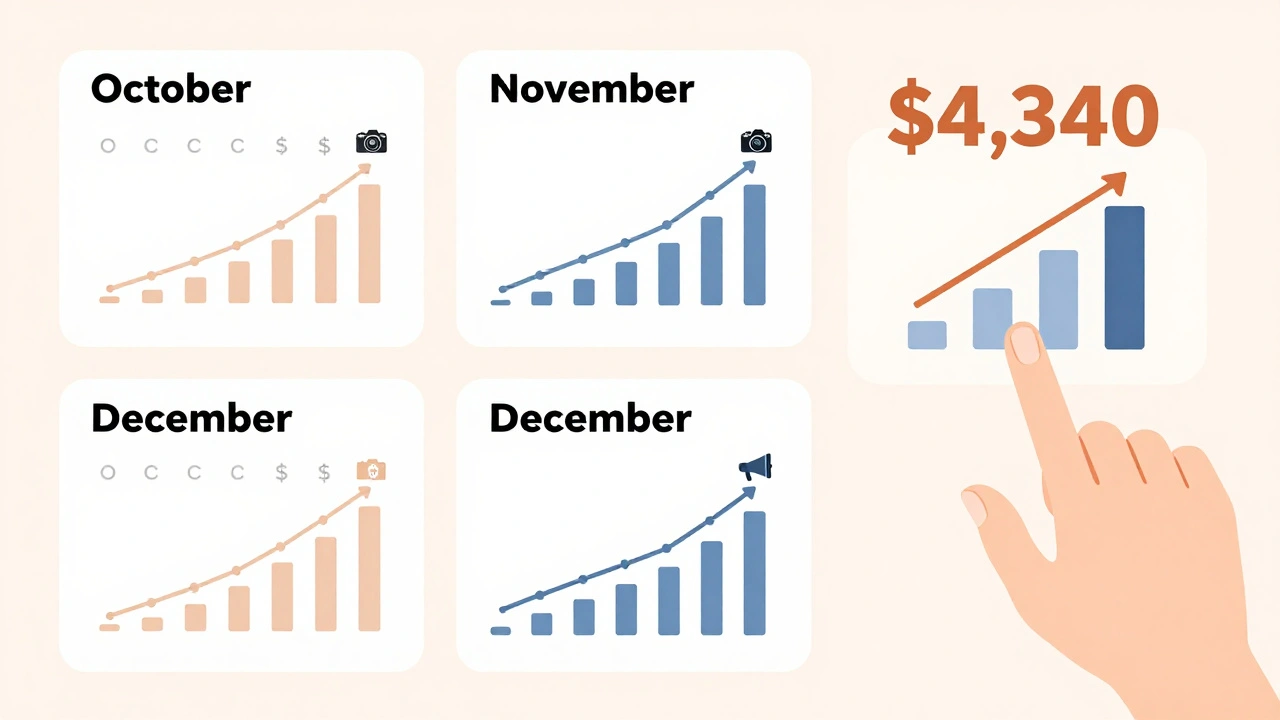
| Net Profit | $3,090 | $3,427 | $4,340 |
She noticed her marketing costs jumped in December-and so did her profit. That told her her ad strategy worked. She also saw her software costs stayed flat, meaning she didn’t need more tools. By January, she doubled her ad budget. Revenue jumped again.
What to Do With the Numbers
Once you have this data, you can make smarter decisions:
- If your net profit is under $1,000/month, it’s time to raise prices or cut costs.
- If your payment fees are over 5% of revenue, switch processors or bundle transactions.
- If your marketing spend isn’t bringing in 3x its cost, stop it.
- If your equipment cost more than $1,000, depreciate it over 3 years-not write it off all at once.
Most creators think profit is about how much they earn. But real profit is about how much you keep after everything else. That’s the number that lets you sleep at night.
Free Download: Your Profit and Loss Template
We’ve built a simple, editable Google Sheet template designed for independent adult studios. It auto-calculates your net profit, tracks monthly trends, and flags if your expenses are too high.
Just enter your income and expenses each month. The sheet does the rest. No formulas to mess up. No accounting degree needed.
Download it here: [Free Profit and Loss Template for Adult Studios]
Use it for one month. Then look back. You’ll be surprised how much clearer your business becomes.
Frequently Asked Questions
Do I need to register my adult studio as a business?
It depends on your location and income. In the U.S., if you earn over $400 from self-employment, you must report it to the IRS-even if you haven’t registered a business. Many creators operate as sole proprietors. But if you’re making $50K+ a year, forming an LLC can protect your personal assets and offer tax benefits. Talk to a tax professional who understands adult content regulations.
Can I write off my camera or lighting gear?
Yes. Equipment used for your studio is a business expense. If it costs under $2,500, you can deduct the full amount in the year you buy it. For more expensive gear, you can depreciate it over 3-5 years. Keep receipts and note the date of purchase. Even a $150 ring light counts.
What if I make money on multiple platforms?
List each platform’s income separately in your P&L. That way, you can see which one is most profitable. Some creators make 70% of their income on OnlyFans but spend 40% of their time managing FanCentro. That’s not efficient. Use your P&L to double down on what works.
How do I handle taxes if I’m not in the U.S.?
Tax rules vary by country. In the UK, you’ll need to register as self-employed with HMRC. In Canada, you report income as business earnings on your T2125 form. In Australia, you need an ABN and report under the GST system. The key is to track your income and expenses no matter where you live. A P&L gives you the data you need to file correctly.
Should I hire an accountant who specializes in adult content?
Not necessarily-but you should hire someone who has worked with content creators before. Many traditional accountants refuse to work with adult businesses. Look for someone who handles freelancers, influencers, or digital creators. They know how to classify income, handle cross-border payments, and maximize deductions without raising red flags.
Next Steps
Start today. Open a blank spreadsheet. Type in your last month’s income. Add your expenses. Calculate the difference. That’s your profit. Now do it again next month. In three months, you’ll know exactly how your studio is performing. You won’t be guessing. You’ll be deciding.
Profit isn’t about how much you make. It’s about how much you keep. And that starts with one simple sheet.