

Quick Guide: Key Takeaways
- Informed Consent is active, voluntary, and can be withdrawn at any moment without penalty.
- Coercion uses psychological pressure, financial traps, or threats to force compliance.
- Red flags include isolated living conditions, restricted access to IDs, and scripts provided by "managers."
- True consent requires full transparency about risks, payment, and the final use of the content.
To get this right, we have to start with the basics. Informed Consent is a voluntary agreement based on a full understanding of the risks, benefits, and conditions of an activity. In a professional adult setting, this means the performer knows exactly what will be filmed, who will see it, where the money goes, and that they have the power to stop the scene instantly. If any of those pieces are missing, you aren't dealing with consent; you're dealing with a gamble.
The Anatomy of Coercion
Coercion isn't always a guy with a gun. In the modern adult industry, it's often a slow burn. Coercion is the practice of forcing another party to act in an involuntary manner through the use of threats, intimidation, or manipulation. It's a psychological game designed to make the victim feel like they have no other choice.
Consider the "Debt Bondage" trap. A recruiter might pay for a performer's flight, a fancy hotel, and new wardrobe. Suddenly, the performer is told they owe $5,000 and can't leave until the debt is paid. This isn't a business loan; it's a tool of control. When someone is working to pay off an undefined or inflated debt, their informed consent is effectively erased because the cost of saying "no" is too high.
Then there's the "Emotional Grooming" phase. A manager might start by acting like a protector or a romantic partner. They isolate the performer from friends and family, telling them, "No one understands you like I do." Once the isolation is complete, the manager starts pushing boundaries-asking for a "small favor" in a scene that the performer isn't comfortable with. Because the performer relies on this person for emotional support, they comply to keep the relationship stable. This is coercion masked as love.
Spotting the Red Flags in Real-Time
If you're a producer, a fellow performer, or a venue manager, you need to look for patterns, not just single words. A person might say they are fine, but their environment tells a different story. Look for these specific indicators:
- Controlled Communication: The performer is never allowed to speak alone. A "manager" or "agent" insists on translating or speaking for them, even if the performer speaks the language.
- Lack of Documentation: The person doesn't have their own passport or ID. It's "being kept safe" by someone else. This is a classic hallmark of Human Trafficking, where the removal of travel documents prevents the victim from escaping.
- Scripted Responses: When asked how they are, they give a rehearsed, overly formal answer that doesn't match their body language.
- Financial Disconnection: They have no direct access to their earnings. All money goes to a third party who "manages the taxes."
| Feature | Informed Consent | Coercion / Trafficking |
|---|---|---|
| Decision Power | Performer chooses scenes and partners. | Manager/Pimp dictates the work. |
| Financials | Direct payment to the performer. | Payment goes to a third party. |
| Boundaries | Clear "hard limits" and safe words. | Limits are ignored or mocked. |
| Mobility | Free to leave the set or city. | Movement is monitored or restricted. |

The Role of Legal Frameworks and Safety Standards
To combat these issues, the industry has moved toward more rigorous standards. 2257 Compliance is a U.S. federal regulation requiring producers of adult content to maintain records of performers' ages and identities. While it's often viewed as a paperwork headache, it's actually a vital safety tool. When a performer is required to provide their own government ID directly to the producer, it creates a paper trail and confirms that the person is an adult acting of their own volition.
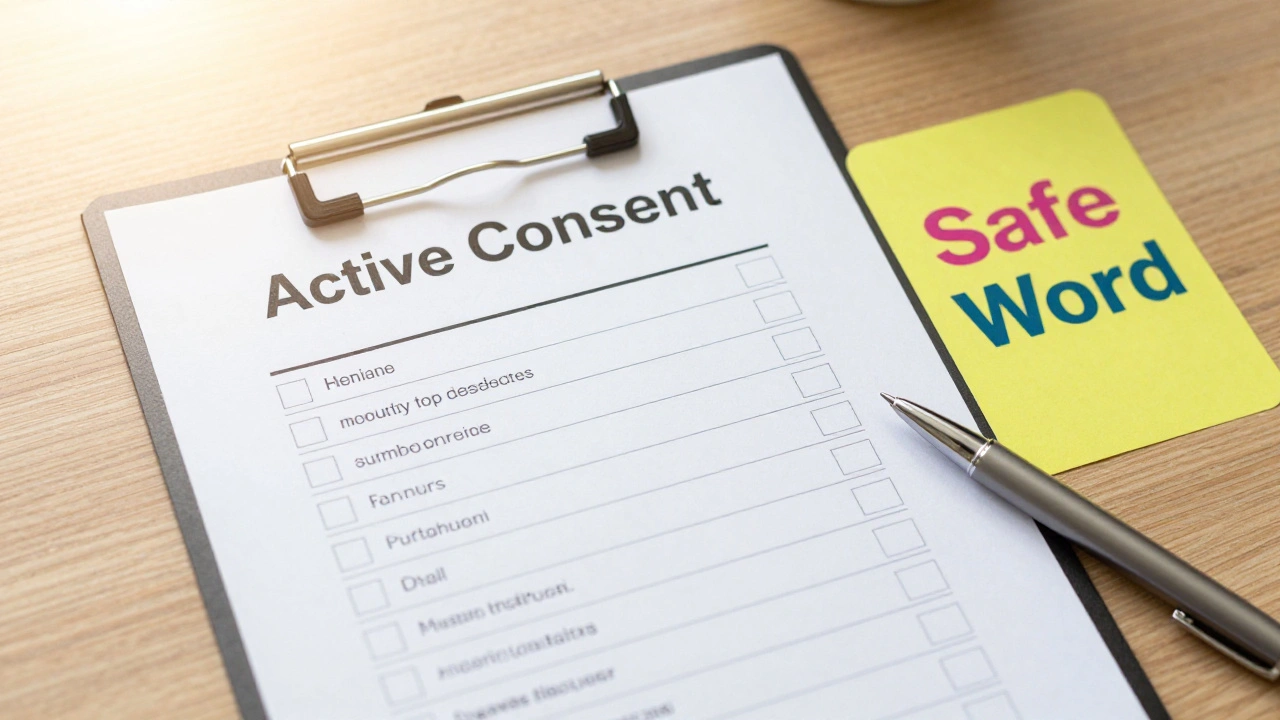
However, paperwork isn't enough. We need the implementation of "Active Consent" protocols. Instead of asking, "Is this okay?" (which can be answered with a coerced "yes"), professionals are moving toward specific checklists. A performer checks off exactly what acts they agree to and what they will not do. This document is signed and dated, and if the scene deviates from that list, it is a violation of consent, regardless of what is said in the heat of the moment.
How to Intervene Without Escalating Danger
If you suspect someone is being coerced, your first instinct might be to confront the manager. Don't do this. Confronting a trafficker in front of the victim can lead to immediate retaliation against that person once you've left the room.
Instead, try to create a window of privacy. Ask the manager for a moment to discuss a technical detail, or ask the performer to help you with something in another room. Once you are alone, ask open-ended, non-judgmental questions. Instead of "Are you being trafficked?", try "Do you have access to your passport?" or "Do you feel safe going home tonight?"
Provide them with resources they can access privately. A small slip of paper with a hotline number or a suggestion to use a "hidden' browser tab to search for help is more effective than a loud confrontation. If the danger is immediate, contact local authorities or specialized organizations like the National Human Trafficking Hotline.
Building a Culture of Transparency
The only way to truly eliminate coercion is to make the adult industry a place where transparency is the default. This means normalizing the use of Safe Words-pre-agreed signals that stop all action immediately. When a safe word is used, the scene stops, the lights come up, and the performer's autonomy is restored instantly. This creates a psychological safety net that tells the performer: "You are in control here."
We also need to stop the stigma around "quitting." Many coerced performers feel they can't leave because they've "sold their soul" or are too ashamed to tell their families. By fostering a community that supports performers in transitioning out of the industry, we remove one of the primary psychological chains that traffickers use to keep people trapped.
Can someone consent to a scene and then be coerced later?
Yes. Consent is a continuous process, not a one-time signature. A performer may initially agree to a project, but if the conditions change-such as being told they must perform an act they previously refused or being threatened with leaked footage-the original consent is voided. Coercion can enter the equation at any point in a professional relationship.
What is the difference between a strict contract and coercion?
A legal contract outlines expectations, pay, and deliverables; it can be breached, and the penalty is usually financial or professional. Coercion involves threats to a person's physical safety, reputation, or family, or the use of psychological manipulation to force compliance. If the "penalty" for breaking a contract is violence or blackmail, it is no longer a contract-it's coercion.
How do I handle a situation where I think a colleague is being controlled?
Prioritize the victim's safety. Avoid confronting the controller. Try to establish a private connection with the performer, offer a listening ear, and provide them with a way to contact help (like the National Human Trafficking Hotline) privately. Do not force them to leave the situation if they aren't ready, as this can put them in more danger.
Is financial dependence always a sign of coercion?
Not necessarily. Many people rely on their income for survival. However, it becomes coercion when a third party controls that money to manipulate the performer's behavior. If a manager takes the paycheck and only gives back a small allowance, or uses the money to create a "debt" that can never be paid off, that is a major red flag for trafficking.
What should I do if I've already filmed content that I now realize was coerced?
Document everything. Save messages, emails, and any evidence of threats or payments. Reach out to a legal professional or a victims' advocate who specializes in adult industry law. There are legal avenues to have non-consensual or coerced content removed from platforms through DMCA takedowns or specific legislation regarding "non-consensual intimate imagery."
Next Steps for Industry Safety
Whether you are a creator or a producer, the goal is a zero-tolerance environment for coercion. If you're a producer, start by implementing mandatory, written checklists for every scene. If you're a performer, keep your own copies of all IDs and contracts in a secure cloud folder that only you can access. If you're a fan or a consumer, support creators who are transparent about their boundaries and a production company that prioritizes performer wellness over maximum profit. The more we treat informed consent as a non-negotiable right rather than a suggestion, the harder it becomes for traffickers to operate in the shadows.