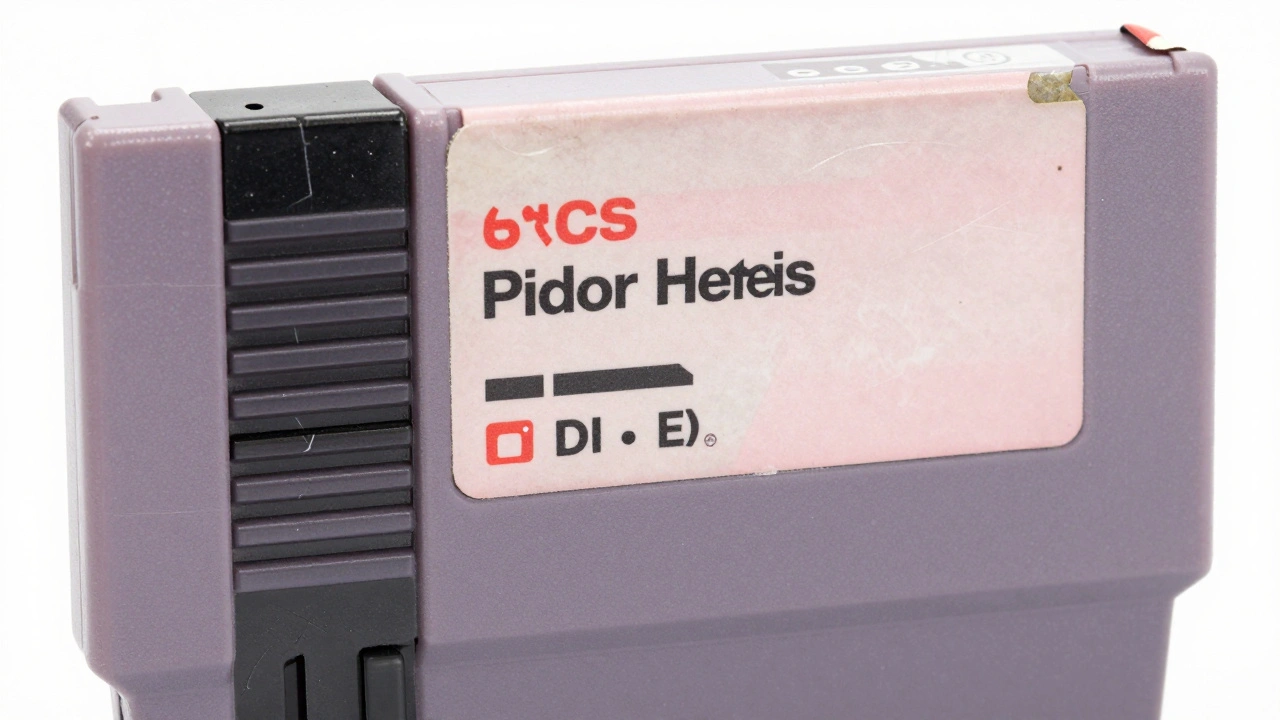

Ever opened up an old NES or Sega Genesis cartridge, stared at the label, and wondered if it’s worth sending off for professional grading? You’re not alone. Collectors all over the world are doing the same thing-evaluating their games before handing them over to services like WATA Games, CGC Video Games, or PSA. And the key to doing this right? Learning how to pre-grade using the 10-point scale. This isn’t guesswork. It’s a system built on decades of collector experience, and getting it right can mean the difference between a game that sells for $200 and one that sells for $2,000.
Why the 10-Point Scale Matters
Back in the early 2000s, grading retro games was messy. Some collectors used a 100-point scale, others just said "mint," "excellent," or "junk." But as prices for sealed, original cartridges started climbing into the thousands, the industry needed something consistent. That’s when the 10-point scale took over. It’s the same scale used for comic books and trading cards-simple, clear, and universally understood. A 10.0 means perfect. A 1.0 means barely playable. Everything in between is measured in small, meaningful steps.Today, every major grading service-WATA, CGC Video Games, PSA-uses this scale. That means if you can accurately estimate your game’s grade before submission, you’ll save money, avoid disappointment, and know exactly what you’re dealing with. No more surprises when the slab arrives.
What You’re Really Looking At: The Four Critical Areas
Pre-grading isn’t about one thing. It’s about four things, all of which matter equally:- Label condition
- Cartridge housing (the plastic case)
- Corners and edges
- Seal quality (if sealed)
Let’s break each one down.
Label Condition: The First Thing You Check
The label is the face of the game. It’s what people see first. And it’s also the most fragile part.Look for:
- Color fading-especially reds turning pink or blacks turning gray. Sunlight is the enemy here. A faded label can drop your grade by a full point.
- Peeling corners or edges. Even a tiny curl on the top right corner counts.
- Sticker residue. If someone slapped a price tag on it and peeled it off, that sticky gunk left behind? That’s a deduction.
- Writing on the label. Names, dates, or "property of" scribbles? You’re looking at 8.5 or lower, no matter how good the rest looks.
- Back label condition. Many collectors forget this. The back should be clean, with no tears or smudges. A torn back label can knock a game from 9.6 down to 8.8.
Cartridge Housing: Watch for Cracks
The plastic case is the backbone. And it’s brittle. Older cartridges, especially from the NES and SNES era, were made with a type of plastic that gets fragile over time. Even slight stress-like being dropped in a drawer or squeezed in a box-can cause micro-cracks.Cracks are the worst thing you can find. They’re permanent. They can’t be fixed. And they’re an automatic grade killer.
- A single hairline crack? You’re looking at 8.0 at best.
- Two or more cracks? Drop to 7.5 or lower.
- Cracks near the cartridge slot? That’s a 6.0 or below. It affects function, not just looks.
Hold the cartridge up to a bright light. Tilt it. Look for lines that catch the light. If you see them, you’ve found your flaw.
Corners and Edges: Sharp or Rounded?
This is where most people mess up. They think "no visible scratches" means "high grade." But corners tell the real story.Cartridges have eight corners. Four on the top, four on the bottom. A perfect 10.0 has sharp, pointed corners-like new. But after years of handling, storage, and shelf wear, those corners soften.
- Sharp corners? That’s 9.8 or higher.
- Slightly rounded? That’s 9.6.
- Noticeably soft? 9.2 or lower.
- Flattened or crushed? You’re in the 8.0 range.
Use your thumbnail. Gently run it along the edge. If it catches on a soft spot, that’s wear. If it slides smoothly, you’re still in the high end.
Seal Quality: Separate from the Box
If your game is still sealed, this is where things get interesting. WATA Games made this clear: the box and the seal are graded separately.Seal quality isn’t about the box-it’s about the plastic wrap around it. Here’s what matters:
- Shrink wrap tightness. It should hug the box like a second skin. If it’s loose or sagging, you lose points.
- Seam integrity. Original seals have an "H-seam" or "vent holes" on the back. If that seam is broken, torn, or resealed, your seal grade drops.
- Scuffs or nicks. Even tiny scratches on the plastic? That’s a B+ or lower.
- Punctures. A hole from a pin, staple, or sharp object? That’s a C or worse. It’s not just cosmetic-it’s structural.
Seal grades are usually given as A++, A, A-, B+, etc. But remember: a game can have a 9.8 box and a B+ seal. That’s still a valuable item-but not a top-tier investment.
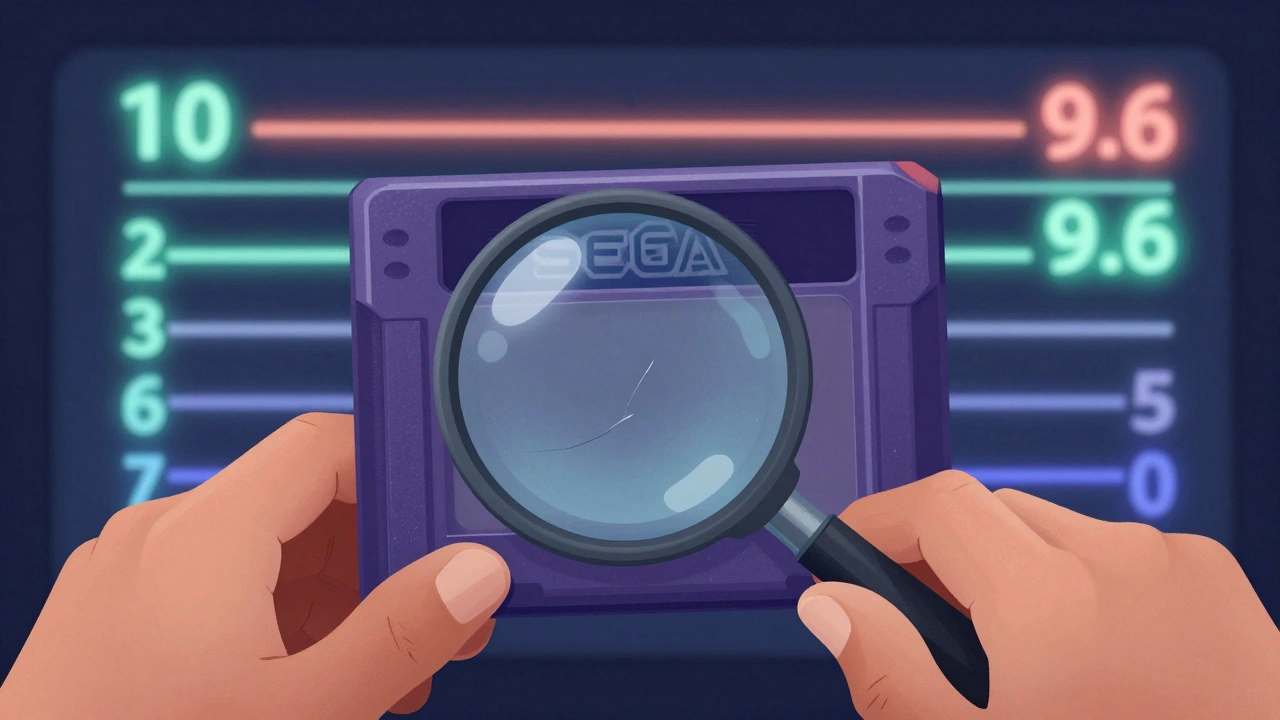
The 10-Point Scale Breakdown: What Each Grade Really Means
Here’s the real guide-no fluff, no marketing. Just what each grade looks like in the wild.- 10.0 - Theoretical perfection. No visible flaws under magnification. Label colors vibrant, corners razor-sharp, seal flawless (if sealed). You’ll rarely see this outside of factory-sealed inventory.
- 9.8 - Almost flawless. One tiny imperfection: maybe a barely-there scratch on the label, or a corner that’s 99% sharp. This is what most "mint" claims actually are.
- 9.6 - Great condition. Still premium. Minor wear: slight color fading on one edge, one rounded corner, or a faint crease you can only see at an angle.
- 9.4 - Very solid. Light handling marks. A few small dents, maybe a light scratch on the box. Corners are softening but not rounded yet.
- 9.2 - Very solid overall. Moderate wear. Box has some scratches, corners are noticeably soft, label has minor fading. Still a strong collectible.
- 9.0 - Solid. Now you’re at the edge of "investment grade." You’ll see box creases, multiple small dents, and color fading. This is where many collectors start to question whether grading is worth it.
- 8.5 - Above average. Clear signs of use. One major crease down the side, corners crushed, label peeling at one edge. This is the line between "collector" and "casual."
- 8.0 - Average. One significant flaw: a large corner crush, deep scratches, or major label fading. The cartridge still works, but it’s not a showpiece.
- 7.5 and below - Significant wear. Warped plastic, large tears, deep dents, or holes. These are for players, not collectors.
Common Mistakes in Pre-Grading (And How to Avoid Them)
Most collectors think they’re good at this. They’re wrong.- Mistake 1: "It looks fine to me." - You’re not a professional grader. Use a bright LED lamp. Get a magnifying glass. Look at it under different angles. What looks clean in daylight might have a hairline crack under a 10x magnifier.
- Mistake 2: "The label is faded, but the box is intact." - Faded labels are the #1 reason games drop below 8.0. Red ink turning pink? That’s a 2-point drop right there.
- Mistake 3: "The seal is just a little scuffed." - A scuff isn’t a scratch. It’s a surface mark that means the plastic was handled roughly. That’s not "A" grade. It’s a "B."
- Mistake 4: "I’ll just send it in and see what happens." - That’s how you waste $40 on a grading fee for a game that’ll come back as a 7.0. Pre-grade first. Know your numbers.
How to Document Your Pre-Grade
Before you send anything in, take photos. Not just one. Take five.- Front of the cartridge (full view)
- Back of the cartridge (label and seam)
- Top and bottom corners (close-up)
- Seal (if sealed) from all four sides
- Any flaw you see (zoom in-show the scratch, the crack, the peel)
Label each photo. "Front label, slight red fading." "Top-right corner, soft edge." This isn’t just for you. If you’re selling later, these photos become your proof.
When to Grade (And When to Skip It)
Not every game needs grading. Here’s the rule:- Grade if you think it’s 9.0 or higher.
- Don’t grade if it’s 8.0 or below.
Why? Because grading costs $30-$60 per game. A game worth $150 won’t make back that fee if it grades as an 8.2. But a 9.6? That could jump to $1,200. The math only works when you’re in the top tier.
Also, if the cartridge is cracked, don’t bother. No service will give it a grade above 6.0. And if the label is half gone? Save your money.
Pre-grading isn’t about being perfect. It’s about being honest. And the more honest you are, the better your decisions will be.