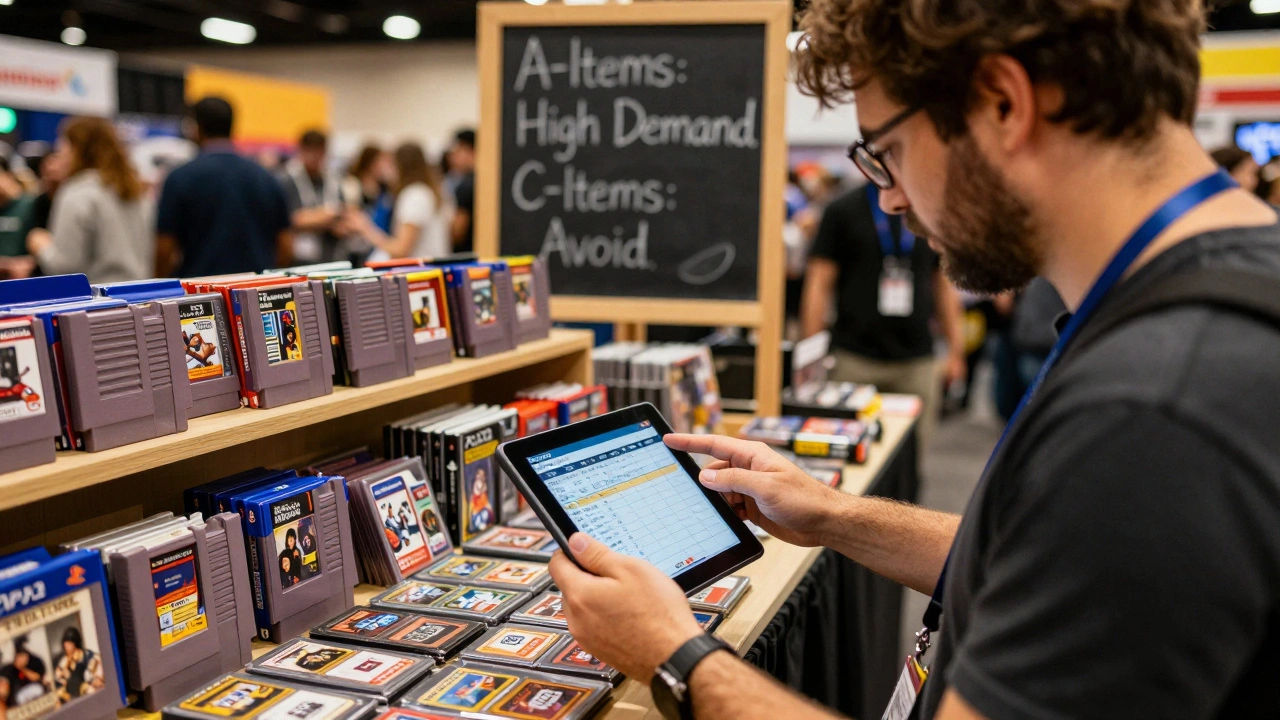

Walking into a video game expo and seeing rows of vendors with crates full of NES cartridges, PS2 boxes, and sealed TCG singles is exciting-but if you’re a vendor, it’s also a minefield. You show up with your entire stock, only to realize half of it is already on every other booth. Or worse, you brought 20 copies of a game that sold out last year and no one even glanced at it. Researching vendor inventories before a game expo isn’t just smart-it’s the difference between making rent and packing up early.
Start with the Expo’s Official Vendor List
Most major expos, like the Retro Gaming Expo in Portland or the Midwest Classic Con, publish a list of registered vendors weeks before the event. This isn’t just a directory-it’s your first intelligence report. Go through it. Note names. Look up their websites, Instagram pages, eBay stores, or Etsy shops. Many vendors post their upcoming inventory ahead of time, especially if they’re clearing out old stock. You’ll spot patterns: one vendor always brings 50 copies of EarthBound, another has 200 Magic: The Gathering singles from the 2018-2021 era. This tells you what’s saturated.
Don’t just look at their current listings. Search for past expo photos. Reddit threads like r/retrogaming or r/TCG are goldmines. Someone always posts a booth tour video. Watch for what’s on display. If three vendors have the same rare Super Mario 64 box with the original manual, you’re probably not going to move yours unless you drop the price or bundle it.
Use Inventory Tools Designed for Game Retailers
Most serious vendors use point-of-sale (POS) systems built for game stores. Tools like BinderPOS a cloud-based inventory and sales system designed for retro game retailers and GameSmart POS a retail management platform that tracks TCG singles, console inventory, and pre-orders for game shops let vendors see what’s selling fast, what’s sitting, and what’s been marked down. You won’t get direct access to their databases-but you can reverse-engineer their behavior.
How? Track price changes. If a vendor listed a Legend of Zelda: Ocarina of Time cartridge at $180 last month and now it’s $140, they’re trying to move it. That means demand dropped-or they’re overstocked. If another vendor has had the same price for six months, they’re confident. Use that to adjust your pricing. If you’re bringing the same item, you can’t compete unless you’re cheaper or have a better condition.
Apply the 80/20 Rule to Your Own Stock
Before you even think about what others are bringing, clean up your own inventory. The Pareto Principle a business concept stating that roughly 80% of outcomes come from 20% of causes applies hard here. In game retail, 20% of your items usually generate 80% of your sales. That means you need to know exactly which ones they are.
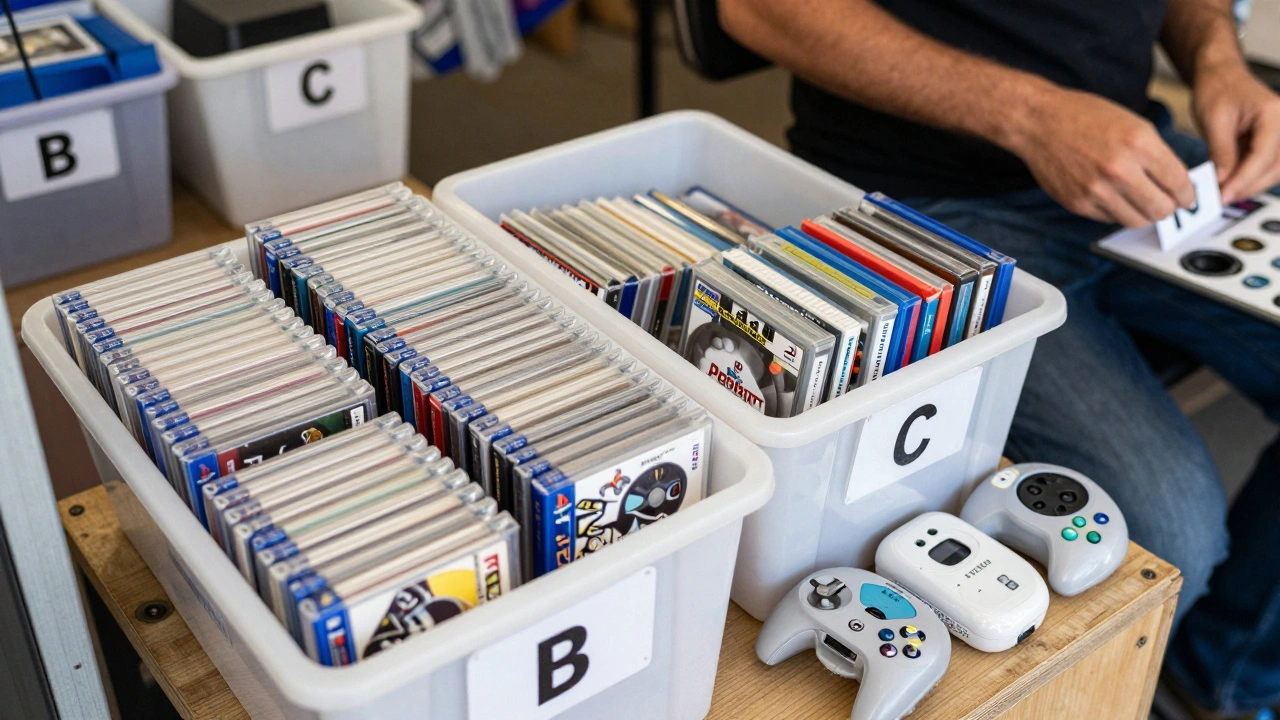
Go through your stock. Use barcode scanners if you have them-most vendors do. Sort everything into three groups:
- A-items: High demand, fast turnover (e.g., sealed PS1 games, popular TCG rares)
- B-items: Steady but slow sellers (e.g., PS2 games with no hype)
- C-items: Low demand, hard to move (e.g., obscure GameCube peripherals, damaged manuals)
Bring 80% A-items, 15% B-items, and no more than 5% C-items. If you’re bringing 200 units, that’s 160 A, 30 B, and 10 C. Anything else is dead weight. You’ll be moving boxes all day, and you don’t want to be stuck with 50 copies of Shenmue II when no one’s even asking.
Watch What Sells Out at Past Expos
Check YouTube. Search for “[Expo Name] 2025 vendor haul” or “Retro Gaming Expo 2024 sales recap.” You’ll find videos where vendors show what they sold-and what they didn’t. One vendor at the 2025 Retro Gaming Expo sold 75 game guides in a single day, leaving only five. Another had a bin of 100 GoldenEye 007 cartridges and sold every single one by noon. That’s data.
Also look at auction sites. Go to eBay and filter for “sold items” from the last 90 days for games you plan to bring. If 80% of the listings sold for $100 or more, you’re good. If 70% went unsold or were marked down, rethink your pricing. You’re not guessing anymore-you’re using real market data.
Anticipate the Logistics
Inventory isn’t just about what you bring-it’s about how you bring it. One vendor from Seattle brought 15 boxed PS2 consoles to a 2024 expo. By 2 p.m., he had sold 12. But he couldn’t reorganize his booth because the boxes were too heavy. He ended up stacking them on the floor, blocking foot traffic. His sales dropped after lunch.
Plan your booth layout before you even pack. Large boxes? Keep them on low shelves or the floor. Singles? Use clear plastic bins with labels. TCG cards? Use display cases with price tags. You need to see your inventory at a glance. If you can’t find something in five seconds, neither can a customer.
Also, know the expo’s rules. Some venues, like the Retro Gaming Expo, have 24-hour security. Others don’t. If you’re bringing high-value items-sealed N64 games, factory-sealed Dreamcast titles-consider insurance. A single lost copy of Super Mario Bros. 3 in mint condition can cost you $500. Don’t risk it.
Talk to Vendors Before the Show
Don’t be shy. Reach out. Send a polite DM to a few vendors whose inventory you’ve studied. Ask: “Hey, I’m bringing a few copies of Chrono Trigger to the expo-any idea how many others are bringing it?” Most will answer. They’ve been there. They know the game.
Join niche forums. The Retro Game Collector Discord server has a #pre-expo-inventory channel where vendors post their lists. One guy posted his entire inventory for the upcoming Portland Retro Expo. Within hours, others replied: “I’ve got 40 of those. Don’t bring more than 10.” That saved him $2,000 in unsold stock.
Networking isn’t just for making friends. It’s for avoiding mistakes.
Bring a Backup Plan
No matter how well you research, something will surprise you. Maybe a vendor brings 30 copies of a game you thought was dead. Maybe the crowd goes crazy for a game you didn’t even bring.
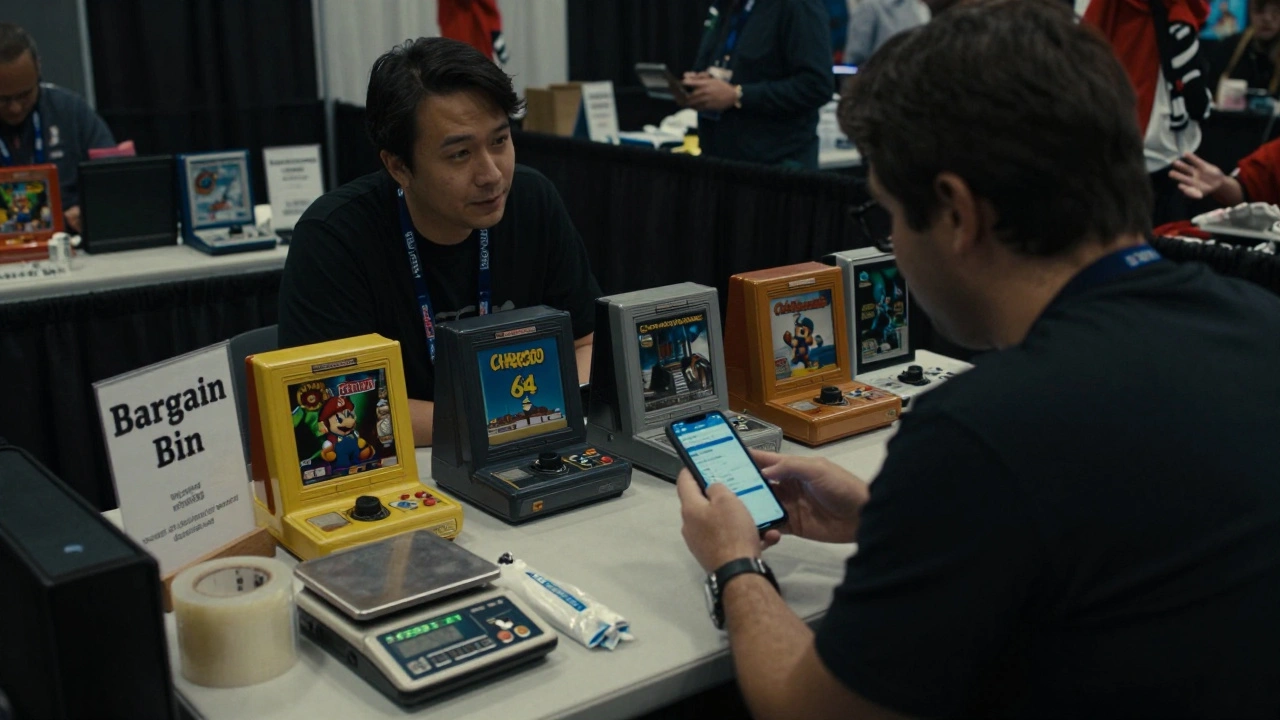
Always have a flexible pricing strategy. If something isn’t moving by 2 p.m., drop the price 20%. Have a “bargain bin” ready for last-minute deals. And carry a portable scale and shrink-wrap tape. A cracked case? Bundle it with a manual and a poster. People love a deal.
Bring extra cash for last-minute buys. Sometimes, you’ll see a vendor with a crate of unopened Metroid Prime copies and realize they’re overstocked. You can pick them up cheap and resell them at your booth. That’s how some vendors turn a small booth into a profit.
Can I find out exactly what other vendors are bringing before a video game expo?
No, most vendors don’t share exact inventory lists publicly. But you can get very close by studying their online stores, past expo videos, eBay sales data, and community forums. Combine these sources to build a reliable picture of what’s likely to be there.
What’s the most common mistake vendors make with inventory at game expos?
Bringing too much low-demand inventory (C-items) and not enough high-turnover items (A-items). Many vendors fill their booth with nostalgia pieces they love-but no one else wants. Focus on what sells, not what you collect.
Do I need expensive POS software to research vendor inventories?
No. While tools like BinderPOS and GameSmart POS help manage your own stock, you don’t need them to research others. Use public data: eBay sold listings, social media posts, YouTube videos, and vendor websites. Free tools work if you’re patient.
How early should I start researching vendor inventories?
Start at least six weeks before the event. That’s when most vendors finalize their stock and post updates online. By four weeks out, you should have a clear idea of what’s saturated and what’s scarce.
Should I bring more inventory than I think I’ll need?
Never. Overstocking is the fastest way to lose money. If you’re unsure, bring less. You can always restock from your car or home if something sells out. But if you’re stuck with 50 unsold copies of a game no one wants, you’re out that money-and the space.
Final Tip: Be Ready to Adapt
The best vendors don’t just show up with a plan-they adjust on the fly. If you see a line forming at a booth selling Goldeneye cartridges, you might want to move yours to the front. If no one’s touching your Jet Set Radio box, bundle it with a poster and drop the price. The expo isn’t a static event-it’s a live market. Your inventory isn’t just stock. It’s a conversation with the crowd. Listen. Adjust. Sell.