
- 0
Starting a retro video game collection doesn’t mean you need to empty your bank account on eBay. In fact, the most satisfying collections are built slowly, one game at a time, with patience and strategy. Too many people jump in, see a $200 copy of Super Mario Bros. 3 on eBay, and panic-buy it-only to realize later they don’t even like Mario games. The key isn’t to buy everything. It’s to buy what matters to you.
Start with One System, Not All of Them
Don’t try to collect every console from the 80s and 90s. That’s how you end up with a shelf of unopened Genesis games and a NES you never play. Pick one system you loved as a kid-or one you always wanted to own. For me, it was the Sega Genesis. I grew up playing Altered Beast and ToeJam & Earl at my friend’s house. That’s all I needed to start. Once you pick your system, research what games are worth your time. Not every cartridge is rare. A lot of the games you see in bulk lots are sports titles from 1993 that nobody plays anymore. Stick to the classics: Mega Man 2, Contra, Streets of Rage 2. These are the games people still talk about. They hold value, sure-but they’re also the ones you’ll actually play.Know What’s Really Worth It
Market prices for retro games are wild right now. A sealed Super Mario Bros. sold for $100,000. But that doesn’t mean every sealed game is worth thousands. Most unopened cartridges are just plastic and cardboard. The real value is in the gameplay. Here’s what to look for:- Cartridge condition: Check for cracks, rust on the pins, or faded labels. A game with a broken case is worth 70% less.
- Manual and box: If you care about display value, yes, they add price. But if you just want to play? Skip them. A game without a box still works fine.
- Region lock: Japanese cartridges won’t work on American consoles without a mod. Stick to your region unless you know what you’re doing.
Where to Find Cheap Retro Games
Thrift stores, flea markets, and garage sales are still the best places to find deals. I found a working Sega Genesis for $15 at a local Goodwill last year. The controller was broken, but I replaced it for $8 online. Total cost: $23. That’s less than half the price of a new NES Classic. Here’s where to look:- Local thrift stores: Visit weekly. Inventory turns fast. A game that’s $5 today might be $20 next month if someone else spots it.
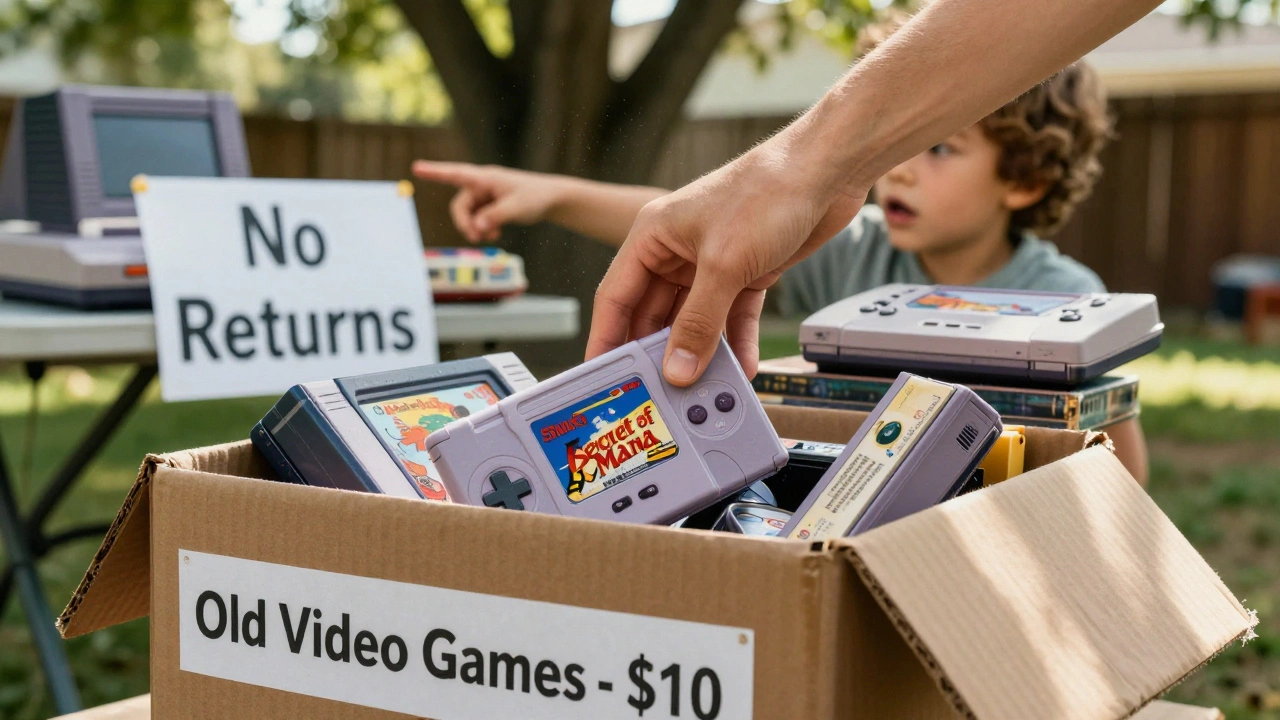
- Garage sales on weekends: People often don’t know what they have. I once bought a box of 20 SNES games for $10 because the owner thought they were "old Nintendo stuff." Turned out, three were worth $15 each.
- Facebook Marketplace: Search "retro games" and set alerts. People list them by accident all the time.
- Online bulk lots: eBay sellers often sell 50-game lots for $50-$100. Most are trash, but if you’re patient, you’ll find one or two gems. Don’t buy unless you’re okay with 90% junk.
Use Mini Consoles and Emulation
You don’t need original hardware to enjoy retro games. The NES Classic, SNES Classic, and Sega Genesis Mini all come with 30-40 pre-loaded games, perfect controllers, and save states. They cost $60-$80. That’s cheaper than buying five individual cartridges. And if you’re tech-savvy? Emulation works great. Install ZNES or RetroArch on an old laptop, plug in a $12 USB controller, and you’ve got a full NES library for under $50. You can even add cheat codes, rewind gameplay, and adjust screen filters. No need to hunt down rare cartridges. A lot of collectors hate emulation. But if you’re on a budget and just want to play Castlevania or Contra, why not? The joy is in the game, not the cartridge.Buy Compilations Instead of Individual Games
Why pay $100 for one Genesis game when you can get six for $30? Companies like Sega and Nintendo regularly release budget compilations. The Genesis 6-Pak includes Altered Beast, Golden Axe, Comix Zone, and three others-all in one cartridge. These bundles are perfect for beginners. You get variety, you save money, and you find new favorites you didn’t even know you wanted. I picked up the SNES Classic Edition and discovered Secret of Mana-a game I’d never played before. Now it’s one of my top five.Set a Budget and Stick to It
This is the most important rule. Decide how much you can spend per month. $20? $50? $100? Write it down. Then stick to it. I set mine at $30/month. That means one game, or one mini console, or a bulk lot. No more. If I see a game I want that costs $70? I wait. I watch. I check back in two weeks. More often than not, it drops to $40. Avoid the "I’ll just buy this one more game" trap. That’s how collections spiral out of control. You end up with 200 games you never play. Focus on quality, not quantity.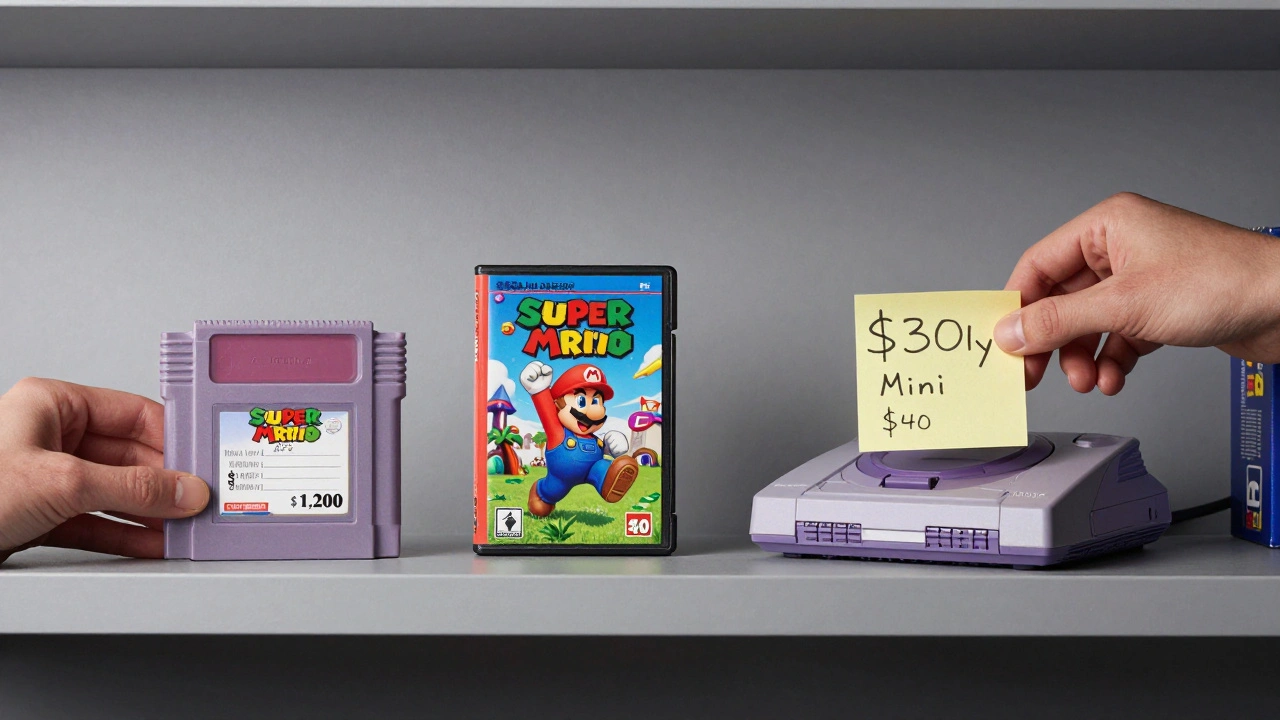
Trade, Don’t Just Buy
Some retro shops let you trade games for store credit. I traded five games I didn’t like for three I really wanted. No cash changed hands. I got better games, and the shop got rid of clutter. There are also online trade communities. Reddit’s r/retrogaming has a swap thread. You mail someone a game, they mail you one. It’s slow, but it’s free.Don’t Chase Sealed Games
Sealed games are beautiful. But they’re not playable. And they’re insanely overpriced. A sealed Super Mario World might cost $1,200. A used one? $40. Same game. Same fun. One you can play. One you just put on a shelf. If you want to collect sealed games, fine. But don’t start there. Play the games first. Fall in love with them. Then decide if you want to preserve them.Patience Wins Every Time
The best deals aren’t on eBay. They’re in the back of a thrift store bin. They’re in a garage sale box labeled "old video games." They’re in a Facebook post from someone who forgot they even had them. I waited six months to find a working Sega Genesis under $20. When I did, I felt like I won the lottery. Not because it was rare. Because I earned it. Building a retro collection isn’t about spending money. It’s about spending time. Learning what you like. Knowing the market. Waiting for the right moment. Your collection doesn’t need to be big. It just needs to be yours.What’s the cheapest way to start a retro game collection?
The cheapest way is to buy a retro mini console like the NES Classic or Sega Genesis Mini. They cost $60-$80 and come with 30-40 games built-in. If you want to go even cheaper, use an emulator on an old laptop with a $12 USB controller. You can play hundreds of games for under $50 total.
Are thrift stores still good for finding retro games?
Yes, especially if you visit weekly. Inventory changes fast, and people often don’t know what they’re selling. I’ve found working consoles for $10, boxes of games for $5, and even rare accessories like the Sega CD controller for $3. The key is consistency-don’t just go once.
Should I buy sealed or opened retro games?
Only buy sealed if you want to display it. If you want to play, always buy opened. Sealed games cost 5-10x more than used ones, and you can’t play them. A $40 used Super Mario Bros. gives you the same gameplay as a $1,000 sealed one. The joy is in playing, not preserving.
Is emulation legal?
Downloading ROMs for games you don’t own is legally gray. But if you own the original cartridge and make a backup for personal use, it’s generally accepted. Most people use emulation to play games they already own or can’t find anymore. It’s not about piracy-it’s about access.
How do I avoid overpaying on eBay?
Check PriceCharting.com first to see the average market price. Don’t bid on the first listing you see. Wait for auctions to end. Look for sellers with high ratings and clear photos. If a game looks too good to be true, it probably is. A game with a cracked case or missing box should cost 50-70% less than a perfect one.
What’s the best retro console for beginners?
The Sega Genesis Mini is ideal. It has 42 games, original-style controllers, save states, and rewind. It’s plug-and-play, no setup needed. If you prefer Nintendo, the SNES Classic is great too. Both cost less than five individual cartridges and let you try games before buying physical copies.
Can I trade my old games for cash or credit?
Yes. Stores like Retro Replay and local retro shops often offer trade-in programs. You bring in games you don’t play, and they give you store credit. Some even give you coins you can use later for discounts. It’s a smart way to refresh your collection without spending more.