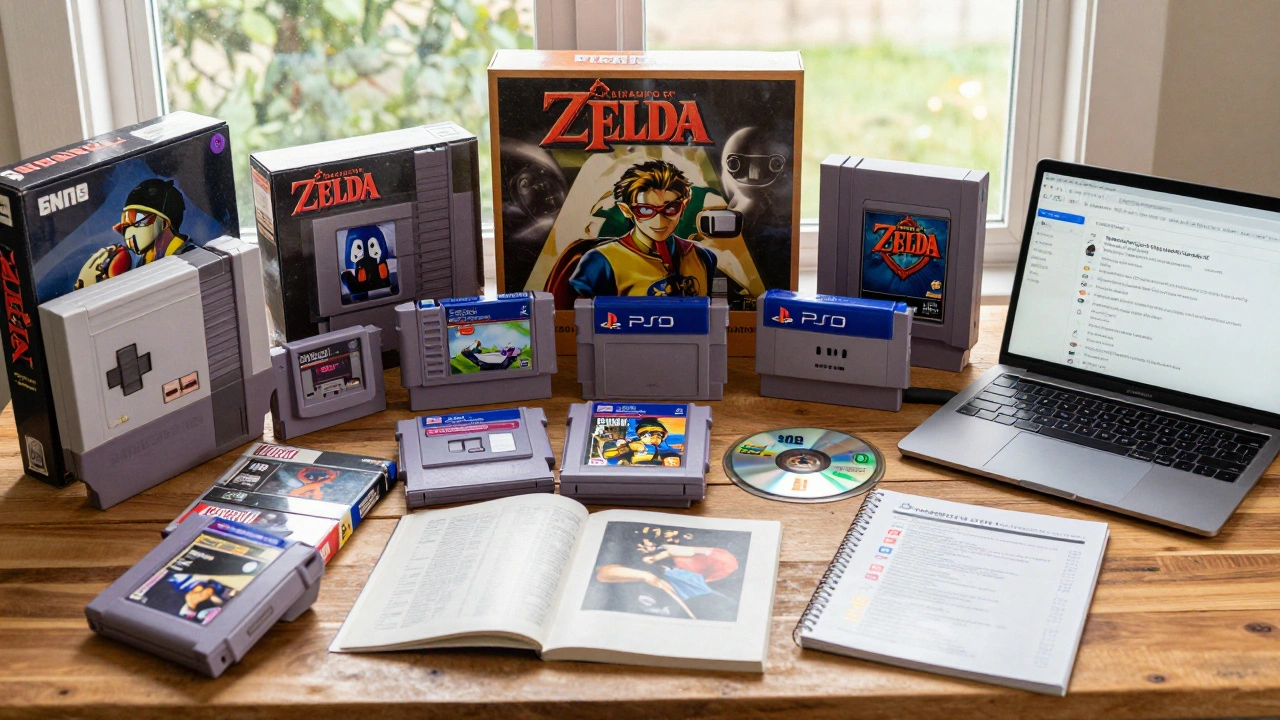

When you’ve got a closet full of old Nintendo cartridges, dusty PlayStation discs, and boxes of SNES games gathering dust, you’re not just holding onto nostalgia-you’re sitting on cash. But selling retro video game collections isn’t as simple as dropping them off at the nearest store. Selling retro video game collections requires knowing where to go, what to bring, and how to maximize your return. Not all stores pay the same. Not all games are worth the same. And if you don’t prepare right, you could walk away with pennies instead of dollars.
Know What You Have Before You Walk In
Start by sorting your collection. Don’t just grab a box of games and head out. Take time to separate them by system: NES, SNES, Sega Genesis, PlayStation 1, N64, Dreamcast, and so on. Then check each game for completeness. A game with its original box, manual, and artwork is worth 3 to 5 times more than a loose cartridge. A sealed, unopened NES game in mint condition? That could be worth hundreds. A worn-out PS2 disc with no case? Maybe $1.Use eBay to check recent sales. Search for the exact title, condition, and whether it includes the box. Filter for "Sold Items" to see what people actually paid-not just what sellers are asking. If you find three recent sales of "The Legend of Zelda: Ocarina of Time" for $180 with box and manual, you now have a real benchmark. Don’t guess. Use real data.
Don’t Expect Much from Chain Stores Like GameStop
GameStop and similar retailers are convenient, but they’re not your best bet for retro games. Most of them stopped accepting systems older than PS3 and Xbox 360 years ago. Even if they do take your N64 or PS1 games, they’ll pay you $1 to $3 per title. That’s not a sale-it’s a clearance.There’s one exception: trade-in promotions. GameStop runs these every few months, especially around holidays. During those windows, they might offer double or triple trade-in value. Keep an eye on their website or sign up for email alerts. If you’re planning to sell, time it right. Walk in during a promotion, and you might get $10 instead of $2 for a game you’d otherwise lose money on.
Heritage Auctions for High-Value, Graded Games
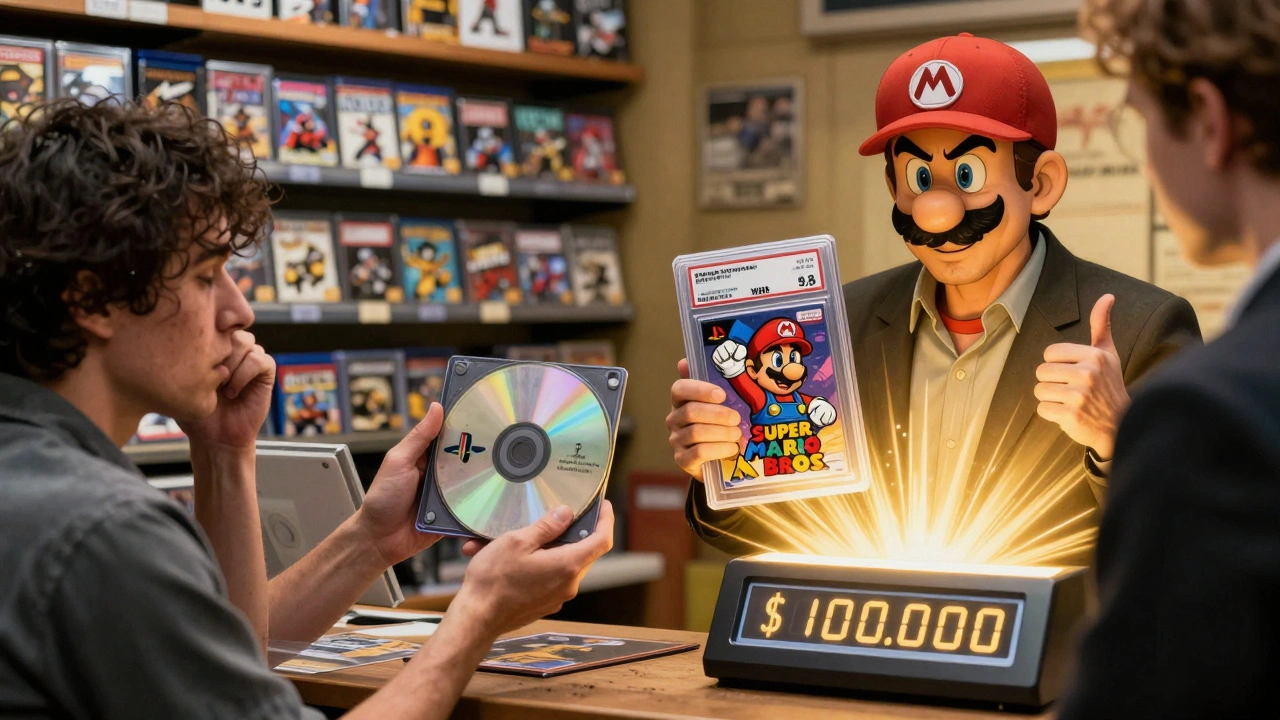
If you’ve got sealed, graded games-especially NES, SNES, or Sega Genesis titles with WATA or VGA certification-you’re looking at Heritage Auctions. This isn’t a local shop. It’s the auction house where rare games sell for thousands. A sealed "Super Mario Bros." with a WATA 9.8 grade sold for over $100,000 in 2024. Even unsealed, high-grade games regularly fetch $500 to $2,000.To sell here, you need to prepare properly. Clean the game gently. Don’t touch the label with bare hands. Keep it in its original plastic wrap if it’s still sealed. Submit photos and details through their online evaluation form. They’ll tell you if it’s worth auctioning. If they accept it, they’ll handle the listing, marketing, and payment. You get paid after the auction closes, minus their 15% to 20% fee. But if you’ve got a rare title, this is the only way to get top dollar.
eBay for Complete Vintage Collections
For games that are complete but not graded or sealed, eBay is your go-to. Buyers here pay real money for original boxes, manuals, and even inserts. A complete "The Legend of Zelda: A Link to the Past" with box and manual sells for $150 to $250. A PS1 copy of "Metal Gear Solid" with its original plastic case? $80 to $120.But eBay has a problem: counterfeit games. Thousands of fake cartridges from China flood the market. To compete, you must prove authenticity. Take clear photos of the label, the cartridge’s serial number, and the inside of the box. Write "100% Original, No Repros" in your listing. Mention the exact condition of the manual, box wear, and label fading. Buyers will ask. Be ready with answers.
For lower-value games-like sports titles from PS1 or PS2-bundle them. Sell 10 games as a lot for $30 instead of listing them one by one. It saves you time and attracts bulk buyers looking for cheap retro stock.
Local Buyers for Bulk or Bulky Collections
If you’ve got 50+ games, heavy consoles, or a full shelf of retro gear, a local buyer is the smartest move. No shipping. No waiting. No risk of lost packages. You get cash in hand.But here’s the catch: don’t haul your entire collection to a store. That puts you at a disadvantage. Buyers know you’re motivated. You don’t want to walk out with half your stuff unsold because you’re too tired to carry it back. Instead, invite them to your place. Send a few photos first. Say, "I’ve got 60 games, mostly SNES and N64, all with boxes. Can you come look?" Most serious buyers will come. They’ll assess on-site, make an offer, and pay you right there.
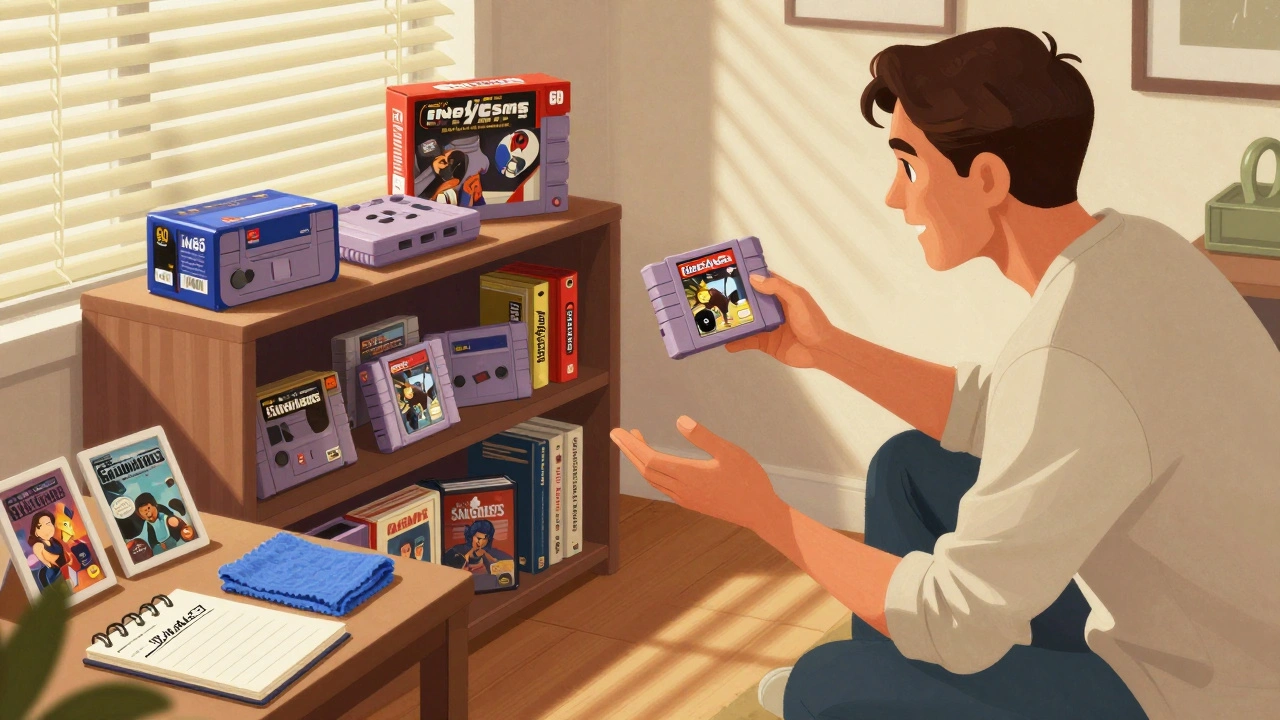
If you must go to them, bring only your top 10 most valuable games. Test them first. Make sure they turn on. Clean them. Use a microfiber cloth on the cartridges. Don’t show everything. Let them think you’ve got more. That gives you room to negotiate.
Amazon? Skip It for Retro
Amazon works great for PS3, Xbox 360, or newer games. But for anything older? Forget it. Their fees are high, their listing rules are strict, and buyers don’t trust retro listings there. You’ll spend hours uploading, pricing, and answering questions-and still get lowball offers. Stick to eBay or local buyers for retro.Final Prep Checklist
Before you sell, do this:- Sort games by system and condition
- Keep original boxes, manuals, and inserts
- Take clear photos of high-value items
- Check eBay sold listings for pricing
- For sealed/graded games: contact Heritage Auctions
- For bulk games: prepare bundled lots or invite a local buyer
- For low-value games: wait for a GameStop promotion
Don’t rush. Selling retro games isn’t a garage sale. It’s a strategic move. The right preparation turns clutter into cash. The wrong approach leaves you wondering why you got $20 for a collection that could’ve brought $1,200.
Can I sell retro games to GameStop for good money?
Generally, no. GameStop rarely accepts games older than PS3 or Xbox 360, and when they do, they pay $1 to $3 per game. The only time you might get better value is during a trade-in promotion, which happens a few times a year. Even then, payouts are still low compared to other options.
What’s the best way to sell sealed retro games?
Heritage Auctions is the top choice for sealed, high-value retro games, especially those with WATA or VGA grading. They specialize in rare collectibles and have sold sealed NES and SNES games for over $100,000. You’ll need to submit photos and details for evaluation first. If accepted, they handle the auction and pay you after the sale, minus a 15%-20% fee.
Do original boxes and manuals really matter?
Yes, dramatically. A game with its original box, manual, and artwork can be worth 3 to 5 times more than a loose cartridge. For example, a sealed "Super Mario Bros." with box and manual sells for $150-$250, while a loose one might only get $15. Even damaged boxes can be replaced with thrift store finds to boost value before selling.
Should I clean my retro games before selling?
Yes, but carefully. Use a dry microfiber cloth to wipe down cartridges and discs. Never use water, alcohol, or cleaners. Avoid touching labels with bare hands-oil from skin can damage them. For boxes, gently remove dust with a soft brush. The goal isn’t to make them look new, but to remove dirt and grime that make them look neglected.
Is eBay safe for selling retro games?
It’s safe if you’re careful. Counterfeit games are common, so buyers are skeptical. Prove authenticity by showing serial numbers, original packaging details, and clear photos. Write "100% Original" in your listing. Avoid vague descriptions. Answer buyer questions quickly. Listings with real photos and honest condition notes sell faster and for higher prices.
How do I know if my game is worth selling or keeping?
Ask yourself: Are you still playing it? If not, it’s just taking up space-and that space could be turned into cash. Check recent eBay sales for similar items. If a game you haven’t touched in years is worth $50 or more, selling it could fund a new game, console, or even a weekend trip. Retro collections aren’t just memories-they’re assets.