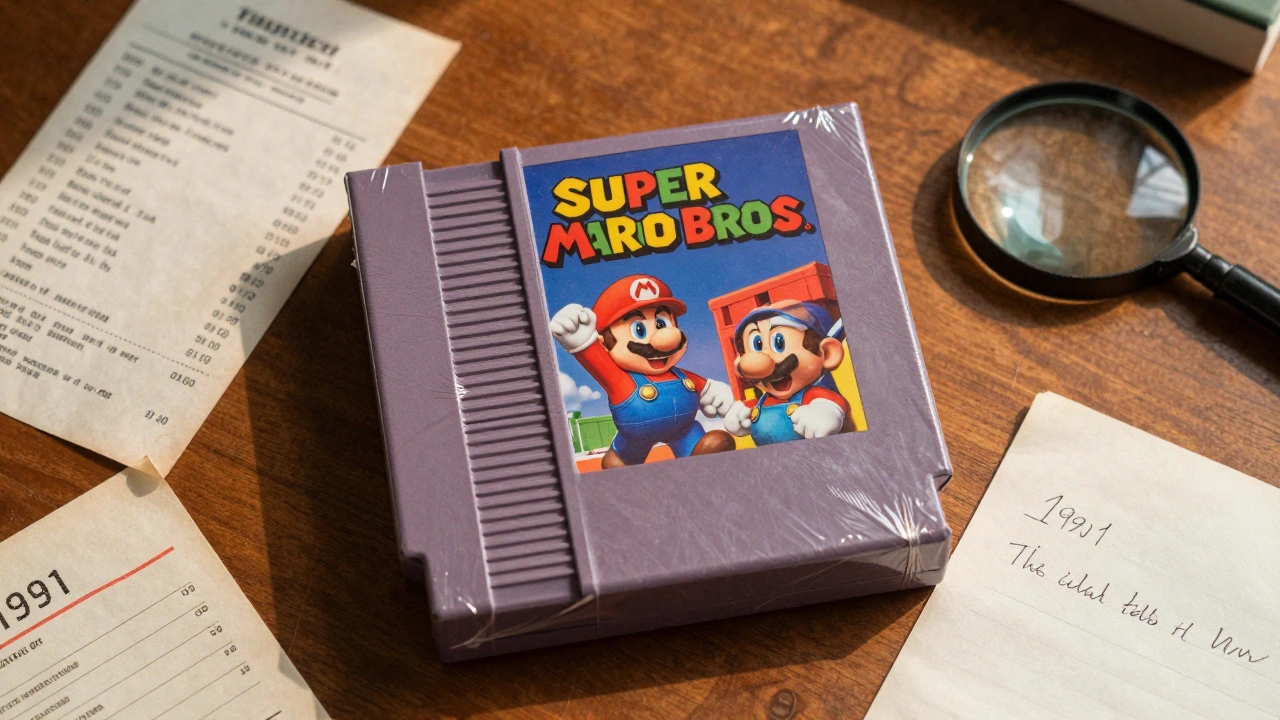

When you buy a rare video game - say, a sealed copy of Super Mario Bros. with its original box and manual - you’re not just buying a game. You’re buying a piece of history. And like any collectible, its value depends on one thing: trust. But how do you know it’s real? How do you know the cartridge wasn’t refilled, the box wasn’t printed on a home printer, or the manual wasn’t copied from a PDF? This is where provenance and documentation become everything.
What Provenance Really Means in Video Games
Provenance isn’t just a fancy word. It’s the complete history of an item - who owned it, when it was bought, where it was stored, and how it changed hands. For physical games, that means original packaging, factory seals, dated receipts, or even photos of the game in its original owner’s home. For digital games, it’s about verifiable ownership records tied to your account, transaction logs, and blockchain-backed certificates.Think of it like a car’s title. If you buy a classic Mustang without a title, you don’t know if it’s stolen, rebuilt from parts, or even a replica. The same goes for a $10,000 copy of Stadium Events for the NES. Without proof of origin, it’s just a cartridge with a weird label.
Why Documentation Matters More Than You Think
Most collectors focus on condition: box art, shrink wrap, cartridge shine. But condition alone can be faked. A skilled forger can make a perfect-looking copy. What can’t be faked easily is documentation.Take the Nintendo World Championships 1994 cartridge. Only 116 were made. Most were never sold - they were given out at events. Today, a single one sells for over $90,000. But here’s the catch: the only ones that sell for that price have documentation. Not just a receipt - but photos from the event, press clippings, even handwritten notes from Nintendo employees who handed them out. That’s provenance. That’s what turns a rare item into a verified artifact.
Without it? You’re gambling. And in a market where fake cartridges sell for thousands, that’s not a risk most serious collectors are willing to take.
How Blockchain Is Changing the Game
For digital games, provenance used to be impossible. You bought a game on Steam. You owned it. But Steam could delete your account. They could change their terms. You had no real ownership - just a license.Now, companies like Ubisoft and EA are testing blockchain-based ownership for limited-edition digital items. Not NFTs as hype. Real, verifiable records. Each purchase is timestamped, encrypted, and stored on a public ledger. You can prove you bought the game on October 12, 2023, from the official store. You can prove you transferred it to your brother in 2024. No middleman. No dispute.
Take Final Fantasy XIV: Endwalker’s digital collector’s edition. It came with a unique in-game mount and a digital certificate tied to your account. That certificate? It’s recorded on a private blockchain. If you sell the game later, you don’t just send a Steam key. You transfer the entire ownership record. The buyer gets the mount and the proof they’re not buying a scam.
The Role of Official Certification Programs
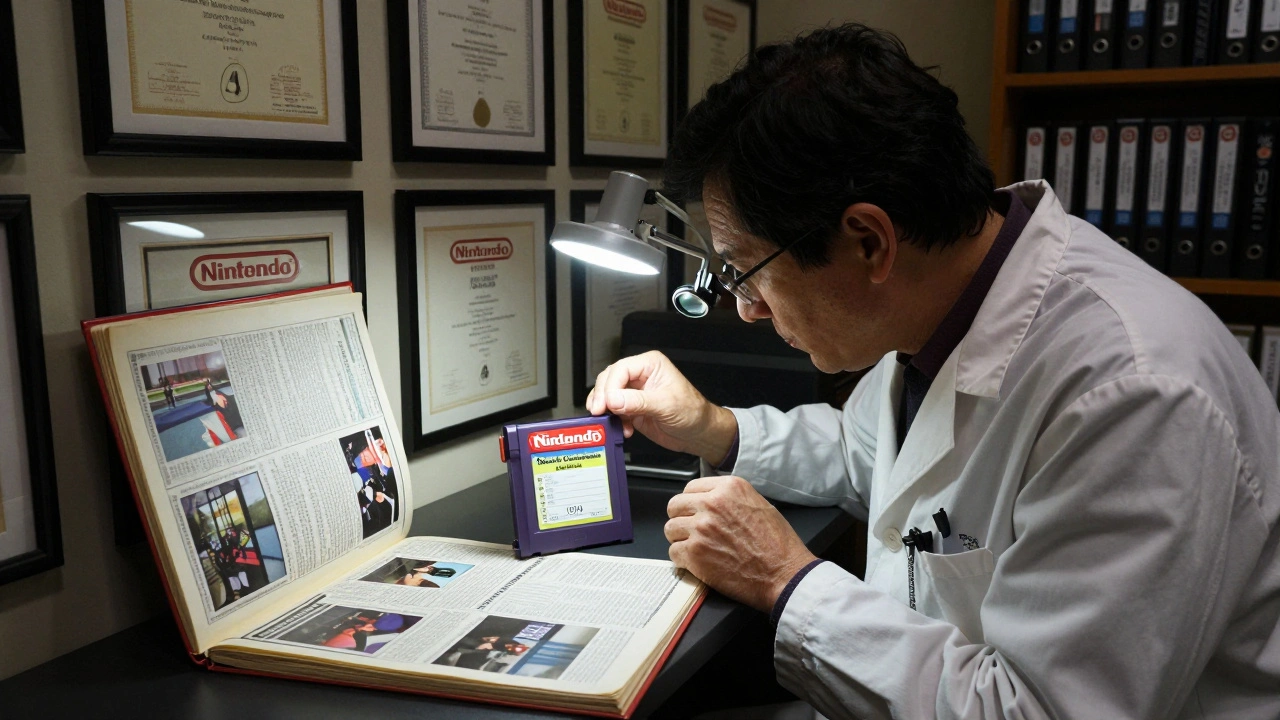
Some companies are stepping up. Sega launched a certification program for rare Genesis cartridges. If you send them your game, they check the PCB, the label, the casing, and the manual. If it passes, they issue a numbered certificate with a QR code that links to a public database. You can scan it and see the full history: when it was received, who inspected it, what tests it passed.Atari does something similar for its 1970s and 1980s titles. Their Atari Vault program lets collectors register their games. Each one gets a unique ID. If you buy a game from someone who registered it, you know it’s real. If you sell it, you transfer the ID. No more guessing.
This isn’t about locking people out. It’s about giving them confidence. When you spend $5,000 on a game, you deserve to know it’s real - not because someone on eBay said so, but because a trusted authority verified it.
How Collectors Are Building Their Own Provenance
Not every game has an official program. So collectors are doing it themselves.One guy in Ohio, who goes by “RetroDoc,” has spent years photographing every game he buys. He takes pictures of the box seam, the manual’s watermark, the sticker on the cartridge. He records the seller’s username, the date of the transaction, and even the shipping label. He stores it all in a private cloud with a timestamp. When he sells it, he passes the entire folder to the buyer.
It sounds extreme. But look at what happened when a sealed Super Mario Bros. 3 sold for $156,000. The buyer didn’t just get the game. They got a 37-page PDF with photos, receipts, and a letter from the original owner explaining how he got it from a friend in 1991. That’s provenance. And that’s what made the sale legit.
The Dark Side: Fake Provenance and How to Spot It
Not all documentation is real. Some sellers fabricate it. A fake receipt. A doctored photo. A QR code that leads to a placeholder page.Here’s how to check:
- Check timestamps - If the receipt says “June 1995” but the game was released in October 1995, it’s fake.
- Look for consistency - Does the handwriting on the note match the seller’s email signature? Are the fonts on the receipt the same as what was used in 1992?
- Verify the source - If the seller claims it came from a Nintendo event, can you find a news article about that event? Is the employee’s name listed anywhere?
- Ask for raw files - Not a PDF. The original photo, the scanned receipt, the unedited video. If they refuse, walk away.
Real provenance leaves a trail. Fake provenance leaves gaps.
What’s Next? The Future of Game Ownership
The future isn’t just about blockchain or certificates. It’s about standardization.Right now, every platform, every seller, every collector has their own way of documenting. That’s a mess. But imagine if there was a universal standard - like the EAN barcode for physical goods - for video games. A QR code on every box that links to a public registry. A simple way to verify authenticity, no matter where you bought it.
Some industry groups are already talking about it. The International Video Game Collectors Association is drafting a framework. It would let publishers, collectors, and marketplaces all use the same system. No more confusion. No more fraud.
It’s not here yet. But it’s coming.
Bottom Line: Trust Is the Real Value
A sealed copy of a game is worth nothing without proof. A digital item is worthless if you can’t prove you own it. Provenance isn’t about nostalgia. It’s about economics. It’s about fairness. It’s about making sure the people who invest in these games aren’t being ripped off.If you’re buying high-end games, don’t just look at the box. Look at the paper trail. Demand documentation. Record your own. Support companies that verify ownership. Because in the end, the most valuable thing in gaming isn’t the cartridge or the code - it’s the trust behind it.