

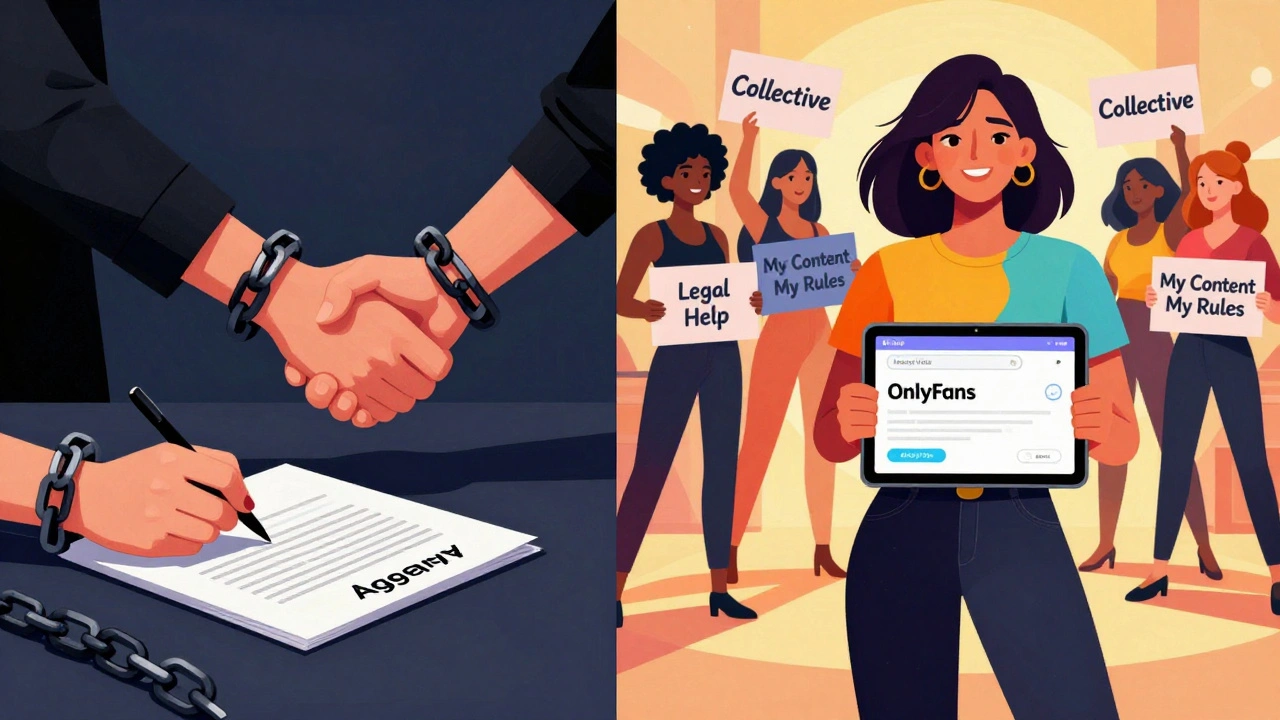
Signing an agency agreement in the adult industry isn’t like signing a lease or a gym membership. It’s a legal contract that can shape your career, your income, and even your personal safety-for years. Many performers walk into these deals thinking they’re getting a foot in the door. Instead, they’re locking themselves into terms that leave them vulnerable. The truth? Not all agencies have your back. Some are built to exploit, not empower.
What an Agency Agreement Actually Covers
An agency agreement in the adult industry typically outlines how a performer works with an agency. It’s not just about booking gigs. These contracts define who owns your content, how you get paid, what you can and can’t do on set, how long the agreement lasts, and even who controls your social media. Agencies often claim exclusive rights to represent you, meaning you can’t work with other agencies or book directly without their permission. Some even take a cut of your independent earnings.
For example, a standard 12-month agreement might give the agency 30% of all income generated through their bookings, plus 50% of any direct sales you make on your own site if they provided the original content. That’s not just a commission-it’s a monopoly on your work. And if you try to leave? You might be stuck paying fees or facing legal threats.
Key Protections You Should Demand
There are legal protections you can and should ask for. They’re not luxuries. They’re necessities.
- Clear payment terms: When do you get paid? How? What happens if the client doesn’t pay? The contract should state payment deadlines and consequences for late or missing payments.
- Content ownership: You should own the rights to your performances. If the agency claims ownership, demand a license agreement instead. That way, you can reuse, sell, or delete your content later.
- Right to refuse: No performer should be forced into acts they’re uncomfortable with. The contract must include a clause that allows you to say no to any scene without penalty.
- Health and safety standards: The agency must require proof of recent STI testing from all parties involved. They should also provide a safe set environment with a third-party monitor present.
- Exit clause: Can you leave? Under what conditions? A fair agreement lets you terminate with 30 days’ notice, without owing fees or surrendering content.
These aren’t negotiable extras. They’re baseline protections. If an agency refuses to include them, walk away. There are dozens of reputable agencies that operate with transparency. You don’t need to settle for less.
Red Flags That Should Make You Stop Signing
Here are the most common warning signs that an agency agreement is designed to trap you, not protect you:
- Upfront fees: Legitimate agencies never charge you to join. If they ask for money for "marketing packages," "training," or "portfolio creation," it’s a scam.
- Indefinite contracts: Contracts that auto-renew without your consent or last longer than 12-18 months are predatory. You should always have control over your career timeline.
- Non-compete clauses: Some agreements forbid you from working with other agencies, creating your own content, or even posting on social media. These are illegal in many states and should be challenged.
- Confidentiality clauses that silence you: If the contract says you can’t talk about your experience, even to law enforcement or a lawyer, that’s a red flag. Real agencies don’t fear accountability.
- Unspecified commission rates: If the contract says "commission as agreed" or "rates subject to change," it’s a loophole waiting to be exploited.
One performer in Arizona signed a contract that gave the agency 70% of her earnings and required her to pay $500/month for "promotion." She later found out the agency had no legal standing to collect fees. She spent over a year in court to get out of it. Don’t wait until it’s too late.
What You Need Before You Sign
Before you even look at the contract, gather these things:
- Proof of the agency’s business license and registration in your state.
- Names and contact info of at least three current or former performers they represent.
- A copy of their standard contract-reviewed by an attorney who understands entertainment or labor law.
- Documentation of their health and safety policies.
- Proof they’ve been in business for at least two years.
There are free legal clinics in cities like Los Angeles, New York, and Portland that specialize in adult industry contracts. You don’t need a six-figure lawyer. You just need someone who knows the difference between a fair deal and a trap.
What Happens If You Break the Contract?
Some agencies threaten lawsuits if you leave. But here’s the truth: most of those threats are empty. Courts don’t enforce contracts that violate labor rights, public policy, or state laws. If your contract forces you to pay fees to leave, bans you from working elsewhere, or takes ownership of your body of work, it’s likely unenforceable.
Still, you need to do it right. Document everything. Keep copies of all communications. If the agency pressures you, sends threatening emails, or tries to delete your content, report them. Organizations like the Free Speech Coalition and the Adult Performer Advocacy Committee can help you file complaints with state labor boards.
You have rights. You’re not a commodity. You’re a professional.
Alternatives to Traditional Agencies
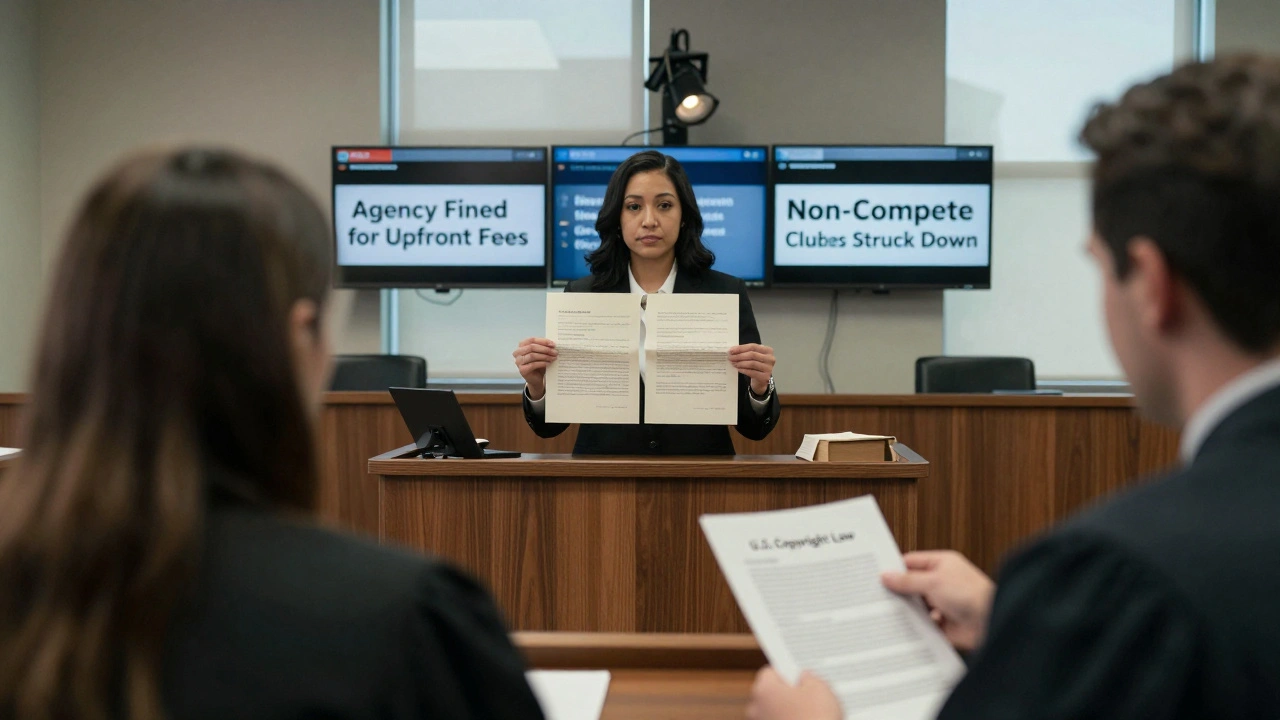
You don’t need an agency to succeed. Many performers now operate independently using platforms like ManyVids, OnlyFans, or JustForFans. These platforms let you keep 80-90% of your earnings, control your schedule, and build your own brand. You can still hire a manager or publicist for a percentage of income-but not a full-service agency that takes half your pay and locks you in.
Some performers form collectives. A group of 5-10 performers pool resources to hire a shared lawyer, book group shoots, or negotiate better rates with studios. These models cut out the middleman entirely and put power back in your hands.
One performer in Oregon started a collective with three others. They hired a freelance producer, split costs on equipment, and negotiated a 10% commission with a single booking agent-instead of 30% with a traditional agency. They made more money, had more control, and slept better at night.
Final Advice: Your Career, Your Rules
The adult industry isn’t going away. But the old system of exploitation is crumbling. Performers are organizing. Laws are changing. Platforms are evolving. You have more power now than ever before.
Don’t rush into a contract. Don’t sign because you’re scared or desperate. Don’t let someone else decide your boundaries. Read every word. Ask questions. Get legal advice. Walk away if something feels off.
You’re not just a performer. You’re a business owner. And like any business owner, you deserve contracts that protect you-not ones that trap you.
Can an agency legally take ownership of my content?
No, not if you’re in the U.S. Under U.S. copyright law, the creator of content automatically owns it unless they sign a written agreement transferring those rights. Many agencies try to claim ownership by burying it in fine print. But you can negotiate a license instead-giving them permission to use your content for a set time, not ownership forever. Always insist on keeping your copyright.
What should I do if an agency refuses to let me see the contract before signing?
Walk away immediately. Any agency that won’t let you review the contract beforehand is hiding something. Legitimate businesses provide contracts in advance so you can review them with a lawyer. If they pressure you to sign "right now," it’s a classic scam tactic. There’s no rush. Your career is too important to gamble on secrecy.
Are agency fees legal in the adult industry?
In most states, charging upfront fees to performers is illegal under labor laws. Agencies are supposed to earn money only when you do-through commissions on bookings. If they ask for money for "training," "headshots," or "membership," it’s likely a scam. Report them to your state’s labor department or the Federal Trade Commission. There are no legitimate reasons for a performer to pay to work.
Can I work with multiple agencies at once?
Yes, unless your contract illegally restricts you. Non-compete clauses that prevent you from working with other agencies are unenforceable in most U.S. states, including Oregon and California. Even if your contract says you can’t, courts typically throw those clauses out. You have the right to market yourself however you choose. Always check your state’s laws on non-compete agreements.
What if I signed a bad contract and now I’m stuck?
You’re not stuck. Even if you signed, you can still break free. Start by documenting everything-emails, payment records, contract copies. Contact a legal aid group that handles entertainment or labor law. Many offer free consultations. You can also file a complaint with your state’s attorney general’s office. Agencies that violate labor laws can be fined or shut down. You’re not alone, and you don’t have to suffer in silence.