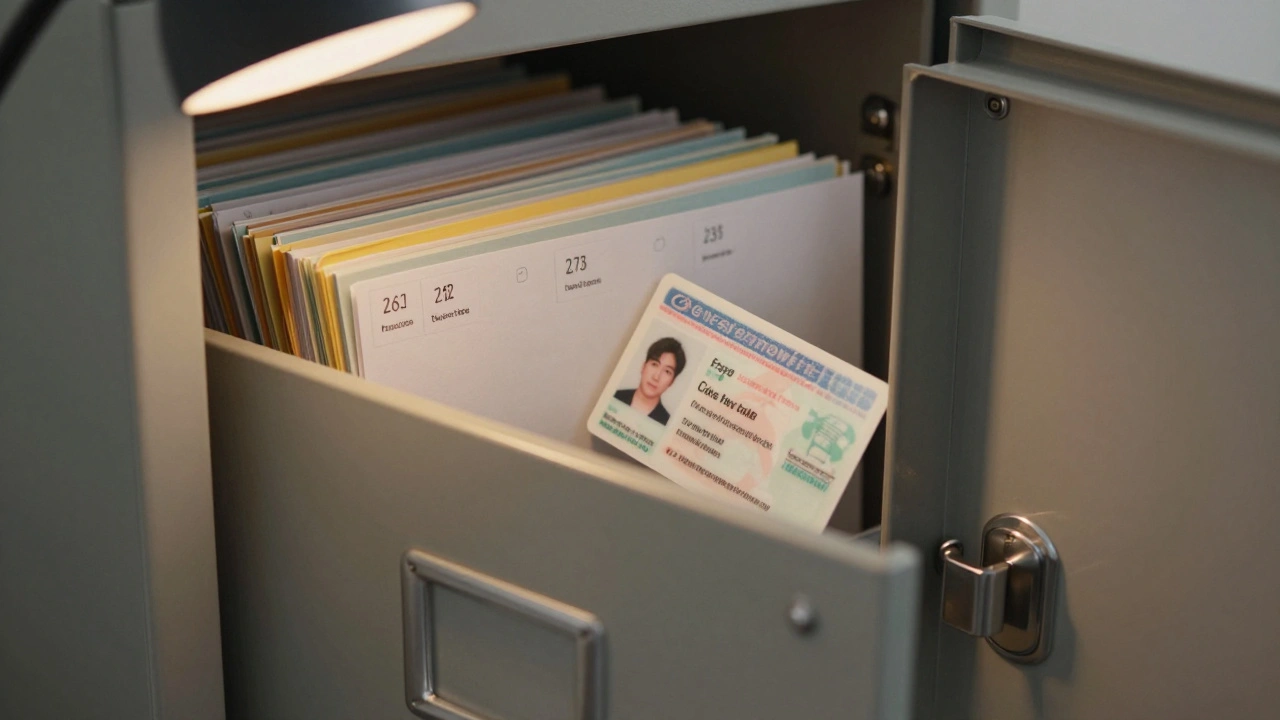

If you’re producing adult content in the U.S., you’re not just making videos-you’re running a business subject to federal law. 18 U.S.C. §2257 isn’t a suggestion. It’s a legal requirement that every producer, no matter how small, must follow. Skip it, and you risk fines, seizures, or even criminal charges. This isn’t about morality. It’s about proof. The law demands you keep records proving every performer is at least 18 years old. No exceptions.
What 18 U.S.C. §2257 Actually Requires
The law doesn’t ban anything. It doesn’t tell you what you can film. It only says: if you produce, distribute, or import any visual depiction of actual sexually explicit conduct, you must keep records that prove every performer was over 18 at the time of production. This applies to everything: videos, photos, live streams archived later, even content sold on platforms like OnlyFans or ManyVids if you’re the original producer.
The records must include:
- The performer’s full legal name
- The performer’s date of birth
- A copy of a government-issued ID (driver’s license, passport, military ID, etc.)
- The date the record was created
- The address where the record is stored
That’s it. No extra forms. No complicated systems. Just clear, verifiable proof. The ID copy must be legible and show the full name and birthdate. A selfie with a driver’s license? Not enough. A scanned, high-resolution copy? Yes.
Where Records Must Be Stored
You can’t just save these files on your phone or a personal cloud drive. The law says records must be kept at the principal place of business of the producer. That means:
- If you’re a sole producer working from home, your home address is your principal place of business.
- If you run a studio with a commercial lease, that business address is where records live.
- If you’re part of a production company, the company’s official address is required.
You must also make these records available for inspection by the Attorney General or any authorized federal agent-within 30 days of a request. No excuses. If you say you’re storing them online but can’t pull them up when asked, you’re in violation.
What Counts as "Sexually Explicit Conduct"
This is where people get confused. The law defines it narrowly:
- Actual sexual intercourse (vaginal, anal, or oral)
- Bestiality
- Masturbation
- Sadistic or masochistic abuse
- Exhibition of the genitals or pubic area for the purpose of sexual stimulation
Things that don’t trigger §2257: nudity without sexual context, simulated sex, kissing, sensual dancing, or bondage without explicit sexual activity. If you’re unsure, ask yourself: would this content be considered pornographic by a reasonable person? If yes, you need records.
How Long Do You Keep Records?
You’re not just collecting these once. You must keep them for at least five years after the date you produced the material. That means:
- If you filmed a scene on January 15, 2024, you must keep those records until January 15, 2029.
- If you’re still distributing that content in 2026, the clock doesn’t reset.
- If you delete the video but still have the files on a server, the records stay active.
Some producers keep them longer-up to seven or ten years-as a buffer. It’s not required, but it’s smart. Federal audits can be delayed, and you don’t want to be caught off guard.
What Happens If You Don’t Comply?
Violating §2257 is a federal felony. First offense? Up to five years in prison and fines up to $250,000. Repeat offense? Up to ten years. But you won’t get arrested overnight. Most cases start with a letter from the Department of Justice, followed by a demand to produce records. If you can’t, they may seize your equipment, freeze your bank accounts, or initiate a civil forfeiture process.
There’s also civil liability. If a performer later claims they were underage (even if they weren’t), and you lack records, the burden of proof falls on you. No records? You lose. Period.
Common Mistakes Producers Make
Most violations aren’t intentional. They’re careless.
- Using expired IDs. A driver’s license expired in 2023? It’s invalid for proof in 2026.
- Reliance on third-party platforms. If you use a studio or agency, you still bear legal responsibility. They don’t shield you.
- Storing records on public cloud services like Google Drive or Dropbox without encryption. The law doesn’t require encryption, but if your records are hacked and exposed, you’re still liable.
- Assuming "consent" or "self-certification" is enough. It’s not. You need government-issued ID.
- Not updating records for re-shoots. Even if you filmed someone last year, every new production requires a fresh record.

How to Set Up a Simple Compliance System
You don’t need expensive software. Here’s a basic system that works:
- When you hire a performer, ask for a clear scan or photo of their government ID.
- Take a timestamped photo of them holding the ID (optional but helpful).
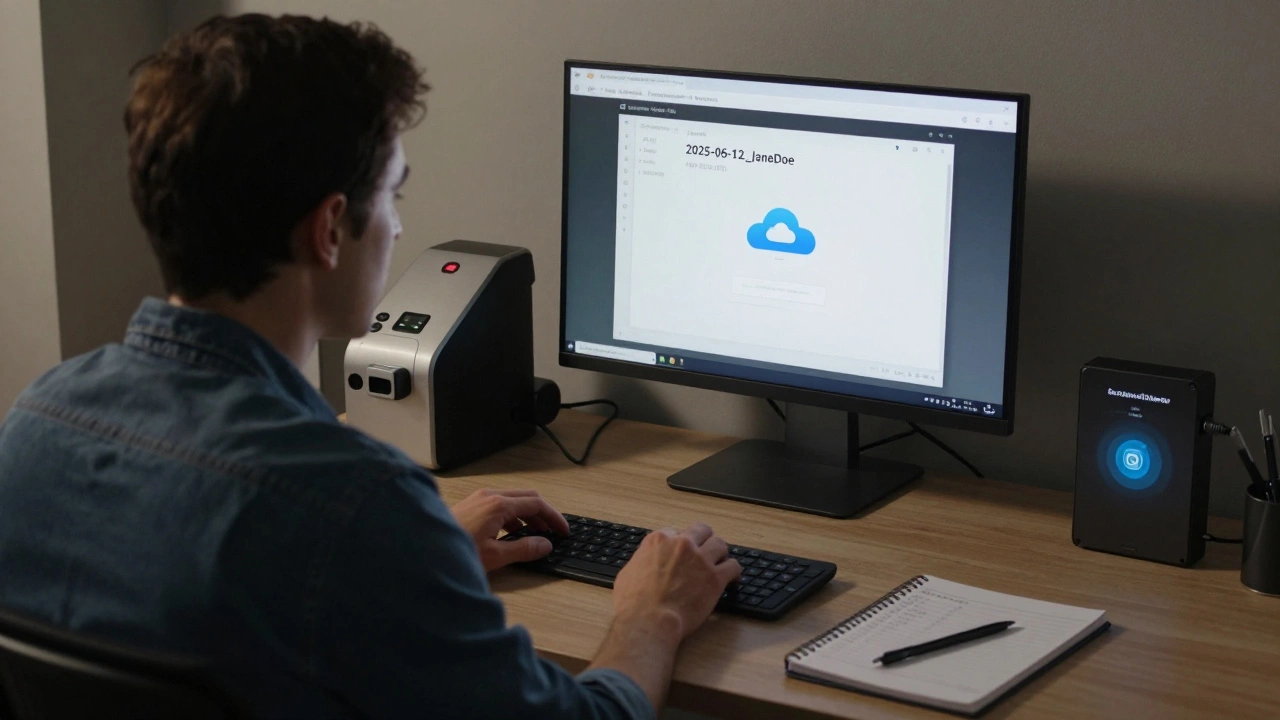
- Save the ID scan and performer details in a folder named with the production date (e.g., "2025-06-12_JaneDoe").
- Store this folder on a password-protected external drive or encrypted cloud storage.
- Write down the physical location of the storage (e.g., "Home office, locked filing cabinet, 123 Main St, Portland, OR").
- Review records quarterly. Delete old files only after five years have passed.
Many producers use free tools like Notion or Airtable to track performers and expiration dates. It’s not required, but it helps avoid mistakes.
What About Independent Performers?
If you’re an independent performer who films and uploads your own content, you’re still a producer under the law. You’re responsible for your own records. Don’t assume platforms like OnlyFans or Fansly are handling compliance-they aren’t. They’re marketplaces. The law puts the burden on the creator.
Some performers keep their own records and share them with producers they work with. That’s fine, but the producer still needs to verify and store them. You can’t outsource your legal duty.
Why This Law Exists
It’s not about censorship. It’s about protecting minors. In the 1980s, there were cases of underage performers being exploited in the industry. Congress passed §2257 to make sure no one could hide behind anonymity. The records are a paper trail. If someone claims they were underage, investigators can trace back to who filmed them and when.
The system isn’t perfect. But it’s the only legal shield you have. Without it, you’re vulnerable.
Do I need records if I only film solo performers?
Yes. Even if you’re filming yourself, you’re still considered the producer. You must keep a copy of your own government-issued ID, with your name and birthdate clearly visible, and store it at your principal place of business. The law doesn’t make exceptions for solo creators.
Can I use a digital signature or e-signature instead of a physical ID copy?
No. The law requires an actual copy of a government-issued identification document. Digital signatures, self-declarations, or affidavits are not acceptable substitutes. Only official documents like driver’s licenses, passports, or military IDs meet the standard.
What if I film someone outside the U.S.?
You still need to comply. The law applies to any content distributed in the U.S., regardless of where it was filmed. Foreign IDs are acceptable if they include the performer’s full name, date of birth, and a photograph. If the ID is in a foreign language, you must provide a certified translation.
Can I store records electronically?
Yes. Electronic storage is allowed, as long as the records are accessible, legible, and securely stored. You must be able to produce them within 30 days of a federal request. Cloud storage is acceptable if encrypted and password-protected. Avoid public folders or unsecured links.
What if I stop producing content? Do I still need to keep records?
Yes. You must keep records for five years after the last date of production-even if you’ve shut down your business or deleted all files. The obligation doesn’t disappear just because you’re no longer active. Destroying records early is a violation.