
Every year, thousands of people enter the adult entertainment industry thinking they’re just signing up to make content. But few realize they’re walking into a workplace with almost no safety net. No sick days. No health insurance. No unemployment benefits. And in many places, no legal protection if something goes wrong. This isn’t a rumor-it’s the reality for performers right now. If you’re performing, producing, or even just starting out, knowing your rights isn’t optional. It’s survival.
Are You an Employee or an Independent Contractor?
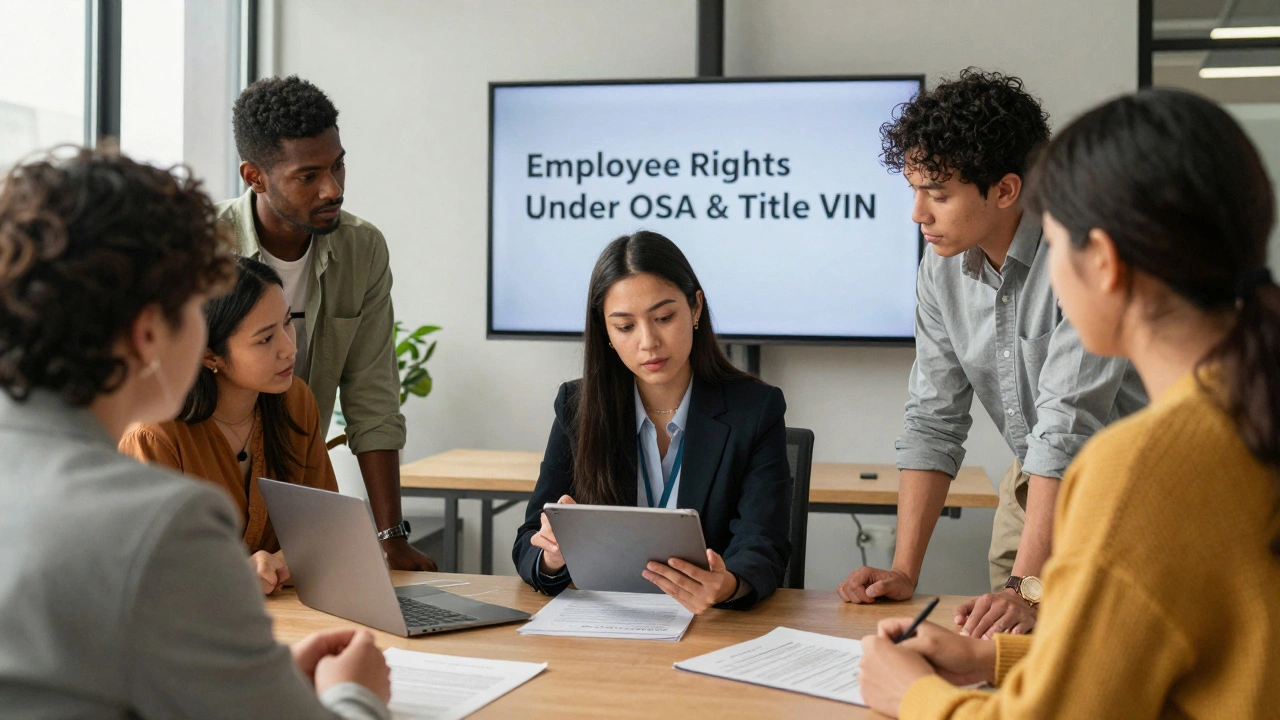
The biggest legal blind spot for performers is misclassification. Most studios and platforms treat you as an independent contractor. That means you don’t get minimum wage, overtime pay, workers’ compensation, or unemployment benefits. But under U.S. labor law, if a company controls when, where, and how you work, you may legally be an employee-even if your contract says otherwise.
The IRS uses a three-part test to determine this:
- Behavioral control: Do they tell you when to shoot, what to wear, or how to perform?
- Financial control: Do they set your rates, dictate your pricing, or require you to use only their equipment?
- Relationship type: Is your work central to their business? Do you work exclusively for them?
If you answered yes to most of these, you might be misclassified. In 2023, a California court ruled in Johnson v. Reality Kings that performers who followed strict scheduling, costume, and performance guidelines were employees under state law. That case set a precedent. You’re not just a freelancer-you might be a worker with rights.
What Legal Protections Do You Actually Have?
There’s no federal law specifically protecting adult performers. But you’re still covered by general labor and civil rights laws.
Workplace Safety: OSHA (Occupational Safety and Health Administration) applies to workplaces with 10+ employees. If you’re working on a set with a crew, the studio must provide safe conditions. That includes clean surfaces, proper lighting, ventilation, and access to first aid. In 2024, Oregon passed a new rule requiring all adult production companies to have a written safety protocol and provide free STI testing every 30 days.
Anti-Discrimination: Title VII of the Civil Rights Act protects you from discrimination based on race, gender, religion, national origin, and sex. That includes being turned down for a role because of your body type, tattoo, or sexual orientation. If you’re asked to perform something that feels coercive, that’s not just unethical-it’s potentially illegal.
Contract Rights: You have the right to read, understand, and negotiate every contract before you sign. No one can force you to sign away your rights to your own image, name, or likeness without fair compensation. A common trick? Contracts that claim ownership of your content forever, even after you leave the industry. That’s not enforceable in most states if it’s overly broad or unconscionable.
How to Protect Yourself Before You Shoot
Before you step on set, do this checklist:
- Get a written contract. Verbal promises don’t hold up. Demand everything in writing-pay rate, shoot duration, content usage rights, exclusivity terms, and cancellation policies.
- Know your STI testing schedule. Most reputable studios require testing every 14 days. Ask for proof of the last test for every performer on set. If they can’t provide it, walk away.
- Use a third-party payment processor. Avoid direct bank transfers from unknown companies. Use platforms like Payoneer or Stripe with built-in dispute resolution.
- Record your shoot. Keep a timestamped video of your arrival, the crew, and the conditions. It’s not paranoia-it’s evidence.
- Know your exit rights. You can stop at any time. No contract can force you to continue. If someone threatens you, threatens to delete your footage, or pressures you, that’s coercion. Call the Adult Performer Advocacy Committee (APAC) hotline immediately.
What to Do If Something Goes Wrong
It happens. Someone breaks a promise. A studio refuses to pay. You’re pressured into something you didn’t agree to. Here’s what to do next:
- Document everything. Save emails, texts, contracts, payment records, and witness names.
- Contact APAC. The Adult Performer Advocacy Committee offers free legal referrals, crisis counseling, and help filing complaints. They’ve helped over 1,200 performers since 2020.
- File a complaint with your state labor board. In California, New York, and Oregon, you can file a wage claim even if you’re classified as a contractor. The burden of proof shifts to the employer to show you’re not an employee.
- Report sexual coercion. If you were forced or pressured into non-consensual acts, report it to the police and to the FBI’s Internet Crime Complaint Center (IC3). Many performers don’t realize this counts as a federal crime.
Industry Organizations That Actually Help
Not all groups claiming to support performers are trustworthy. Here are the ones with real track records:
- Adult Performer Advocacy Committee (APAC): Free legal aid, mental health resources, and a 24/7 hotline. Founded by performers, run by performers.
- Free the Work: A nonprofit that helps performers negotiate contracts and file for unemployment benefits. They’ve won over $2 million in back pay since 2021.
- Sex Workers Outreach Project (SWOP): Offers harm reduction training, safety workshops, and advocacy at the state legislative level.
- Performers Union (PU): A new labor union formed in 2024 that represents over 800 performers in California and New York. They’re negotiating for health insurance, paid time off, and residuals.
What’s Changing in 2026?
The landscape is shifting. In January 2026, the U.S. Department of Labor launched a pilot program to classify adult performers as employees in states with high production volumes. Oregon and California are leading the way-mandating health benefits, paid sick leave, and union representation.
Platforms like OnlyFans and ManyVids are now required to disclose their payment terms clearly. If they don’t, you can report them to the FTC. Some studios are starting to offer 401(k) matching and mental health coverage. It’s not perfect-but it’s progress.
More performers are banding together. Social media campaigns like #MyBodyMyRights and #PayUsFair have pushed platforms to change their policies. You’re not alone. And you don’t have to accept the old rules.
Final Reality Check
You’re not a commodity. You’re not a product. You’re a worker. And workers deserve safety, fair pay, and dignity. The system is stacked against you-but it’s not unbreakable. Every performer who speaks up, files a complaint, or demands a better contract makes it harder for bad actors to keep exploiting others.
Know your rights. Document everything. Walk away if something feels wrong. And remember: the most powerful tool you have isn’t your camera-it’s your voice.
Can I be fired for refusing to do a scene I didn’t agree to?
No. You have the right to refuse any scene that wasn’t clearly outlined in your contract. If a studio threatens to delete your footage or withhold payment for refusing, that’s a breach of contract and potentially coercion. You can report this to your state labor board or APAC. Your consent is non-negotiable.
Do I have to pay for my own STI tests?
Legally, no. Under Oregon’s 2024 rule and similar laws in California, studios must provide free STI testing every 14 days. If they ask you to pay, they’re violating state law. Keep receipts and report them to the state health department. Some studios still try to shift costs-but you’re not obligated to pay.
Can I copyright my own content?
Yes. As the performer, you automatically hold copyright to your performance under U.S. law. Studios can license your content, but they can’t claim ownership unless you sign a written transfer agreement. Many contracts try to take this away-don’t sign unless you’re getting fair compensation for it.
What if I’m underage when I start?
You must be 18 or older to legally perform in the U.S. Any studio that hires someone under 18 is breaking federal law. If you were underage when you started, contact APAC immediately. They can help you void contracts and report the studio to the FBI’s Child Exploitation Unit. You’re not at fault.
Can I get unemployment if I quit?
It depends. If you’re classified as an independent contractor, you usually can’t. But if you were misclassified and treated like an employee, you may qualify. In 2025, California approved a new rule allowing performers who worked 20+ hours per week for one studio to file for unemployment-even without formal employment status. APAC can help you prove your work hours.