
You might assume that working in the adult entertainment industry comes with a standardized set of medical rules. The reality is far more complex. Unlike healthcare workers or food service employees, there is no single federal law dictating how often an adult performer must undergo health screening for sexually transmitted infections. Instead, you are navigating a patchwork of state laws, private agency requirements, and platform policies. This lack of uniformity creates significant confusion regarding your rights, the frequency of testing, and who gets to see your results.
If you are stepping into this field or looking to protect your existing career, understanding these mechanics is non-negotiable. It’s not just about compliance; it’s about bodily autonomy and professional longevity. We will break down exactly how these systems work, what you can legally refuse, and how to keep your medical history private while maintaining your employability.
The Regulatory Landscape: State vs. Private Standards
The first thing to grasp is that "the industry" does not have one rulebook. Your obligations depend entirely on where you film and who you film for. In the United States, regulations fall into two main buckets: government-mandated programs and private verification services.
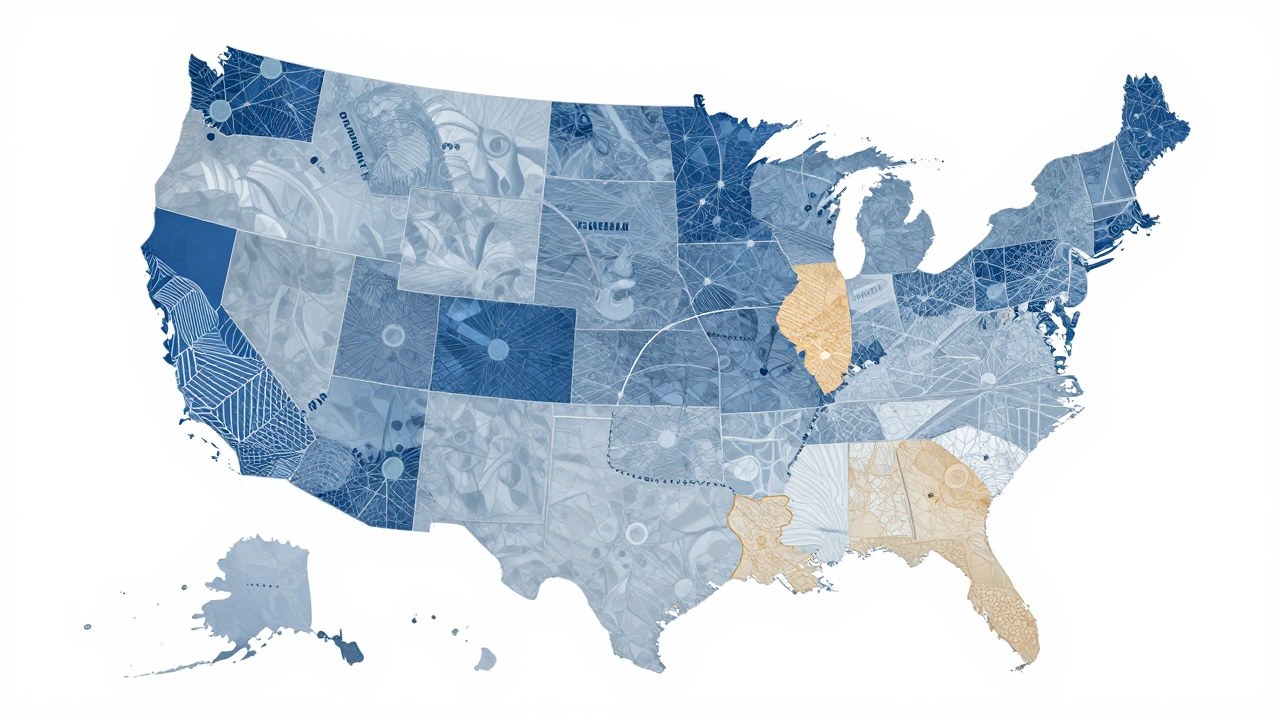
California and Nevada are the only states with strict, government-enforced health testing mandates for adult performers. In California, the Department of Public Health oversees a specific program requiring regular screenings. If you shoot in Los Angeles or San Francisco under these jurisdictions, you cannot bypass these tests. Failure to comply can result in fines or the shutdown of production companies. Nevada has similar but slightly different protocols, primarily focused on Las Vegas productions.
Outside of these two states, the landscape shifts to private entities. Most performers rely on services like PASS (Performer Availability Screening Service) a private health monitoring program widely used by major studios and platforms or LA Verified a health screening service accepted by many independent producers. These are not government agencies. They are private businesses that studios trust. Their rules can change without legislative notice. One month they might require monthly tests; the next, they might switch to quarterly panels based on new data. You need to know which system governs your current contracts.
Testing Frequency: What Is Actually Required?
How often do you need to get tested? There is no universal answer, but there are common baselines. For most private verification services like PASS, the standard requirement is every 14 days for new members or those returning from a break. Once you establish a clean record, some programs extend this window, but monthly testing remains the industry norm for active performers.
Government-mandated programs often have longer intervals. California’s program, for instance, may allow for less frequent testing if you maintain a perfect record and adhere to specific safe-work practices. However, "less frequent" does not mean "rare." You should expect to visit a clinic at least once a month, if not twice.
Here is a breakdown of typical testing frequencies:
- New Performers: Initial full panel required before any scene. Follow-up tests often within 14-28 days.
- Active Performers (Private Services): Every 14 to 30 days. Some high-volume shooters opt for weekly self-tests to stay ahead of deadlines.
- Government Mandates (CA/NV): Varies by county and individual history, typically ranging from monthly to quarterly for low-risk profiles.
- After a Positive Result: Immediate suspension from work until treatment is complete and a follow-up test confirms clearance. This period can last weeks or months depending on the infection.
Missing a test deadline doesn’t just mean you can’t work that day. It can reset your entire clearance clock. Many performers miss their window because they underestimate travel time or lab processing delays. Plan your tests well in advance of scheduled shoots.
Your Rights as a Performer
Knowing when to test is half the battle. Knowing what you can say "no" to is the other half. Performers often feel pressured to accept invasive procedures or share information they aren’t legally required to disclose. Let’s clarify your rights.
The Right to Refuse Non-Mandatory Tests: If you are working in a state without government mandates, you are generally contracting with a private service. While you must comply with the terms of that service to work with participating studios, you are not legally compelled by the state to join. However, refusing to participate in the industry-standard service effectively ends your ability to work professionally in that sector. It’s a practical choice, not a legal one.
The Right to Safe Work Conditions: You have the right to verify your partner’s status before filming. No reputable producer should force you to shoot with someone whose health card is expired or unverified. If a director pressures you to ignore a lapsed test date, you have the right to walk away. Documenting this pressure can be crucial if disputes arise later.
The Right to Medical Care: Health testing programs are for screening, not treatment. If a test comes back positive, you have the right to seek care from your own physician. Do not let the testing agency dictate your treatment plan. They provide the data; your doctor provides the medicine.
Privacy Protections and Data Security
This is perhaps the most sensitive area. Who sees your results? In an ideal world, only you and your doctor would know. In practice, your status is shared with production companies, casting directors, and sometimes even talent agencies.
Private services like PASS operate under strict confidentiality agreements. They do not publish lists of who is clean or who is infected. Instead, they issue a "card" or digital token indicating your current status. A green light means you are cleared; a red light means you are not. They rarely share the specific diagnosis with third parties unless legally compelled.
However, privacy breaches do happen. Small, independent producers may not have the same robust IT security as large agencies. When you submit your documents, ask questions:
- Who has access to my raw test results?
- How long is my data stored?
- Can I request deletion of my records after leaving the industry?
In states with government mandates, your data is protected by HIPAA-like regulations. Government agencies cannot release your identity or specific medical conditions to the public. But remember, bureaucracy is slow. If you move states, your records may not transfer seamlessly, forcing you to start over.
Comparison of Major Health Verification Systems
| Feature | PASS (Performer Availability Screening Service) | LA Verified | State Mandates (CA/NV) |
|---|---|---|---|
| Governing Body | Private Organization | Private Organization | State Department of Public Health |
| Typical Frequency | Every 14-30 Days | Every 14-30 Days | Varies (Monthly-Quarterly) |
| Geographic Scope | Nationwide/International | Primarily US/West Coast | Specific State Only |
| Data Privacy | High (Confidential Agreements) | High (Confidential Agreements) | Very High (Legal Protection) |
| Cost Responsibility | Usually Performer | Usually Performer | Varies (Often Producer) |

Navigating Independent Work and Content Creation
The rise of platforms like OnlyFans and ManyVids has blurred the lines. If you create solo content or collab with other creators directly, do you still need formal testing? Legally, in most places, no. There is no police officer checking your passport before you upload a video to your personal channel.
However, ethics and sustainability matter. If you plan to ever return to traditional studio work, maintaining a valid health card is wise. Gaps in your testing history can raise red flags for future employers. Moreover, if you collaborate with other performers, having verifiable proof of your health builds trust. It signals professionalism. Many top-tier indie creators voluntarily submit to PASS or similar services to reassure their partners and audience.
Consider creating a personal protocol. Even if not required, regular testing protects your long-term health. STIs can be asymptomatic for years. Catching them early prevents complications that could end your career prematurely.
Practical Tips for Managing Compliance
Staying compliant feels like a part-time job. Here is how to streamline the process:
- Set Calendar Alerts: Mark your test due dates three days in advance. Labs get busy, and slots fill up fast.
- Keep Digital Copies: Save photos of your cards and confirmation emails. Cloud storage ensures you never lose proof of your status during travel.
- Understand the Panel: Know what you are being tested for. Standard panels usually include HIV, Syphilis, Gonorrhea, Chlamydia, and Hepatitis B/C. Ask if Herpes is included, as policies vary.
- Budget for Costs: Testing is expensive. Factor $50-$150 per test into your monthly expenses. Some producers reimburse, but don’t count on it.
- Communicate Early: If you suspect exposure, tell your agent or producer immediately. Hiding it risks everyone’s health and your reputation.
Frequently Asked Questions
Is health testing mandatory for all adult performers?
Legally, only in states with specific mandates like California and Nevada. However, practically, yes. Almost all reputable studios and platforms require proof of recent testing through services like PASS or LA Verified. Without it, you will find very few opportunities to work professionally.
Who pays for the health tests?
In most cases, the performer is responsible for the cost. This can range from $50 to over $100 per panel depending on the provider and location. Some larger production companies may reimburse performers, but this is not standard practice. Always check your contract for reimbursement clauses.
Can a producer see my specific diagnosis?
Generally, no. Most verification services provide a simple "cleared" or "not cleared" status. They do not share specific diagnoses like "HIV positive" or "Herpes positive" with third parties unless required by law. This protects your privacy while ensuring workplace safety.
What happens if I test positive for an STI?
You must immediately stop working and notify your agent or producer. You will be suspended from the verification program until you complete treatment and pass a follow-up test. The duration of suspension depends on the type of infection and treatment response. Honesty is critical here; hiding a positive result can lead to permanent blacklisting.
Do I need testing if I only create solo content online?
There is no legal requirement for solo creators in most jurisdictions. However, if you plan to collaborate with others or return to studio work, maintaining a valid health card is highly recommended. It demonstrates professionalism and protects your long-term career viability.
How long does it take to get test results?
Most modern labs provide results within 24 to 48 hours. Some express services offer same-day results. However, you should plan for potential delays due to holidays or lab errors. Always schedule your tests well before your next booked scene to avoid cancellations.