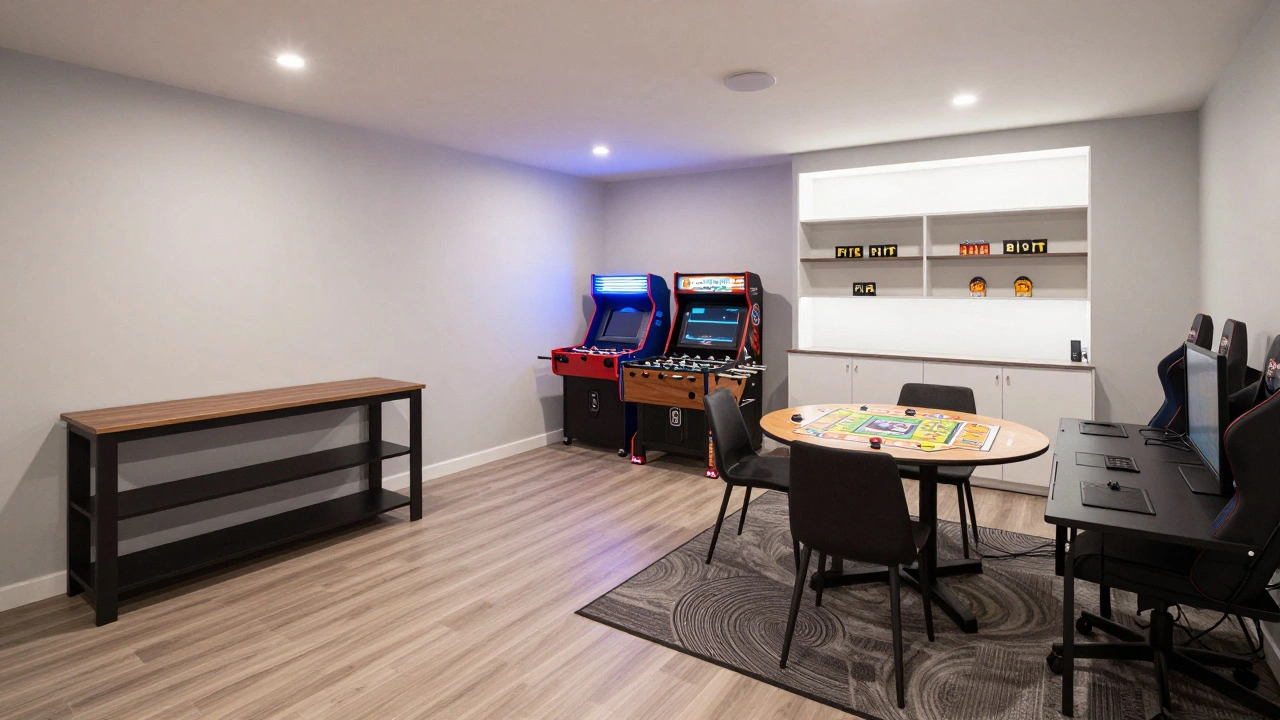

Setting up a game room isn’t just about stacking consoles and hanging posters. If you’ve invested in a serious video game collection-retro cartridges, sealed boxes, limited editions, or rare arcade machines-you need a layout that keeps your games safe and lets people move through the space without tripping over controllers or knocking over a $500 copy of Super Mario Bros. 3. This isn’t about fancy lighting or neon accents. It’s about smart design that protects your collection while making the room actually usable.
Start With Zones, Not Just Furniture
A well-planned game room doesn’t throw everything into one big pile. It divides space into clear zones. Think of it like a kitchen: you’ve got cooking, prep, and cleanup areas. Your game room needs the same logic.- Console Zone: Place your main TV and console setup in a corner with a sturdy media stand. Leave at least 8 feet of clear space in front for standing or sitting. Don’t put it right next to a doorway-people walking in shouldn’t have to sidestep your controller.
- PC Gaming Station: Keep this away from high-traffic paths. A desk with cable management, an ergonomic chair, and good ventilation is non-negotiable. If you’re running a high-end rig, don’t put it where sweat or spills from snacks can drip onto it.
- Tabletop & Board Game Area: A round table works best here. It lets people sit comfortably without blocking each other’s view. Store games on nearby shelves sorted by player count: 2-player, 4-player, party games. No more digging through 12 boxes to find Codenames.
- Arcade & Active Play Zone: Foosball, air hockey, or a Pop-A-Shot? Put these in the center of the room, but give them breathing room. At least 8 feet of clear space around each machine. That’s not just for playing-it’s for spectators to move around without bumping into someone trying to dunk a basketball.
These zones aren’t just for fun. They create natural traffic patterns. People know where to go, where to wait, and where not to step. No more collisions during a heated Super Smash Bros. match.
Storage That Protects, Not Just Holds
Your games are worth more than just their original price. A sealed copy of EarthBound can sell for over $1,000. A mint-condition Super Mario 64 box? That’s $2,500. You can’t just shove them on a dusty shelf and hope for the best.- Climate-Controlled Shelving: Humidity and heat ruin cartridges and discs. Avoid basements or attics unless you’ve added a dehumidifier. Use closed cabinets with ventilation, not open shelves. UV-blocking glass doors help too-sunlight fades labels and warps plastic.
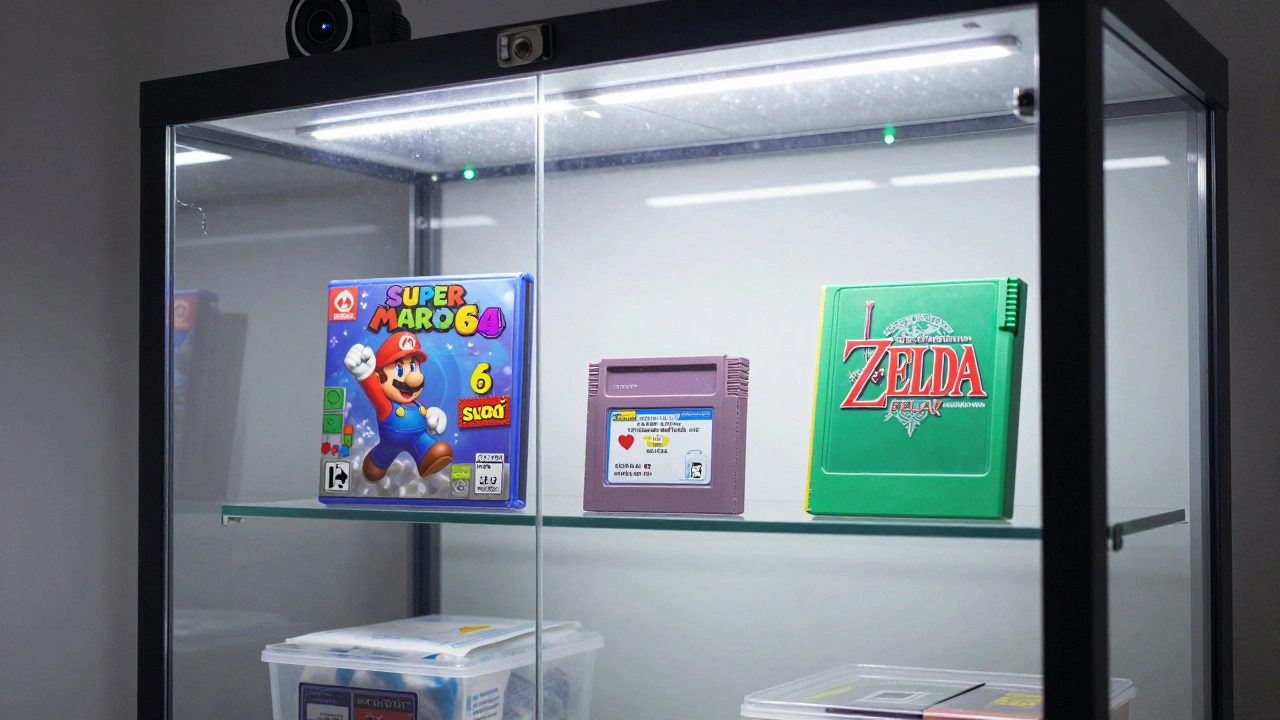
- Locked Display Cases: For high-value items, install lockable glass-front cabinets. Use ones with tempered glass and magnetic locks. Don’t rely on just a key-you need a way to know if someone opened it. Some cases even have motion sensors that log access.
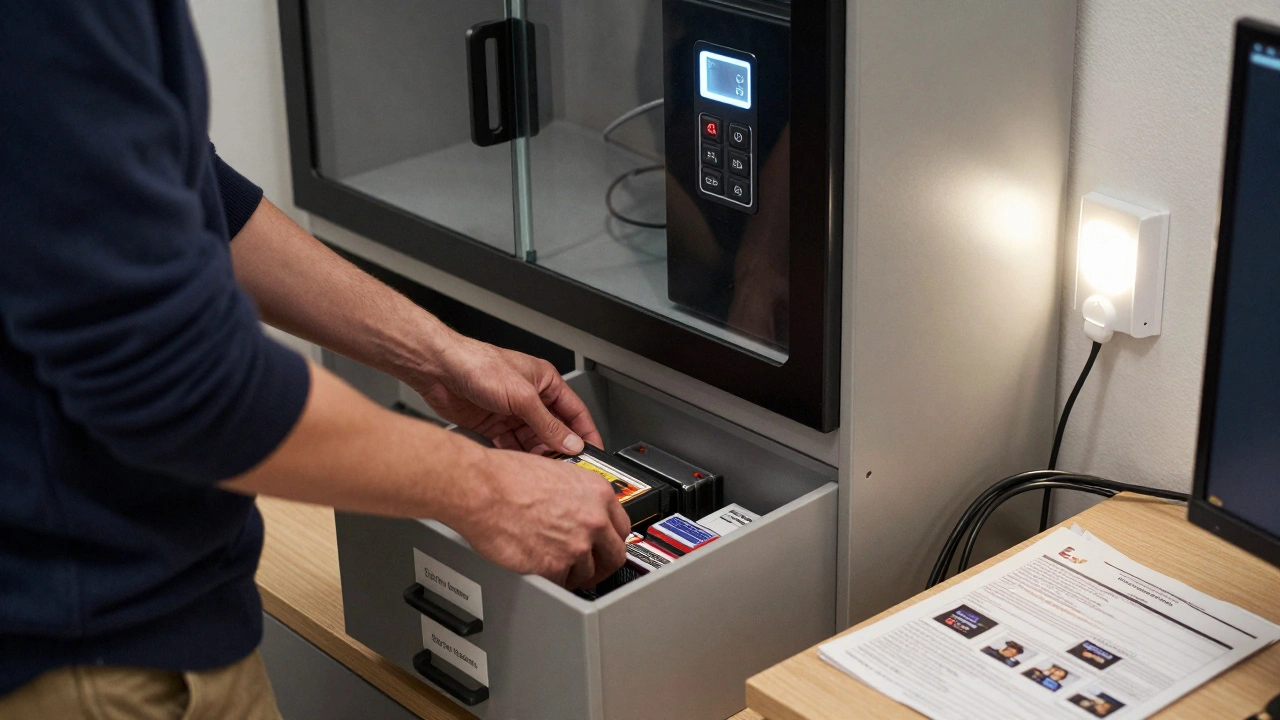
- Controller & Accessory Storage: Use labeled drawers or bins. Don’t let controllers tangle under the couch. A wall-mounted rack with numbered slots keeps everything in place. If you have 15 controllers, you’ll thank yourself later.
- Inventory Tracking: Take photos of every game, note its condition, and write down where it’s stored. Use a free app like Collection Management Pro or even a simple spreadsheet. You’ll need this if you ever file an insurance claim.
Storage isn’t about being neat. It’s about preventing damage from moisture, dust, sunlight, and accidental bumps. A single drop of water on a cartridge can ruin it forever.
Security Isn’t Optional-It’s Essential
Most people think game collections are safe because they’re “just games.” That’s a dangerous assumption. Burglars know what’s valuable. A single rare game can be worth more than a laptop.- Surveillance: Install at least one indoor camera with night vision pointing at your locked display cases. Don’t just point it at the TV-aim it where the high-value games are. Use a system that sends alerts to your phone if motion is detected after hours. Even a basic $80 camera with cloud storage beats nothing.
- Alarm System: Connect your game room to your home alarm. Use door/window sensors on the room’s entrance. If someone tries to break in at 2 a.m., you’ll know before they even get to the shelves.
- Access Control: If you have kids, roommates, or frequent guests, use a keypad lock or biometric lock on your display cases. No one should be able to open them without a code or fingerprint. You don’t need a high-tech system-just one that requires more than a key.
- Insurance: Check your homeowner’s policy. Most don’t cover collectibles over $1,000 unless you add a rider. Get your collection appraised by a specialist. Keep receipts, photos, and serial numbers. If a fire or theft happens, you need proof.
Security isn’t about paranoia. It’s about responsibility. If you spent years building this collection, don’t leave it vulnerable because you didn’t want to spend $200 on a camera.
Lighting That Helps, Not Hurts
Good lighting improves gameplay-but it also improves security.- Use bright, white LED lights over your storage shelves. Dark corners are hiding spots. If your game case is in shadow, it’s easier to steal unnoticed.
- Install motion-sensor lights in hallways leading to the game room. If someone walks toward it at night, the light turns on. That alone deters casual thieves.
- Avoid dim, warm lighting in storage areas. You need to see labels, damage, and dust. Task lighting on shelves isn’t decorative-it’s functional.
Lighting isn’t just mood. It’s surveillance. A well-lit room is a harder target.
Move Like a Pro, Not a Clumsy Gamer
Traffic flow isn’t about aesthetics-it’s about preventing accidents.- Leave 36 inches between furniture and walls. That’s the minimum for a person to walk comfortably, even with a controller in hand.
- Never put a high-traffic item like a mini-fridge or snack bar right in front of a game station. People grabbing drinks shouldn’t block your view of the screen.
- Use rugs with non-slip backing under chairs and consoles. A sliding chair can knock over a TV or break a controller port.
- Keep cords organized. Use cable trays or clips. A tripped wire can send a $600 PS5 flying.
Think about how people move during a 3-hour session. Someone gets up for snacks. Another goes to the bathroom. A third joins a game. If your layout forces them to weave through a maze of consoles, you’ve created a hazard.
What Most People Get Wrong
Most game rooms fail in three ways:- They prioritize looks over function. Neon lights and themed walls look cool, but they don’t protect a $3,000 collection.
- They ignore humidity. Portland’s damp winters are terrible for cartridges. If your room isn’t climate-controlled, you’re slowly destroying your games.
- They assume “it won’t happen to me.” Theft happens. Fires happen. Pets knock things over. Planning for the worst isn’t pessimistic-it’s smart.
There’s no such thing as a “perfect” game room. But there is a smart one. One that lets you play, show off your collection, and sleep soundly knowing your games are safe.
How do I protect my retro game cartridges from humidity?
Store cartridges in sealed plastic bins with silica gel packs to absorb moisture. Keep them in a room with stable temperature (65-75°F) and humidity under 50%. Avoid basements and attics unless you’ve added a dehumidifier. Never leave them in direct sunlight or near vents.
Should I lock my game collection display cases?
Yes-if you have games worth over $500 each. A simple magnetic lock or keypad lock prevents accidental damage and deters theft. Even if you live in a quiet neighborhood, visitors or roommates might not realize how valuable your collection is. Locking it isn’t distrustful-it’s responsible.
Can I use a regular bookshelf for my video games?
Only if you’re okay with fading labels, dust buildup, and warping plastic. Regular shelves expose games to light, air, and temperature swings. Use closed cabinets with UV-filtered glass or solid doors. If you must use open shelves, keep them away from windows and add a small fan for airflow.
What’s the best way to organize a large game collection?
Group by platform first (NES, SNES, PS5, etc.), then by genre, then by release year. Use clear bins or labeled drawers. For high-value items, keep them separate in locked cases. Keep an inventory list with photos and condition notes. Apps like Collection Management Pro make this easy.
Do I need a home security system for my game room?
If your collection is worth over $2,000, yes. A basic system with door sensors and a camera costs less than $200. You don’t need a full home alarm-just make sure the game room is monitored. Motion alerts and remote access let you check in from your phone. Many insurance companies also require proof of security for collectibles.
Next Steps: Build Your Plan
Start today. Here’s how:- Take photos of every game in your collection.
- Write down the estimated value of each item (use eBay sold listings).
- Measure your room and sketch a layout with zones.
- Buy one locked display case for your top 5 most valuable games.
- Install a $50 motion-sensor light in the hallway outside the room.
- Put silica gel packs in your storage bins.
You don’t need to do it all at once. But if you do just these six things, your collection will be safer, more organized, and far less likely to get damaged or stolen. That’s not just smart-it’s what every serious collector should do.