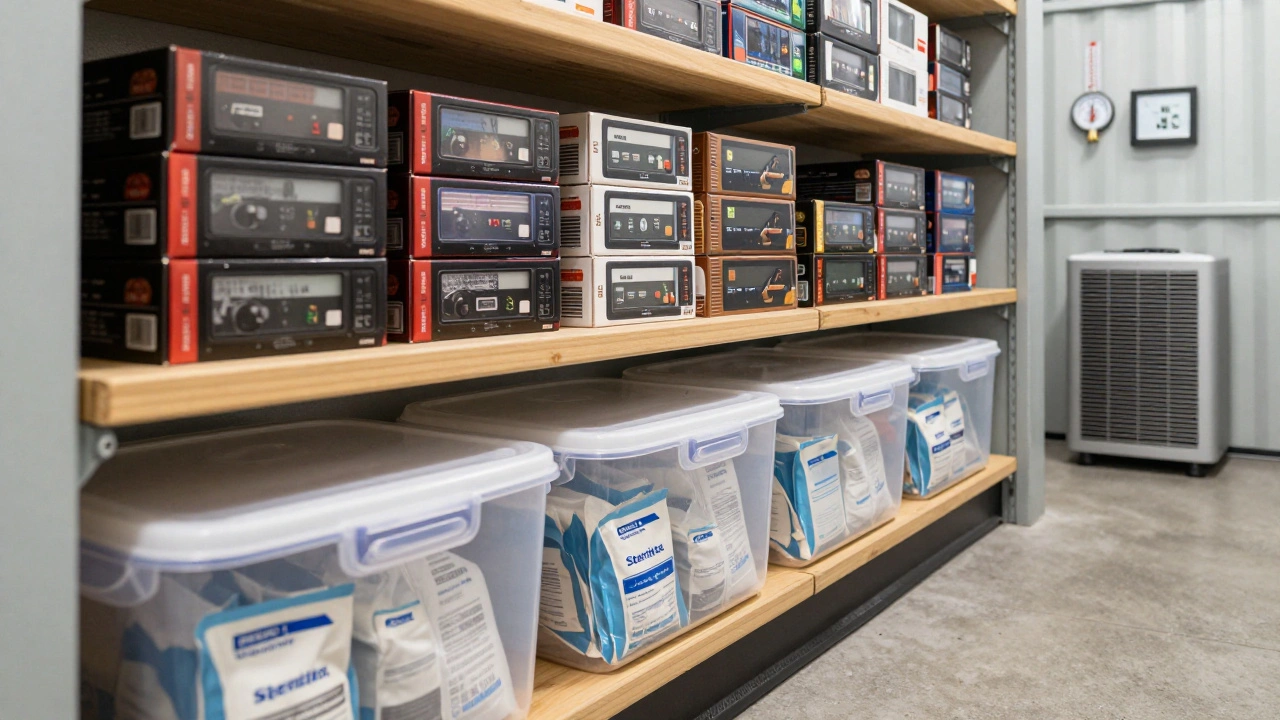

If you’ve ever opened a dusty old game box from the 90s and found the plastic cracked, the label faded, or worse - mold growing on the case - you know how fragile video games can be. It’s not just about nostalgia. For serious collectors, a well-preserved cartridge or disc can be worth hundreds, even thousands of dollars. But storing these items in a garage, attic, or basement? That’s a recipe for disaster. Climate-controlled storage units aren’t just a luxury for collectors; they’re the only reliable way to keep your collection intact for decades.
Why Regular Storage Ruins Video Games
Most people assume a locked storage unit is enough. But temperature swings and humidity are silent killers. In Portland, where winters are wet and summers can spike into the 90s, a regular unit without climate control can swing from 35°F to 95°F in a single season. That’s bad enough for your clothes. For a PlayStation 2, a Nintendo 64 cartridge, or a sealed copy of Super Mario 64, it’s catastrophic. Heat causes plastic to warp. The casing of a Sega Genesis controller can melt if left in direct sunlight. Moisture leads to corrosion on gold contacts inside cartridges. Mold eats through cardboard boxes, stains labels, and ruins manuals. One study from the Library of Congress found that untreated retro game cartridges stored in uncontrolled environments lost up to 40% of their resale value within five years due to physical degradation. That’s not just a damaged game - that’s lost money.What Climate-Controlled Storage Actually Does
Climate-controlled storage units aren’t just air-conditioned rooms. They’re precision environments. These units maintain a steady temperature between 60°F and 70°F and keep humidity levels below 50%. That’s the sweet spot for electronics and paper. No more condensation on your SNES cartridges. No more warping on your Xbox 360 cases. No more musty smell from damp cardboard. These units use industrial dehumidifiers, insulation, and airflow systems to mimic the ideal conditions museums use to preserve artifacts. Companies like Extra Space Storage, Public Storage, and Xtra Storage all offer units built specifically for electronics. They don’t just say “climate-controlled” - they engineer it. The walls are insulated. The floors are sealed. Vents are placed to prevent hot spots. Even the lighting is low-UV to stop fading.How to Pack Your Collection Right
You can have the best storage unit in the world, but if you pack your games like trash, they’ll still get damaged. Here’s how to do it right:- Use original boxes - They were designed for protection. The foam inserts, cardboard thickness, and sealed edges were engineered to buffer shocks and block moisture.
- Buy hard plastic bins - Look for stackable, airtight containers with rubber seals. Brands like Sterilite or Tupperware’s storage line work well. Avoid cheap plastic bins that crack under pressure.
- Add silica gel packets - Put two or three in each bin. These absorb moisture like a sponge. You can buy them in bulk online for under $10 a pack.
- Store games upright - Like books on a shelf. Never stack them flat. The weight crushes boxes and bends cases over time.
- Keep consoles off the floor - Use wooden pallets or plastic shelves. Moisture rises. Even in climate-controlled units, the floor is the most humid part.
- Label everything - Use masking tape and a permanent marker. Include the console, game title, and condition (sealed, used, tested). You’ll thank yourself in five years.
Special Care for Retro vs. Modern Games
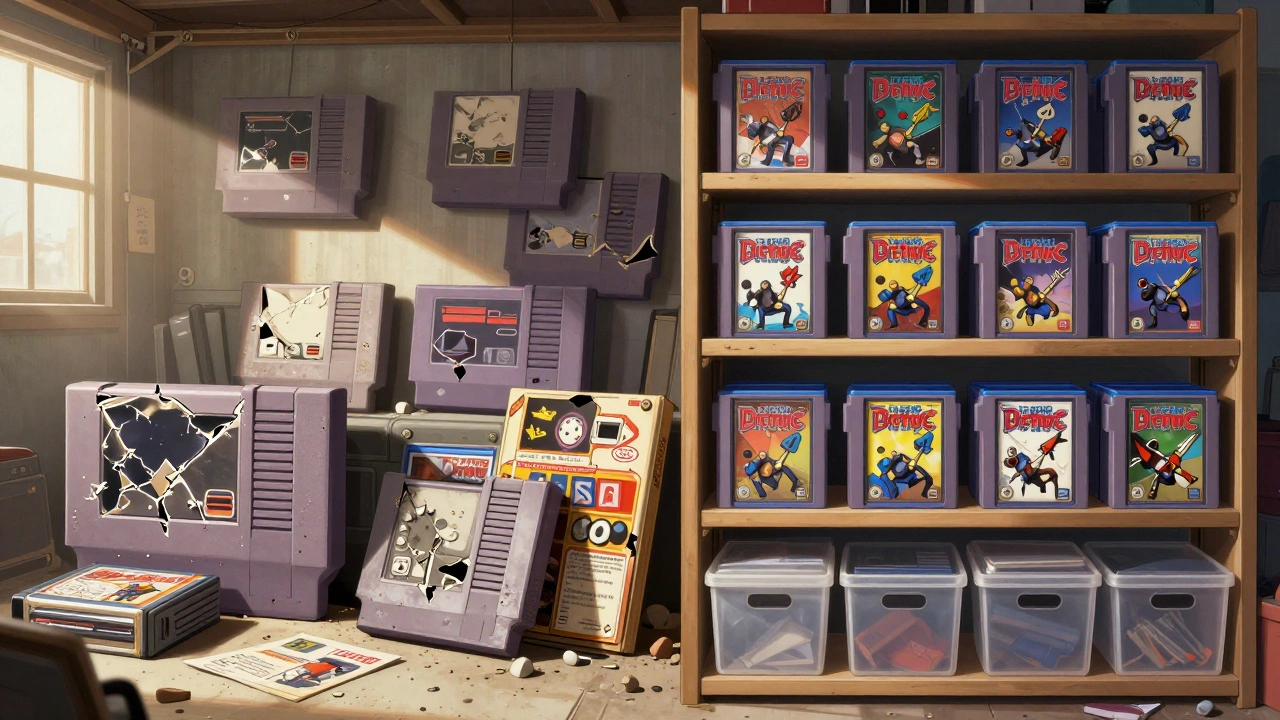
Retro games (pre-2005) need more attention than modern ones. Older cartridges had lead-based solder, rubberized buttons, and paper labels that degrade faster. Capacitors in consoles like the PlayStation 1 or N64 can leak acid over time. That’s why collectors clean consoles every 18 months and replace worn-out capacitors before storage. Modern games (PS5, Xbox Series X, Switch) are more resilient, but they’re not immune. Discs can still scratch. Controllers have rubber triggers that dry out. Dust clogs vents. For these, focus on ventilation. Store consoles with a breathable dust cover - not plastic wrap. Use compressed air every six months to blow out dust from vents. Keep them away from radiators, TVs, or windows where heat builds up.Where to Find the Right Storage Unit
Not all storage companies are equal. Some offer “climate control” but only turn on the AC in summer. Others use cheap sensors that drift out of range. Look for facilities with:- 24/7 temperature monitoring logs (ask to see them)
- Dehumidifiers that run continuously, not just seasonally
- Concrete floors with vapor barriers
- Indoor access (no outdoor ramps where moisture seeps in)
- Security cameras and gated access
Cost vs. Value: Is It Worth It?
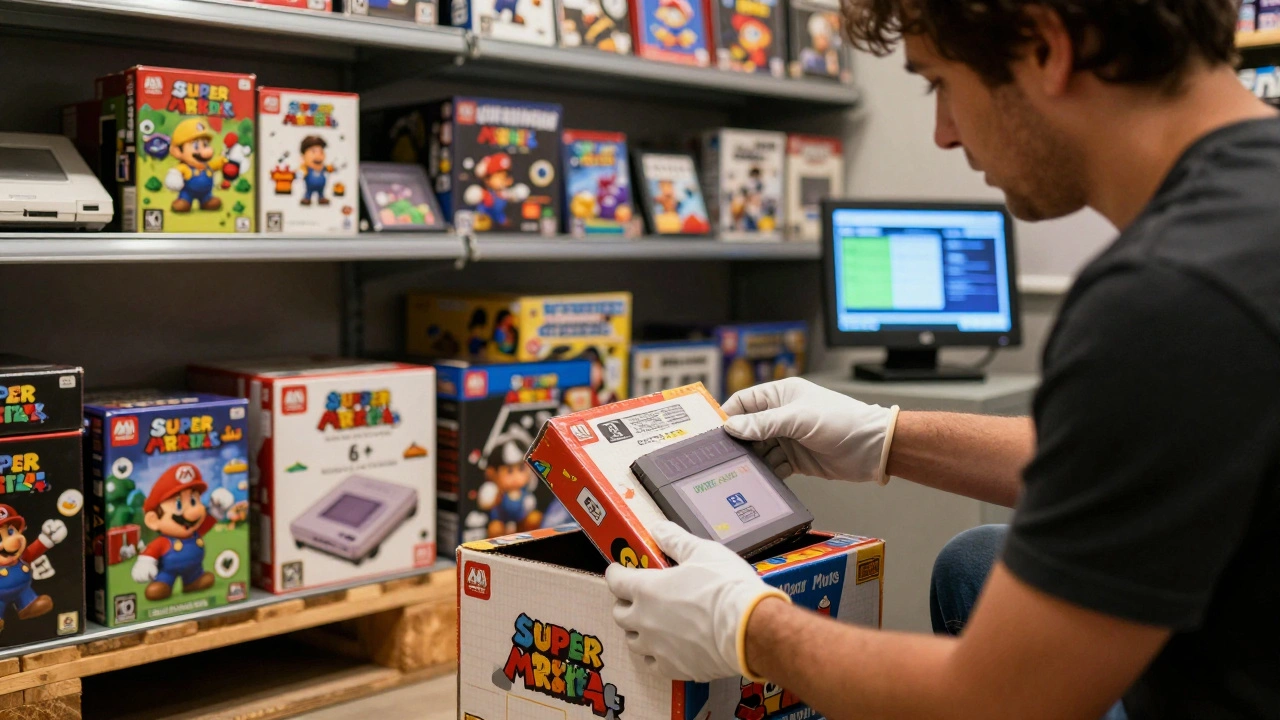
A 10x10 climate-controlled unit in Portland costs about $110-$150 a month. That sounds steep - until you consider what you’re protecting. A sealed copy of Super Mario Bros. 3 in mint condition? $1,200. A Nintendo 64 with original box and manual? $600. A PlayStation 1 with Final Fantasy VII in original packaging? $1,800. One damaged game can wipe out months of storage fees. And if you’re storing 50+ retro titles? The math is obvious. Plus, climate-controlled storage protects more than games. Controllers, power supplies, AV cables, and even your CRT TVs - all can be ruined by humidity. One collector in Seattle lost $4,000 worth of arcade cabinets to mold after storing them in a non-climate unit. He now pays $200/month for a 15x20 unit. No regrets.Long-Term Preservation: Beyond Storage
Storage isn’t a one-time fix. Treat it like maintenance. Every six months, open a box. Check for condensation. Smell for mildew. Replace silica gel packets. Dust shelves. Take photos of your collection and back them up online. That way, even if something happens, you have a record. Some collectors even use climate-controlled storage as a staging area for auctions. They rotate games in and out, keeping only the rarest items locked away. Others use it to preserve games they plan to pass down - not as toys, but as cultural artifacts.What Happens If You Skip Climate Control?
I’ve seen it. A friend stored his NES collection in his garage. Two years later, the boxes were stained, the cartridges wouldn’t connect, and the manuals had black spots. He tried cleaning them. It made things worse. He lost 17 games. Total value: $3,200. He paid $80 a month for storage after that. He says it was the best $80 he ever spent. The truth? Climate-controlled storage isn’t about being fancy. It’s about being smart. Video games are more than entertainment. They’re history. They’re art. They’re investments. And if you care enough to collect them, you owe it to them to protect them properly.Can I just use plastic bins without climate control?
Plastic bins help block dust and minor moisture, but they don’t stop temperature swings or long-term humidity buildup. In places like Portland, where humidity rises in winter and spikes in summer, even sealed bins can develop condensation inside. That’s enough to warp plastic, corrode contacts, and grow mold over time. Climate control is the only way to guarantee stable conditions.
Do I need climate control for modern games too?
Yes, especially if you’re storing consoles or sealed copies. Modern games may have more durable packaging, but discs can still warp, rubber components dry out, and dust builds up in vents. High heat can damage internal electronics over time. Climate-controlled storage prevents these slow, silent failures.
How often should I check on my stored games?
Every 6 months is ideal. Open a few bins, sniff for mustiness, check for condensation on plastic, and replace silica gel packets. If you live in a very humid area, check every 3 months. This takes 20 minutes but can save thousands in repairs or replacements.
Is climate-controlled storage worth it for small collections?
If you have 10 or fewer games, maybe not. But if any of them are rare, sealed, or worth over $200, yes. Even one damaged game can cost more than a year’s storage. It’s insurance. Think of it like storing a vintage watch or guitar - you don’t just toss it in a closet.
Can I store games and consoles together?
Absolutely - but separate them by type. Store all PS5 games in one bin, Xbox ones in another. Don’t stack consoles on top of each other. Use shelves. Keep controllers in padded cases. This prevents pressure damage and makes it easier to find what you need later.