

Running an adult website isn’t just about content-it’s about legal responsibility. If you’re managing a site that serves adult material, you’re not just a publisher. You’re a gatekeeper. And gatekeepers need solid locks. Failure to properly restrict access to minors isn’t just a policy misstep-it can lead to fines, lawsuits, or even criminal charges in some states.
Why Age Gating Isn’t Optional
In the U.S., federal law under 18 U.S.C. § 2257 requires operators of adult content sites to verify that all performers are over 18. But that’s just the start. Many states have gone further. California’s AB 1524, effective since 2023, mandates that any website with adult content must implement a verified age gate before users can view anything. Similar laws exist in Texas, Florida, and Louisiana. These aren’t suggestions. They’re enforceable rules.
And it’s not just about U.S. law. The EU’s Digital Services Act (DSA) requires platforms to take "reasonable and proportionate" steps to prevent minors from accessing harmful content. That includes adult material. If your site gets traffic from Europe, you’re subject to these rules-even if you’re based in Oregon.
What Counts as a Valid Age Gate?
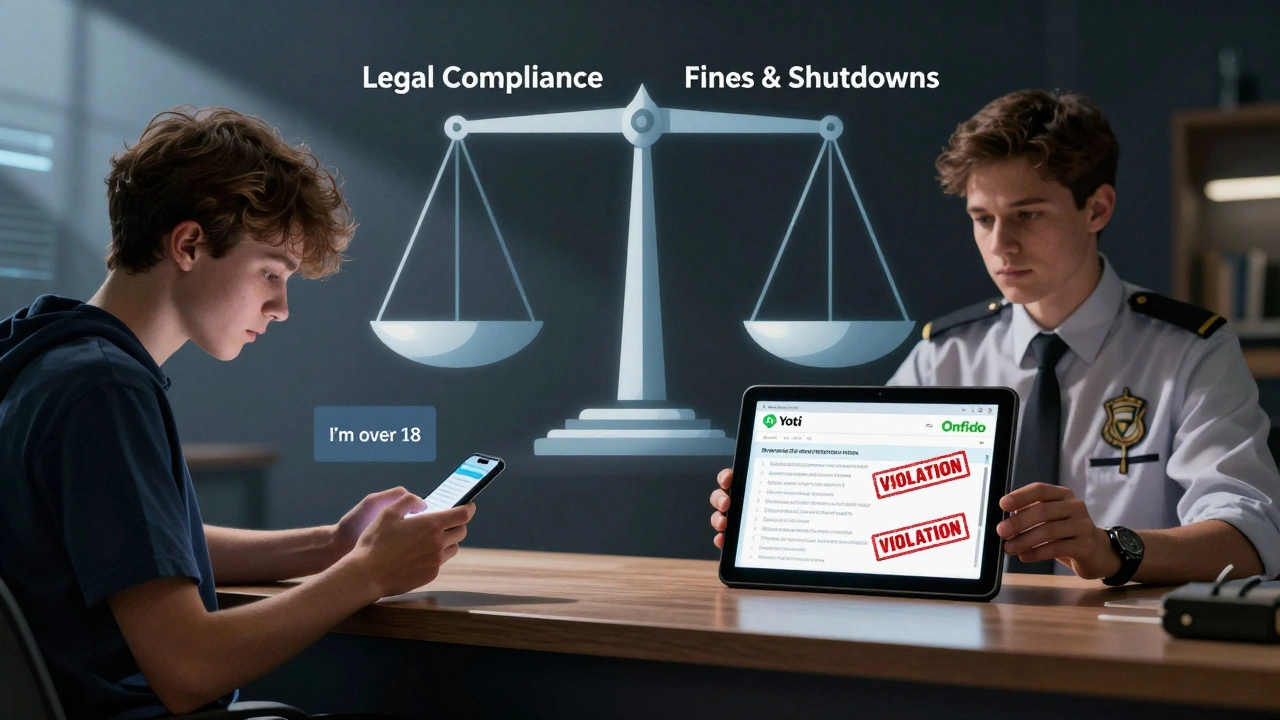
Not all age verification methods are created equal. A simple checkbox saying "I’m over 18"? That’s not enough. Courts and regulators have repeatedly ruled that passive consent doesn’t meet legal standards.
Effective age gating requires:
- Document verification-uploading a government-issued ID (driver’s license, passport)
- Third-party verification services-companies like Yoti, Onfido, or AgeChecked that cross-check ID data against public records
- Biometric checks-facial recognition matched to ID photos, reducing fraud
- Payment verification-requiring a credit card in the user’s name, which ties identity to age
Some sites try to use email confirmation or phone number verification. These are weak. Teens can easily use a parent’s phone or a fake email. Regulators don’t accept those as standalone methods anymore.
Access Controls Beyond the Gate
Once someone passes the age gate, your job isn’t done. You need layered controls to prevent accidental exposure.
For example:
- Use session-based authentication-once verified, the user stays logged in across the site
- Block search engine indexing of adult pages using robots.txt and meta tags
- Implement parental control-style filters on shared devices (like home computers or public libraries)
- Require re-verification after 30 days of inactivity
Some platforms also use IP-based geo-blocking to restrict access from schools, libraries, or public Wi-Fi networks. While not foolproof, it adds another layer of defense.
Common Mistakes That Get You in Trouble
Most violations come from sloppy implementation, not malice. Here’s what goes wrong:
- Using outdated verification tools-some services stopped updating their databases after 2022. If your system still uses them, you’re at risk.
- Not logging verification attempts-regulators can demand audit trails. If you can’t prove who was verified and when, you’re vulnerable.
- Letting users bypass the gate-if your site has a "guest mode" or lets users click "I’m over 18" on mobile apps without verification, you’re violating state laws.
- Ignoring third-party content-if users upload content (like forums or comment sections), you’re still liable. You need automated moderation tools, not just human reviewers.
A 2024 audit by the National Association of Attorneys General found that 63% of adult sites with high traffic had at least one compliance gap. Most were fixable-but only if caught early.
Best Practices for Compliance
Here’s what works:
- Partner with a verified third-party age verification provider-don’t build your own system from scratch.
- Store verification data securely and only as long as legally required (usually 30-90 days).
- Display a clear, visible notice: "This site requires age verification. Access denied without proof of adulthood."
- Train your moderation team to recognize bypass attempts, like screen sharing or fake IDs.
- Review your compliance every 90 days. Laws change fast.
Some operators use a "two-step" verification: ID upload + payment card. This reduces fraud by over 80% compared to ID-only systems, according to a 2025 study by the Digital Trust Institute.
What Happens If You Get Caught?
Penalties vary by state. In California, first-time violations can cost up to $2,500 per incident. Repeat offenses? Up to $10,000 per violation. In Florida, failure to verify can trigger criminal charges. And if minors access your content, you could face civil suits from parents or schools.
There’s also reputational damage. Payment processors like Stripe and PayPal have started blocking sites without verified age gates. Hosting providers may shut you down. Even ad networks like Google Ads now refuse to serve adult content without proof of compliance.
What About Non-U.S. Sites?
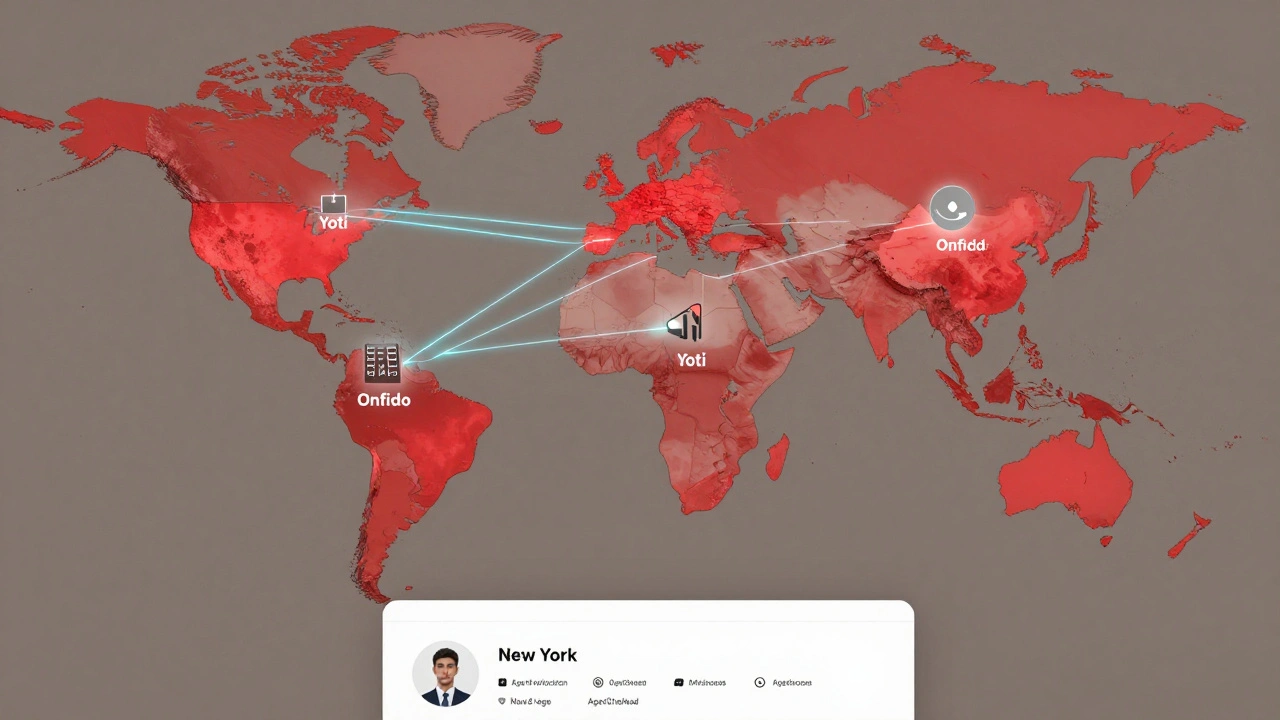
If you’re based outside the U.S., you still need to comply if your site reaches U.S. users. The U.S. doesn’t need jurisdiction over your server-it just needs to reach your audience. A single U.S.-based visitor who accesses your site could trigger legal exposure.
EU sites must comply with DSA. Canada has similar rules under Bill C-36. Australia’s eSafety Commissioner actively monitors international sites for underage access.
There’s no global standard, but the trend is clear: regulators are aligning. What’s legal in one country may be illegal in another. If you want to operate internationally, assume the strictest rules apply everywhere.
Tools That Actually Work
Here are three verified age verification services used by compliant adult sites in 2026:
- Yoti-uses government ID + facial recognition. Complies with GDPR and CCPA. Used by over 1,200 adult platforms.
- Onfido-AI-driven ID verification. Integrates with payment gateways. Used by major European sites.
- AgeChecked-U.S.-focused, accepts driver’s licenses and credit cards. Low false-positive rate.
These services handle the heavy lifting: data encryption, storage, audit logs, and regulatory updates. You just plug them in.
Final Reality Check
You can’t outsmart the law. The days of relying on user trust or "honor systems" are over. Regulators have tools now. They’re watching. And they’re not just going after big sites-they’re targeting small operators too.
If you’re running an adult website today, your compliance isn’t optional. It’s your liability shield. Get it right, or risk losing everything.
Do I need age gating if my site only has text content?
Yes. Even text-based adult content-like erotic stories or forums-falls under age restriction laws in most jurisdictions. The law targets the nature of the content, not the format. If the material is classified as adult, access must be restricted.
Can I use a simple pop-up saying "I’m over 18"?
No. Courts have consistently ruled that unverified consent checkboxes are legally insufficient. This method has been rejected in multiple lawsuits and regulatory actions since 2023. You need documented proof of age, not just a click.
What if I’m based outside the U.S. but have U.S. visitors?
You’re still subject to U.S. laws if your site is accessible to minors in the U.S. There’s no "foreign exemption." If you have traffic from California, Texas, or New York, you must comply with their age-gating rules. Ignorance of location doesn’t protect you.
How long should I keep verification records?
Most states require records to be kept for at least 30 days. Some, like California, require 90 days. Federal law under 18 U.S.C. § 2257 requires records of performer age to be kept for five years. Always check local laws. Never delete verification logs unless legally permitted.
Can I use blockchain or crypto for age verification?
No current blockchain or crypto-based age verification system meets regulatory standards. These methods lack verifiable identity links to government-issued IDs and have been flagged by regulators as unreliable. Stick to proven third-party services with documented compliance.