

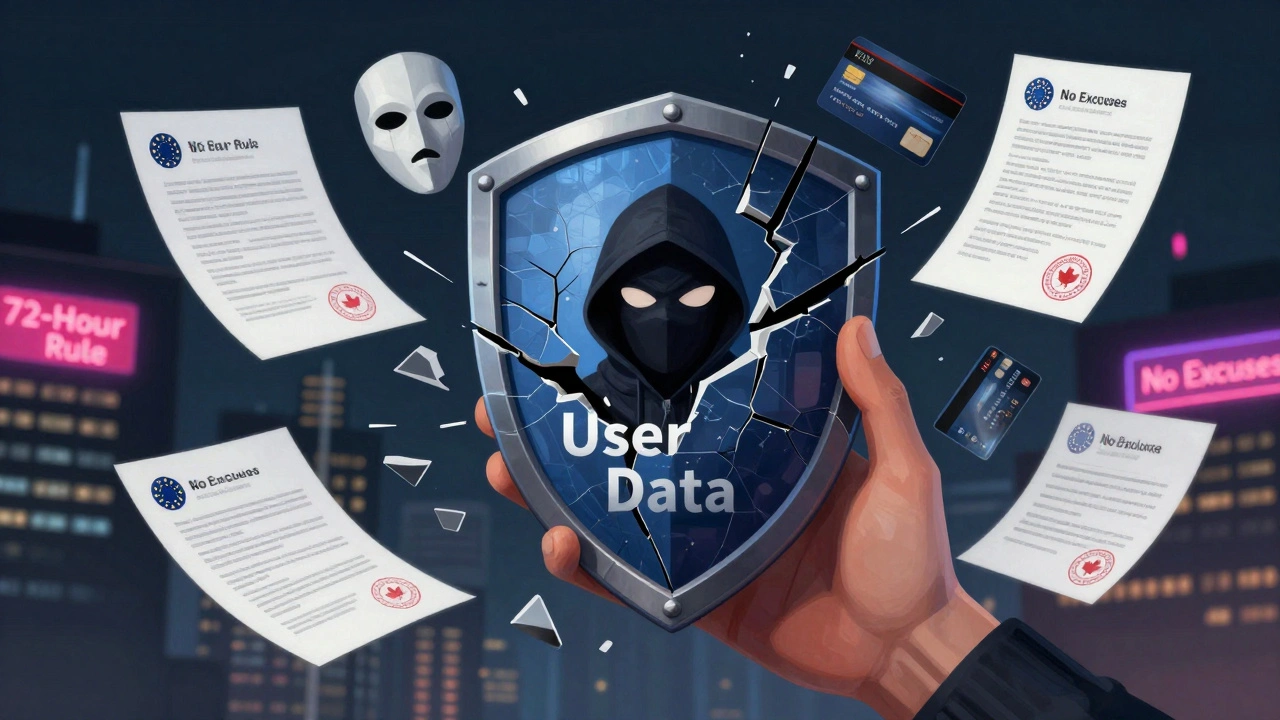
If your adult platform handles user data-whether it’s login details, payment info, or private messages-you’re legally required to report data breaches. Not doing so can mean heavy fines, lawsuits, or even getting shut down. There’s no wiggle room. Rules vary by country, but the core obligations are the same: act fast, be clear, and document everything.
What Counts as a Data Breach?
A data breach isn’t just a hacker stealing a database. It’s any unauthorized access, loss, or disclosure of personal data. For adult platforms, that includes:- User email addresses and passwords
- Payment card details or bank account info
- IP addresses linked to activity logs
- Private messages or media shared between users
- Age verification records or ID scans
If even one user’s data is exposed, and it could lead to identity theft, harassment, or financial harm-you’ve got a breach. Don’t wait for confirmation. If you suspect something’s wrong, assume it happened.
Who Sets the Rules?
There’s no single global law, but most adult platforms must follow at least one of these:- GDPR (EU/UK): Requires reporting within 72 hours of discovering a breach. Fines up to €20 million or 4% of global revenue.
- CCPA/CPRA (California): Must notify affected users without unreasonable delay. No strict 72-hour window, but delays can be seen as negligence.
- PIPEDA (Canada): Report to the Privacy Commissioner and affected individuals if there’s real risk of significant harm.
- HIPAA (if handling health data): If you store medical info (like sexual health records), federal rules apply.
- State laws (US): All 50 states have breach notification laws. Some, like New York and Texas, have stricter timelines than federal rules.
Even if your company is based in one country, if users from the EU, California, or Canada access your platform-you’re subject to their laws. Ignorance isn’t a defense.
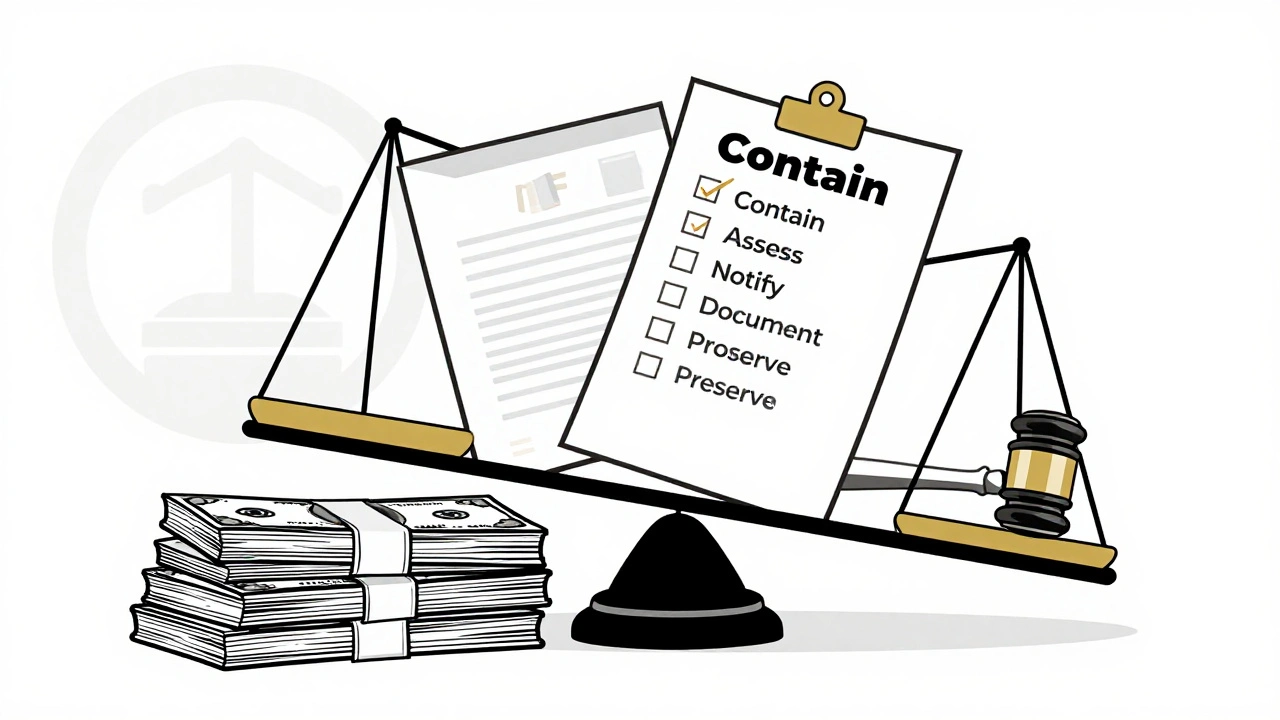
The 5-Step Legal Checklist
Here’s what you must do, step by step, after discovering a breach:
- Contain the breach-Shut down affected systems, change passwords, revoke access tokens, and block malicious IPs. Don’t try to fix it while users are still at risk.
- Assess the damage-Determine what data was exposed, how many users were affected, and whether it’s likely to cause harm. Use logs, backups, and forensic tools. Don’t guess.
- Notify regulators-If you’re under GDPR, report to the relevant supervisory authority within 72 hours. In California, file with the Attorney General if more than 500 residents are affected. Other states have their own portals.
- Notify affected users-Send clear, direct emails or in-app alerts. Don’t bury the news in a newsletter. Include: what happened, what data was taken, what you’re doing to fix it, and what users should do (change passwords, monitor accounts, etc.).
- Document everything-Keep logs of every action, who was notified, when, and how. This isn’t just for compliance-it’s your legal shield if someone sues you later.
What Not to Do
Many adult platforms make these mistakes-and pay for them:
- Delaying notification-Waiting until after the weekend or until after a marketing campaign ends? That’s a violation. Regulators don’t care about your schedule.
- Using vague language-Saying “an issue occurred” or “unauthorized access” doesn’t cut it. Be specific: “Attackers accessed 12,000 user email addresses and hashed passwords.”
- Not offering help-Users need next steps. Provide a free credit monitoring service, reset password links, or a dedicated support line. It shows responsibility.
- Blaming users-Don’t say things like “This happened because you used a weak password.” You’re the platform. You’re responsible for security.
- Deleting logs-Even if you think they’re embarrassing, keep them for at least 6 months. They’re evidence you acted properly.
Why Adult Platforms Are High-Risk Targets
Adult platforms are hit more often than you think. Why? Because the data is valuable. Hackers know:
- People are less likely to report identity theft if it involves adult content-so data sits on the dark web longer.
- Payment data from adult sites often includes real names and addresses, making it useful for fraud.
- Age verification records can be used for blackmail or doxxing.
According to a 2025 report by the Identity Theft Resource Center, adult platforms accounted for 18% of all data breaches involving personal data-even though they represent less than 5% of online services. That’s because many still rely on outdated systems, third-party plugins with known vulnerabilities, or poor access controls.
How to Prevent Breaches Before They Happen
Prevention is cheaper than damage control. Here’s what works:
- Use end-to-end encryption for messages and media storage.
- Require two-factor authentication for all staff and admin accounts.
- Regularly audit third-party vendors (payment processors, analytics tools, hosting providers).
- Train staff on phishing scams-most breaches start with a clicked link.
- Encrypt data at rest and in transit. If you’re storing passwords, use bcrypt or Argon2-not MD5 or SHA-1.
One platform in Germany got fined €1.2 million after a breach exposed 400,000 users. They’d stored passwords in plain text. That’s not negligence-that’s criminal carelessness.
What Happens If You Don’t Report?
Regulators aren’t bluffing. In 2024, the UK Information Commissioner’s Office fined an adult site £1.8 million for failing to report a breach affecting 850,000 users. The company waited 11 days. They also didn’t notify users for 3 weeks. The penalty wasn’t just for the breach-it was for the cover-up.
Legal consequences include:
- Fines up to 4% of global revenue (GDPR)
- Class-action lawsuits from users
- Loss of payment processing services (Stripe, PayPal, and others ban non-compliant platforms)
- App store removal (Apple and Google remove apps that violate data rules)
- Criminal charges in extreme cases (if negligence led to identity theft or child exploitation)
Final Reminder
You can’t outsource responsibility. Even if your hosting provider, payment processor, or developer caused the breach, you are legally on the hook. There’s no “not my fault” defense.
Set up a breach response plan now. Test it. Train your team. Don’t wait for an attack. If you’re running an adult platform, data protection isn’t optional-it’s the foundation of your business.
Do I have to report a breach if no money was stolen?
Yes. Even if financial data wasn’t taken, exposure of email addresses, IP logs, or private messages can lead to harassment, doxxing, or identity theft. GDPR and CCPA require reporting if there’s a risk of harm to individuals-regardless of whether money changed hands.
Can I get away with not reporting if I fix the issue quickly?
No. Fixing the system doesn’t undo the breach. The damage-exposure of personal data-has already occurred. Regulators care about notification, not just remediation. Delayed or missing reports are treated as separate violations.
What if my platform is hosted outside the EU or US?
Location doesn’t matter. If users from the EU, California, Canada, or other regulated regions interact with your platform, you must comply with their laws. Hosting in a country with weak data laws doesn’t protect you-it just makes enforcement harder, not illegal.
Do I need a lawyer to report a breach?
Not always, but it’s smart. Many regulators offer online forms for breach reporting. But if the breach is large, involves minors, or spans multiple countries, consult a privacy attorney. They can help you avoid missteps that turn a reportable incident into a lawsuit.
How long should I keep breach records?
At least 6 months, and preferably 2 years. This covers statute of limitations for lawsuits and audits. Keep logs of who was notified, when, how, and what actions were taken. This documentation can be your best defense if regulators question your response.