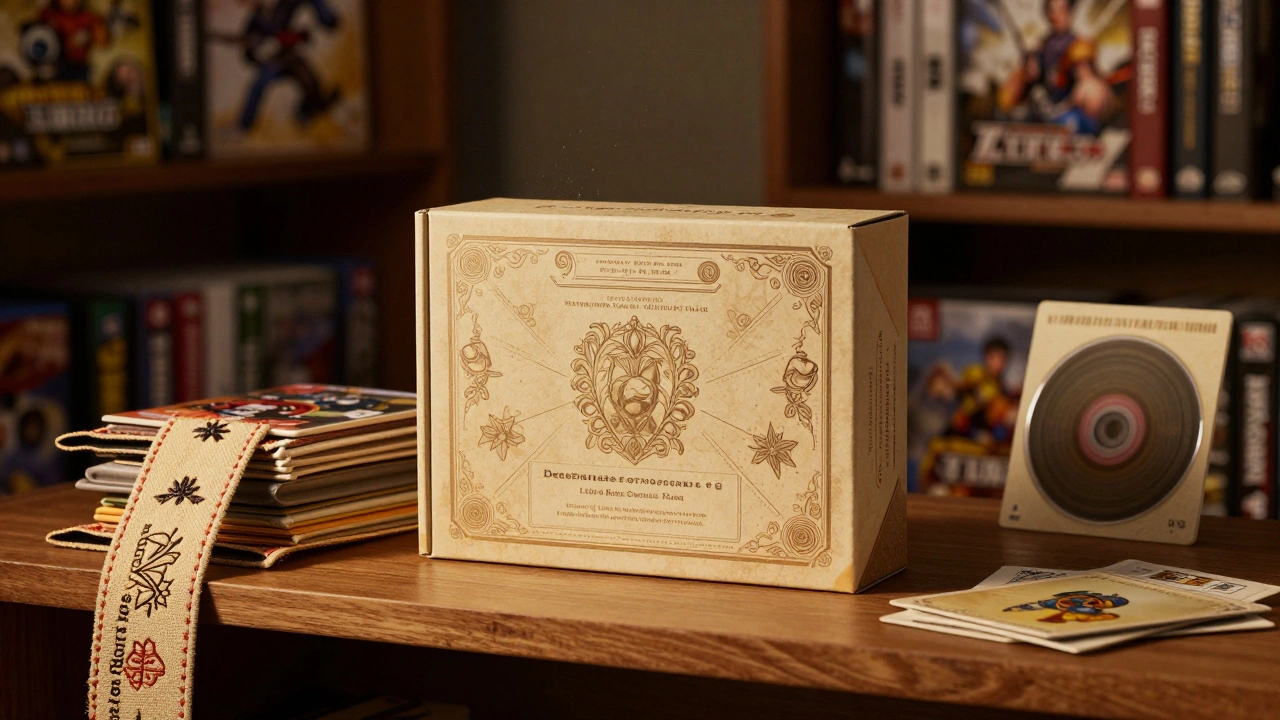

Physical video games aren’t dead-they’re changing. While digital downloads dominate sales numbers, the market for boxed games has quietly come back to life, driven not by big studios or billion-dollar marketing campaigns, but by small, sharp publishers who treat each release like a limited-edition art object. These are the boutique publishers: lean teams, often under ten people, who don’t chase mass appeal. Instead, they build cult followings by curating games that bigger companies ignore-strange, beautiful, or deeply personal experiences that only make sense on disc or cartridge.
Why Physical Games Still Matter
Think physical games are just for collectors? That’s half right. The other half? They’re for players who want something tangible-a sense of ownership, a shelf presence, a ritual around playing. A 2024 report from the NPD Group showed physical game sales in North America and Europe rose 12% year-over-year, with indie titles accounting for nearly 40% of that growth. That’s not a fluke. It’s a reaction. After years of digital-only releases, players are hungry for something they can hold, open, and keep.
But here’s the catch: getting a physical game onto store shelves isn’t just about pressing discs. It’s a maze of certifications, regional regulations, manufacturing logistics, and retail relationships. Nintendo requires unique cartridge designs for each region. Sony and Microsoft demand compliance with strict packaging and labeling rules. The cost to produce 10,000 copies of a PS5 game can run over $120,000-not counting shipping, customs, or retail fees. Without a publisher, that’s impossible.
What Makes a Boutique Publisher Different
Boutique publishers aren’t indie publishers with smaller budgets. They’re a different breed entirely. Indie publishers like Devolver Digital or Annapurna Interactive still operate with corporate structures, marketing teams, and digital-first strategies. Boutique publishers? They’re more like curators. They pick one or two games a year. They work directly with the developer-sometimes for years-shaping the physical experience as much as the game itself.
Take Limited Run Games a boutique publisher specializing in physical releases of indie and retro-style games, known for limited print runs and collector-focused packaging. They don’t sell to Walmart. They sell to people who pre-order on their website, then wait six months for a numbered box to arrive. Their releases often include manuals, art cards, soundtracks, and even custom packaging designed by the original artists. One 2023 release, Blasphemous II, came with a fold-out map, a cloth poster, and a metallic sticker. It sold out in 48 hours. Not because it was the best game of the year-but because it felt like owning a piece of something rare.
Another example is WizKids a boutique publisher known for high-quality physical releases of narrative-driven indie games, often with premium packaging and collectible components. They focus on story-heavy titles like Thimbleweed Park and Return of the Obra Dinn. Their boxes look like vintage novels. The cartridges are etched with artwork. They don’t do discounts. They don’t do sales. They do scarcity.
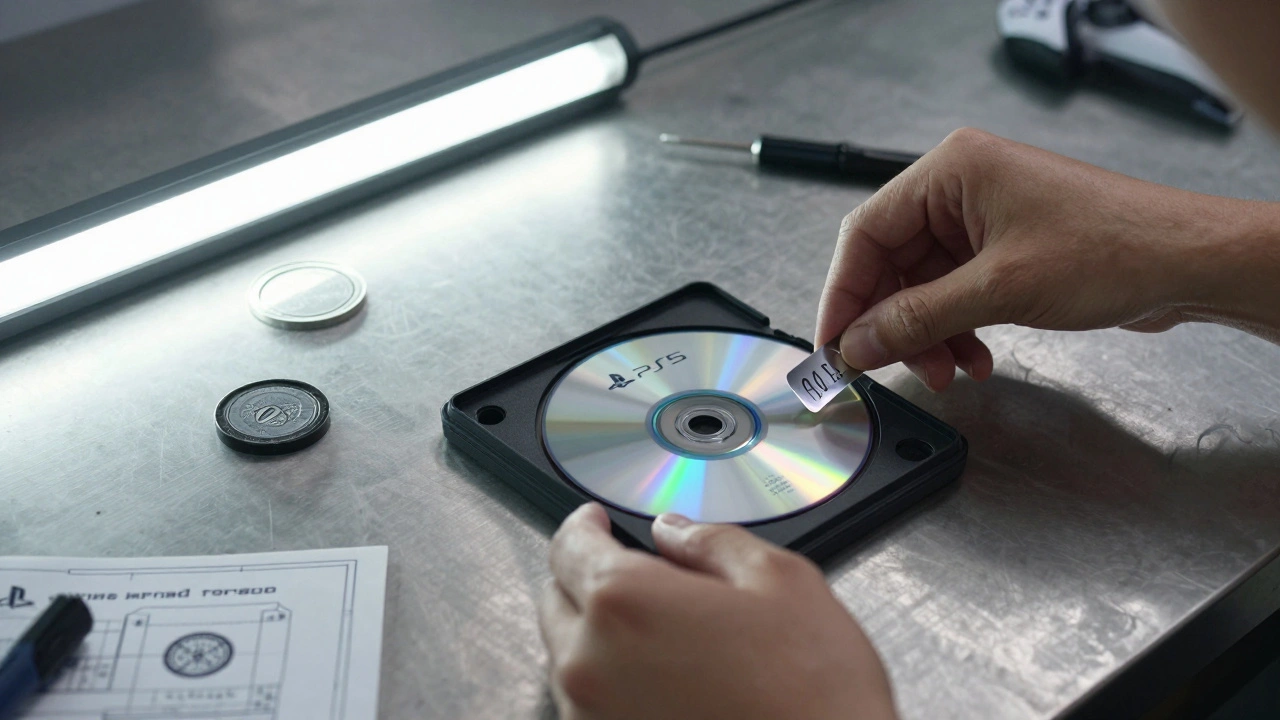
The Physical Game Supply Chain
Behind every boxed game is a hidden network of specialists. Boutique publishers don’t own factories. They partner with them. Companies like Retro Game Manufacturing a U.S.-based manufacturer specializing in cartridge and disc production for indie and boutique publishers in Oregon handle the actual pressing. Others like Global Game Distribution a logistics firm that manages international shipping, customs, and retail placement for physical game releases in the Netherlands handle shipping to Europe. Then there’s GameCert Solutions a certification service that ensures physical game packaging meets Sony, Microsoft, and Nintendo’s technical and legal standards, which handles the paperwork for platform approval.
Each step adds cost. A single PS5 cartridge can cost $8 to produce. Add packaging, manuals, and artwork, and you’re at $22. Shipping to the U.S. from Asia? Another $3. Retailers take 30-50% of the suggested retail price. That means a game sold for $49.99 leaves the publisher with maybe $15 per unit. To break even on a 5,000-unit run? You need to sell 4,000 copies. No room for error.
How Boutique Publishers Survive
They don’t rely on volume. They rely on loyalty.
Boutique publishers build communities. They post behind-the-scenes videos of the manufacturing process. They let fans vote on box art. They release “first print” editions with handwritten notes from the devs. They use Discord, not Instagram ads. Their customers aren’t casual buyers-they’re enthusiasts who pre-order months in advance and resell on eBay for triple the price.
Take Raw Fury a boutique publisher focused on atmospheric, narrative-driven indie games with physical releases that emphasize design and collectibility. Their 2025 release of Wanderhome came with a hand-stitched fabric bookmark and a postcard from the game’s fictional world. Pre-orders opened on a Tuesday. By Friday, they had 8,000 units sold. No press tour. No influencers. Just a mailing list of 12,000 people who trusted them.
They also avoid the pitfalls of big publishers. No seasonal sales. No loot boxes. No digital-only exclusives. Their games are designed to be played once, then kept forever. That’s why they’re thriving in a market where digital games are forgotten after a month.

The Future of Physical Games
The rise of boutique publishers is reshaping how we think about game ownership. It’s no longer about how many units you sell. It’s about how deeply you connect with the people who do.
Platforms are noticing. Nintendo now offers a streamlined physical release program for indie developers through their “Indie Partner Program.” Sony’s physical certification portal has been redesigned to reduce approval time from 12 weeks to 5. Even Microsoft has started allowing smaller publishers to submit physical titles without needing a third-party distributor.
But the real shift? It’s cultural. Younger players-Gen Z and Gen Alpha-are rejecting the idea that games are just data. They want objects. They want stories. They want something that lasts. Boutique publishers are answering that call.
Look at the sales of Streets of Rage 4 a modern revival of a classic beat-’em-up series, released in physical form by a boutique publisher with retro-inspired packaging and collectible extras. The game didn’t break any charts. But its physical edition, released by Dotemu a boutique publisher specializing in retro-inspired games with premium physical releases, sold 27,000 copies in its first month. That’s more than the digital version. And it’s still selling six months later.
Physical games aren’t a nostalgia trend. They’re a statement. And boutique publishers are the ones making it.
Why This Matters
If you’ve ever wondered why a $50 game comes with a 40-page manual, a vinyl poster, and a code for a digital soundtrack-it’s because someone cared enough to make it that way. Not for profit. Not for scale. But for meaning.
Boutique publishers are proving that games can be more than products. They can be artifacts. They can be heirlooms. And in a world where everything is streaming, deleting, or updating, that’s the most radical thing of all.
Are boutique publishers the same as indie publishers?
No. Indie publishers focus on funding and distributing games from independent developers, often with a digital-first approach. Boutique publishers prioritize physical releases, limited runs, and collectible packaging. They work with indie devs, but their goal isn’t market reach-it’s craftsmanship. Think of indie publishers as enablers; boutique publishers as curators.
Can I buy physical games directly from boutique publishers?
Yes, and that’s how most of them sell. Companies like Limited Run Games, Dotemu, and Raw Fury sell directly through their websites. They often use pre-orders to fund production and limit runs to create scarcity. Retailers like GameStop or Amazon rarely carry these editions-they’re too niche. If you want one, you have to act fast when it’s announced.
Why do boutique publishers limit their runs?
It’s not about scarcity for the sake of it-it’s about sustainability. Producing 10,000 copies of a game costs tens of thousands of dollars. If they overproduce, they’re stuck with unsold inventory. Limited runs let them cover costs without risking bankruptcy. It also builds excitement. Knowing a game is rare makes players value it more. Some editions sell out in hours and never get reprinted.
Do boutique publishers release games on all consoles?
Not always. Many focus on Nintendo Switch because its cartridge system is cheaper and easier to certify than PS5 or Xbox discs. Some stick to PC physical releases, which are simpler to produce. A few, like Dotemu, have expanded to PS5 and Xbox Series X, but it’s rare. Each platform has different certification rules, manufacturing costs, and retail requirements. Boutique publishers pick one or two platforms max.
Are physical games from boutique publishers worth the price?
If you care about the game as more than a file, yes. You’re not just buying the game-you’re buying a curated experience: the box, the art, the manual, the soundtrack, the story behind its creation. Many of these editions include extras you can’t get digitally, like hand-numbered certificates or signed art cards. Resale values often double within a year. For collectors and enthusiasts, it’s not expensive-it’s an investment.