
If you’re selling adult content online and shipping it to customers around the world, you’re not just running a business-you’re navigating a minefield of legal traps. Countries don’t just ban adult material; they punish sellers with fines, asset freezes, and even criminal charges. One wrong move could shut down your operation overnight. And it’s not just about what you post-it’s about where it goes, how it’s packaged, and who pays for it.
What Counts as Adult Content Under Export Laws?
There’s no global standard. The U.S. defines adult content as material that lacks serious literary, artistic, political, or scientific value under the Miller Test. But in Germany, even simulated content with minors is illegal. In Saudi Arabia, any sexual imagery-even between consenting adults-is banned. Japan allows some forms of animated adult content, but bans real footage of minors. Australia requires strict age verification and classifies explicit material as R18+, meaning it can’t be shipped to minors. If your product is labeled as "adult entertainment," that’s not enough. You need to know exactly what each country considers obscene, indecent, or illegal.
Some platforms classify content by type: real vs. animated, consensual vs. simulated, solo vs. group. But governments don’t care about your labels. They care about what their customs officers see when a package arrives. A video labeled "educational" might be fine in Canada but trigger an investigation in the UAE. You can’t rely on your platform’s classification. You need your own compliance checklist.
Which Countries Have Strict Export Bans?
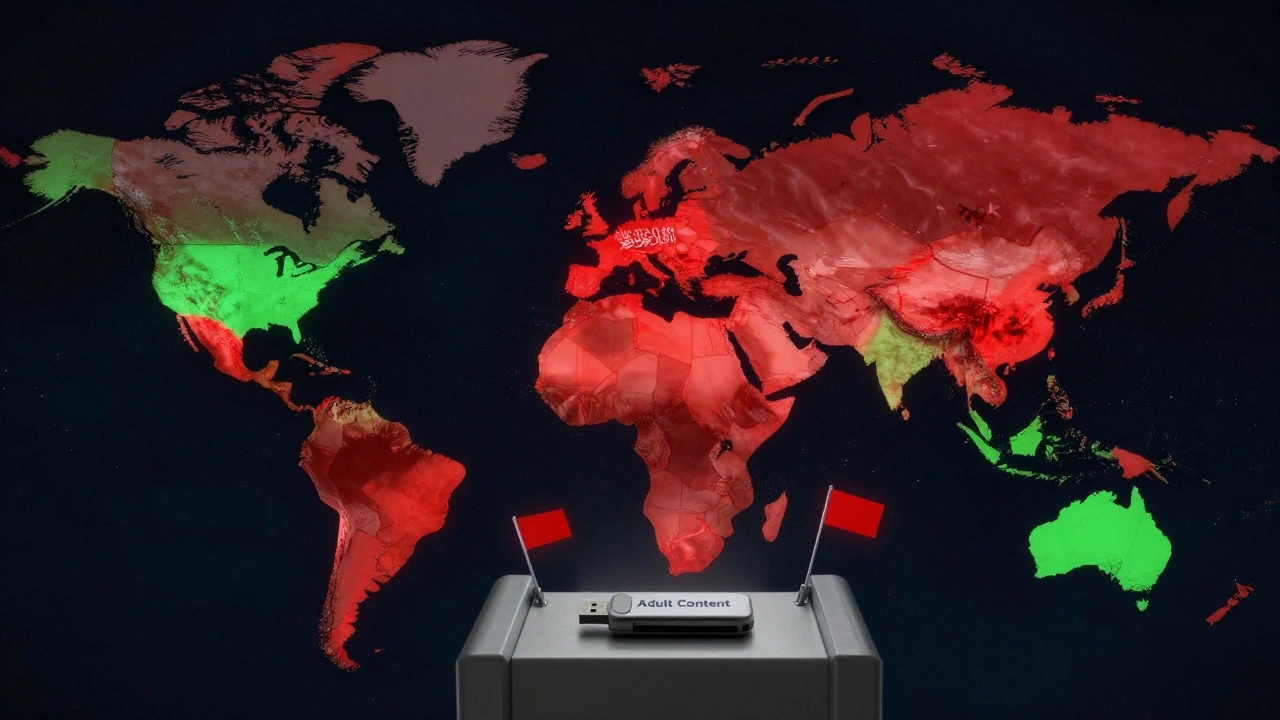
More than 40 countries outright ban the import of adult material. Some are obvious: Iran, North Korea, Brunei. Others are less clear. The United Arab Emirates doesn’t allow any sexual content, even if it’s legal in the U.S. or UK. India has cracked down hard since 2023, seizing shipments and blocking payment processors. In Russia, adult content is classified as "extremist material" if it’s deemed to "undermine family values."
Then there are the sanctions zones. If you’re selling to customers in Crimea, Donetsk, or Luhansk (even if they’re using a VPN), you’re violating U.S. and EU sanctions. The same goes for Iran, Syria, Cuba, and North Korea. Payment processors like Stripe and PayPal automatically freeze accounts that process transactions to these regions. Banks report suspicious activity to FinCEN. One sale to a sanctioned country can trigger an audit that lasts years.
How Payment Processors Enforce the Rules
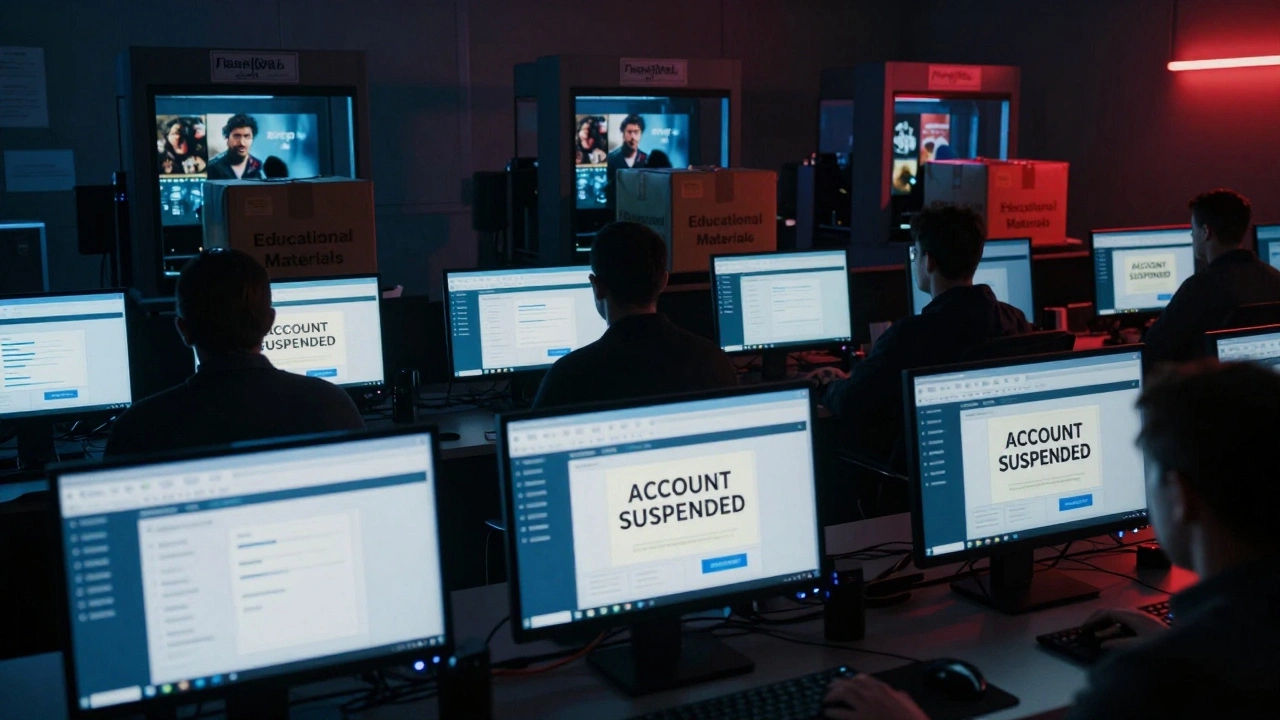
You might think you’re safe if you use crypto or a private bank. You’re not. Major payment providers track IP addresses, shipping destinations, and customer behavior. If a customer in Saudi Arabia buys a video from your site, and their billing address is in Dubai, PayPal flags it. Stripe shuts down your account if more than 5% of your transactions go to banned jurisdictions. Even if you use a third-party processor, they’re required to comply with OFAC sanctions. You don’t get a warning. Your funds get frozen. Your business disappears overnight.
Some sellers try to use crypto wallets or peer-to-peer payment apps. But blockchain analysis firms like Chainalysis and Elliptic share data with financial regulators. If your wallet receives funds from a sanctioned IP or exchanges through a regulated exchange, you’re still at risk. The U.S. Treasury added 12 crypto addresses linked to adult content platforms to its sanctions list in late 2025.
Shipping and Packaging Risks
Even if your content is digital, shipping physical media-USB drives, DVDs, printed materials-is high-risk. Customs agencies scan packages using AI that detects sexual imagery. A single flagged item can trigger a full inspection of your entire shipment. In 2024, U.S. Customs seized over 8,000 packages from adult content sellers heading to Europe and Asia. Many were sent via "discreet" packaging labeled as "electronics accessories" or "educational materials." That didn’t fool anyone. The penalty? Up to $250,000 per violation under U.S. export control laws.
Some sellers use third-party fulfillment centers. But if those centers are based in the U.S., EU, or UK, they’re legally obligated to screen shipments. Many now refuse to handle adult content entirely. If you’re using a warehouse in Poland or Singapore, check their terms of service. Some quietly report customers to authorities to avoid liability.
How to Stay Legal: A Practical Checklist
There’s no magic solution, but there are steps you can take to reduce risk:
- Know your markets: Only sell to countries where adult content is legal. Use a geo-blocking tool that blocks access from banned regions-not just IP-based, but also based on payment currency and shipping address.
- Verify customer location: Require government-issued ID from buyers in high-risk countries. Canada, Australia, and the UK require proof of age and residency. Do the same for yourself.
- Avoid physical shipping: If possible, deliver content digitally via encrypted download links. No packages = no customs inspections.
- Use compliant payment processors: Only use services that explicitly allow adult content (like CoinGate for crypto or specialized fintechs like Payoneer’s adult industry tier). Avoid PayPal, Stripe, and Square.
- Document everything: Keep records of customer IDs, transaction logs, and geo-blocking logs. If you’re audited, you need proof you tried to comply.
- Update your terms: Include clauses that hold buyers responsible for local laws. If they’re in a banned country and buy anyway, you’re not liable-but only if your terms are clear and they agree.
What Happens If You Get Caught?
Penalties vary by country. In the U.S., violating export controls can mean fines up to $1 million and 20 years in prison under the International Emergency Economic Powers Act. The EU can impose fines of up to 4% of your global revenue. In Australia, you could be charged with distributing obscene material and face a criminal record. In some countries, you don’t even need to be present to be prosecuted. A warrant can be issued, and your assets seized.
Many sellers assume they’re anonymous. But digital footprints are permanent. Your domain registration, server logs, payment history, and even metadata in your video files can be traced. Law enforcement agencies share data across borders. A case in Germany in 2025 led to the arrest of a U.S.-based seller because his video files contained embedded metadata linking back to his Oregon-based hosting server.
Alternatives to Direct Sales
If the legal risks feel too high, consider these alternatives:
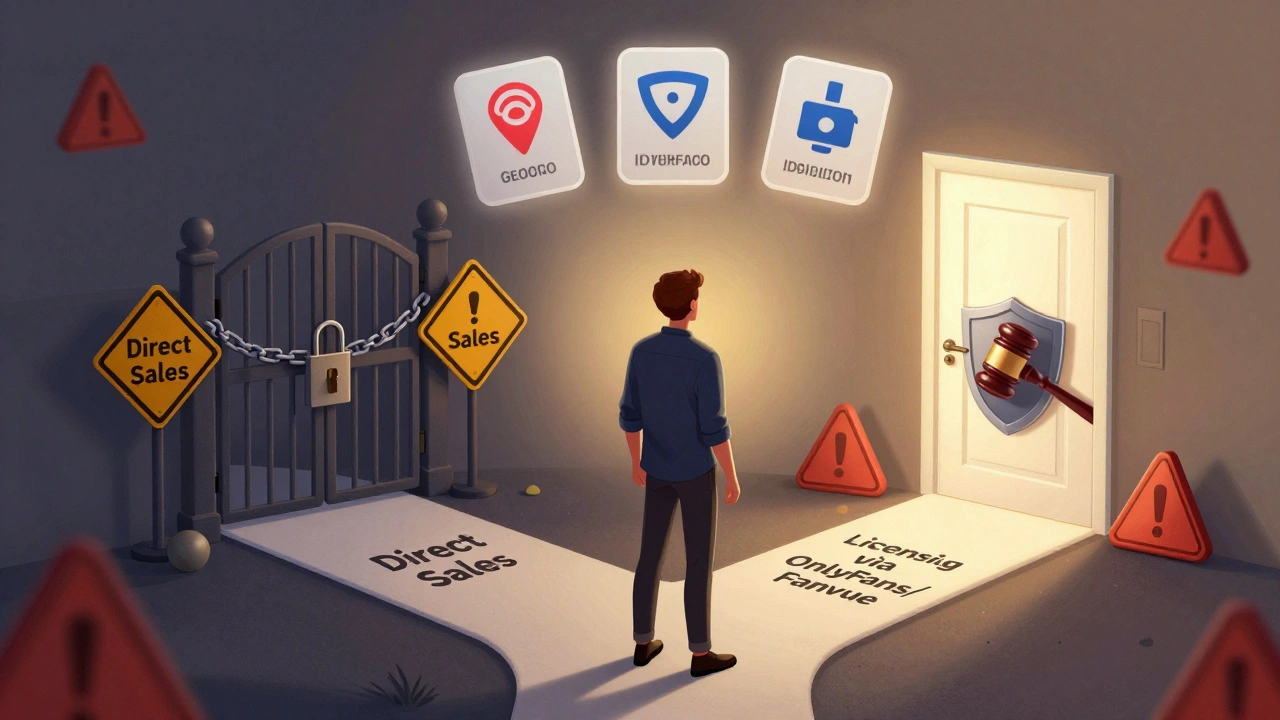
- Licensing: Instead of selling directly, license your content to licensed distributors in compliant countries. They handle the legal side.
- Membership platforms: Use platforms like OnlyFans or Fanvue that have built-in compliance systems. They handle age verification, geo-blocking, and payment processing under their legal umbrella.
- Content syndication: Sell your content to adult content aggregators who already have global compliance teams. You get paid, they handle the risk.
These options don’t eliminate risk-but they shift it to entities with legal teams, not you.
Final Reality Check
The truth? There’s no 100% safe way to sell adult content internationally. Even the most careful operators get hit. But you can drastically reduce your chances of being caught by following the rules, not bending them. The market is still huge-billions in revenue flow every year-but only for those who treat compliance as seriously as production.
Don’t assume ignorance is a defense. Authorities don’t care if you didn’t know. They care if you did nothing to find out. If you’re serious about this business, invest in legal counsel who specializes in international media law. It’s not an expense-it’s insurance.
Can I sell adult content to customers in the EU?
Yes, but only if you comply with each country’s rules. The EU doesn’t have a unified law-each member state sets its own standards. Germany bans simulated content involving minors, France requires age verification, and Poland restricts certain themes. You must geo-block access and verify customer locations. Payment processors like Klarna and Adyen have strict policies for adult content. Failure to comply can result in account suspension or legal action.
Is using cryptocurrency a safe way to avoid sanctions?
No. While crypto offers pseudonymity, it doesn’t offer immunity. Blockchain analysis firms like Chainalysis and Elliptic work with governments to trace transactions linked to sanctioned jurisdictions. If your wallet receives funds from a known adult content platform that has violated sanctions, you’ll be flagged. The U.S. Treasury added crypto addresses tied to adult content sellers to its sanctions list in 2025. Using crypto doesn’t protect you-it just makes detection harder, not impossible.
What happens if I ship physical adult media internationally?
You risk seizure, fines, and criminal charges. Customs agencies in the U.S., Canada, UK, Australia, and EU nations use AI-powered scanners to detect sexual imagery in packages. Even if you label a USB drive as "educational software," inspectors can still identify the content. In 2024, over 8,000 such packages were seized by U.S. Customs alone. Penalties can exceed $250,000 per violation under U.S. export control laws. Digital delivery is far safer.
Can I sell to customers using a VPN?
No. Using a VPN to hide location doesn’t make you compliant. Payment processors and shipping carriers track multiple data points: billing address, device fingerprint, IP history, and even credit card issuer location. If a customer’s card is issued in Saudi Arabia but they use a U.S.-based VPN, that mismatch triggers fraud alerts. Many platforms now block transactions where location data conflicts. You’re not avoiding detection-you’re increasing your risk of being flagged.
Are there legal adult content distributors I can partner with?
Yes. Companies like MindGeek (owner of Pornhub), OnlyFans, and Fanvue have legal teams that handle international compliance, age verification, and payment processing. By licensing your content to them, you transfer legal responsibility. They ensure distribution only occurs in jurisdictions where it’s legal. This is the safest route for creators who want to scale without managing compliance themselves.