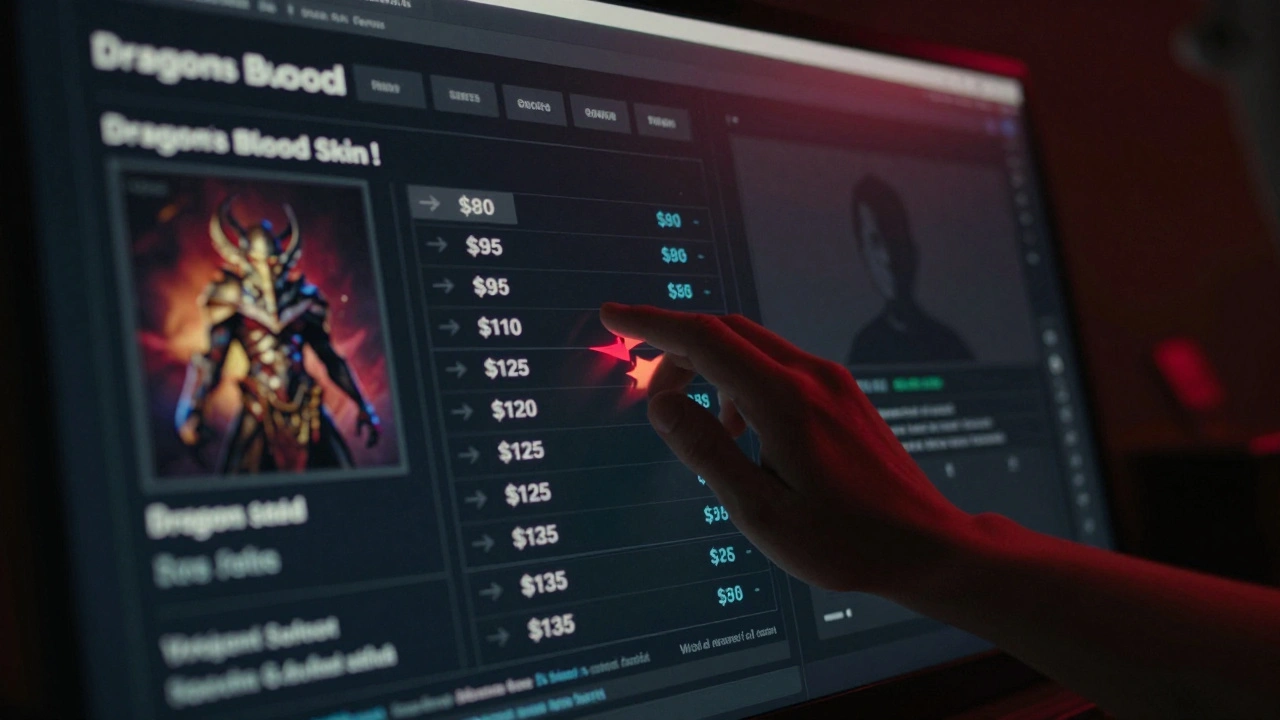

Imagine you’re bidding on a rare Dragon’s Blood skin in a video game auction. You’ve been watching the item for days. The price climbs slowly - $80, then $95, then $110. You raise your bid to $120. Just as you hit submit, another bid appears: $125. Then $130. Then $135. You’re out. But when the auction ends, the seller lists the same skin again - this time for $100. Something’s off. You’re not alone. This isn’t bad luck. It’s shill bidding.
Shill bidding happens when a seller - or someone working with them - places fake bids to drive up the price. It tricks real buyers into thinking an item is in high demand. The goal? To sell for way more than it’s worth. In video game auctions, where rare skins, weapons, or characters can cost hundreds or even thousands of dollars, this scam hurts real players and undermines trust in the whole system.
How Shill Bidding Works in Gaming Auctions
Unlike traditional auctions, video game marketplaces often let sellers list items directly from their in-game inventories. Platforms like Steam Community Market, EA Sports FC Ultimate Team, or third-party sites like PlayerAuctions and SkinBaron handle these trades. But not all of them have strong fraud controls.
Here’s how shill bidding plays out:
- A seller lists a rare item - say, a CS2 knife with low wear.
- They use a secondary account (or pay someone else) to place bids just above the current highest.
- Each fake bid creates the illusion of competition.
- Real bidders, thinking they’re in a heated auction, raise their bids higher than they’d normally go.
- The seller wins the auction at an inflated price - or cancels it, relists, and sells later at a lower price after the hype fades.
This isn’t just unethical. It’s illegal in many places. The Federal Trade Commission (FTC) considers shill bidding fraud. In 2022, businesses lost an average of $3.75 for every $1 lost to fraud - and gaming marketplaces are no exception.
Red Flags: Spotting Shill Bidding Before It Costs You
You don’t need a computer science degree to spot fake bids. Look for these patterns:
- Sudden bid spikes: A bid jumps from $50 to $150 in under 30 seconds with no intermediate bids. That’s not a real buyer - that’s someone trying to rush you.
- Same bidder on multiple items: If the same account is bidding on 5-10 items from the same seller, that’s a red flag. Real buyers don’t chase every rare item from one person.
- New accounts with high bids: A user who just created their profile yesterday is now placing $200 bids? Unlikely. Most real collectors have history.
- Bids right before closing: If bids only happen in the last 10 seconds - especially from accounts with no other activity - it’s likely orchestrated.
- Same IP or device: If you notice multiple accounts bidding from the same location or device (you can sometimes see this in platform logs), it’s a sign of coordination.
Platforms with good fraud detection tools automatically flag these behaviors. But if you’re using a smaller marketplace, you’ll need to watch for them yourself.
How Platforms Fight Back - And What You Should Expect
The best gaming auction platforms use layered defenses to stop shill bidding before it starts:
- Machine learning models analyze millions of past bids. They learn what normal bidding looks like - then flag anything that breaks the pattern. For example, if a bidder has never bid before and suddenly jumps from $0 to $400, the system raises a flag.
- Behavioral analytics track how users act across auctions. If Account A always bids on items from Seller X, and Account B does the same, they’re likely linked. These systems don’t just look at one auction - they look at patterns over weeks or months.
- IP and device tracking helps identify if multiple accounts are being run from the same computer or network. If 5 bids come from the same IP address in 5 minutes, the system locks those accounts.
- Blockchain-backed bid logs are starting to appear on premium platforms. Every bid is recorded in an unchangeable ledger. If a bid disappears after the auction ends, it’s a sign of tampering.
- Smart contracts can auto-suspend accounts if they match known shill patterns. For example, if an account places 3 bids on 3 different items from the same seller within 10 minutes, it gets frozen until verified.
These systems work fast. Suspicious bids are flagged in milliseconds. Auctions can be paused. Accounts suspended. And all of it’s logged - timestamps, IP addresses, bid amounts - for review.

What You Can Do to Protect Yourself
Even the best platforms can’t catch everything. Here’s how to protect yourself:
- Check the seller’s history. Look at their past listings. Do they always sell high-end items? Do they relist the same item after auctions fail? That’s a classic shill tactic.
- Use platforms with public audit trails. Some sites show you who bid, when, and from where. If you can see that a bidder has zero history and just showed up for this one auction - walk away.
- Set your max bid and walk away. Don’t get caught up in the drama. If you set your limit at $150 and someone bids $155, let it go. It’s not worth overpaying because someone’s faking competition.
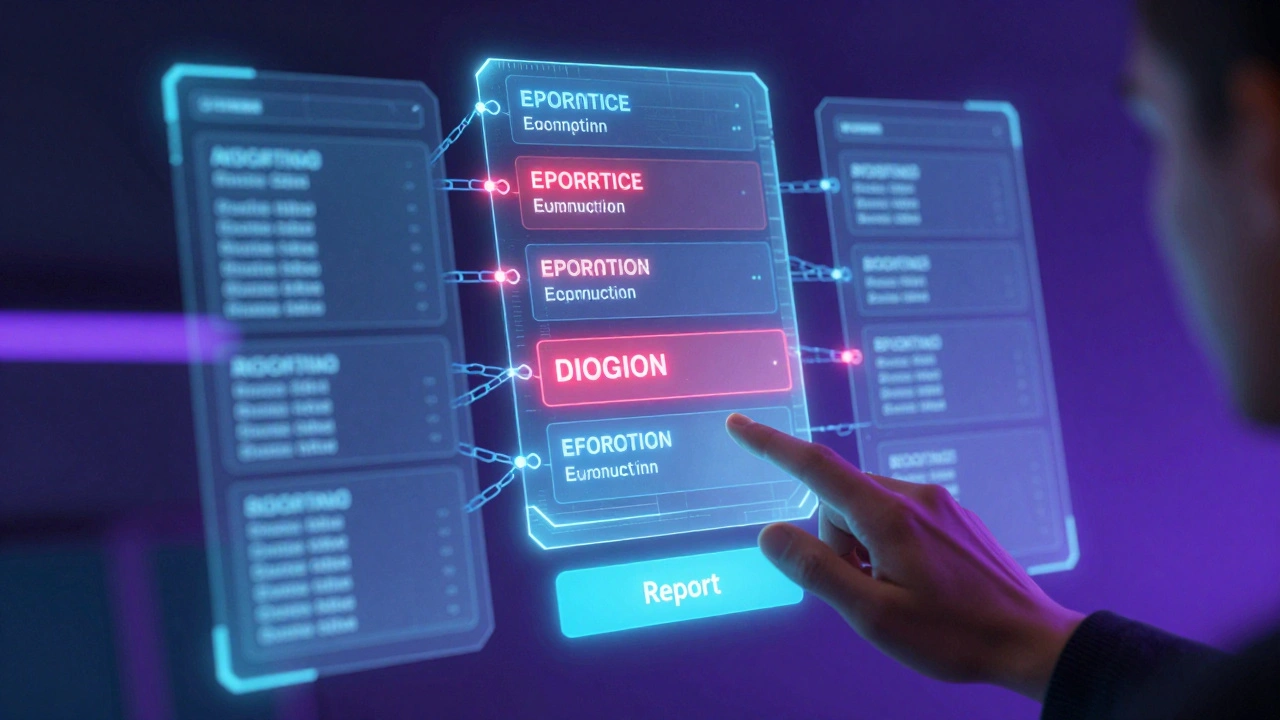
- Report suspicious bids. Most platforms have a “Report Bid” button. Use it. The more reports, the faster the system learns.
- Avoid third-party sites with no moderation. If a site doesn’t show bid history, doesn’t verify accounts, or has no customer support - it’s a minefield.
Why This Matters Beyond Just Money
Shill bidding doesn’t just cost you dollars. It kills trust. When players stop believing auctions are fair, they stop participating. Communities shrink. Marketplaces die. We’ve seen it happen before - with early eBay scams, with counterfeit sneaker resales, with NFT marketplaces in 2021.
Video game items aren’t just pixels. They’re time, effort, and sometimes emotional value. A player might spend 200 hours grinding for a single skin. When shill bidders inflate prices, they’re not just stealing money - they’re stealing the meaning behind the item.
Platforms that take this seriously - like the Steam Community Market, which uses automated detection and limits seller listings - have healthier, more active markets. Those that ignore it? They fade away.
What to Do If You’re a Victim
If you’ve been caught in a shill auction:
- Don’t panic. Don’t bid again hoping to win it back.
- Take screenshots of the auction - including bid history, usernames, timestamps.
- Report it immediately to the platform’s support team. Include the screenshots.
- Check if the item was relisted. If so, report that too.
- If the platform ignores you, consider filing a complaint with your local consumer protection agency. Many states treat online auction fraud as a civil offense.
Platforms that respond quickly to reports often refund victims or offer account credits. But you have to act - and you have to document.
The Future: Blockchain and Smarter Detection
The next wave of gaming auction security is coming. Some platforms are testing blockchain-based bid records. Every bid becomes a permanent, tamper-proof entry. Smart contracts can auto-penalty users who match shill patterns - no human review needed.
Imagine this: You bid on a skin. The system checks:
- Is this account older than 30 days?
- Has this account ever bid on items from this seller?
- Did the bid happen within 5 seconds of the previous bid?
- Is the IP linked to another account that was banned?
If yes to any? The bid gets blocked. The seller gets flagged. The auction continues - fairly.
This isn’t science fiction. It’s already being used in high-value NFT markets. Gaming platforms will adopt it too - because players won’t tolerate fraud forever.
Final Rule: Trust Your Gut
If something feels off, it probably is. The best protection isn’t software - it’s awareness. Don’t let hype push you into overpaying. Don’t assume the platform has your back. Check the history. Watch the pattern. Walk away if it doesn’t add up.
Video game auctions should be about collecting, not competing against ghosts. The next time you see a bid that seems too sudden, too high, too weird - pause. Ask yourself: Who really benefits from this?
What exactly is shill bidding in video game auctions?
Shill bidding is when a seller or someone working with them places fake bids on their own item to make it look more popular than it is. The goal is to trick real buyers into bidding higher than they normally would. It’s fraud, and it’s designed to inflate prices unfairly.
Can shill bidding happen on Steam Community Market?
Steam’s market has strong automated systems that detect and block shill bidding. Sellers can’t list the same item twice in a short time, and bids are monitored for patterns. While no system is perfect, Steam’s controls make shill bidding very hard to pull off successfully there.
How do platforms detect shill bidders?
Platforms use machine learning to analyze bid timing, account history, IP addresses, and bidding patterns across multiple auctions. If a new account suddenly bids on 5 items from one seller in 10 minutes, the system flags it. Behavioral analytics and IP tracking help connect fake accounts to real ones.
Should I avoid third-party gaming auction sites?
Be very careful. Many third-party sites lack real-time fraud detection. They may not log bids properly, verify accounts, or respond to reports. Stick to platforms with transparent bid histories, user verification, and active moderation. If a site feels sketchy, it probably is.
What should I do if I get caught in a shill auction?
Take screenshots of the auction, including all bids and timestamps. Report it to the platform immediately. Don’t bid again hoping to win it back. If the platform ignores you, file a complaint with your local consumer protection agency - many treat this as fraud.
Is shill bidding illegal?
Yes. In the U.S., the Federal Trade Commission (FTC) classifies shill bidding as deceptive trade practice. Many states also have laws against auction fraud. While enforcement varies, platforms that ignore it risk legal action and loss of trust from users.
Can blockchain stop shill bidding?
Blockchain doesn’t stop shill bidding by itself, but it makes it much harder to hide. Every bid is recorded in an unchangeable ledger. If a bid disappears or gets altered, it’s obvious. Smart contracts can also auto-suspend accounts that match known fraud patterns - adding a layer of automatic enforcement.