
Shipping video games isn’t just about tossing a game into an envelope and calling it done. If you’ve ever bought a game online and gotten it cracked, scratched, or broken, you know how frustrating it is. The same goes for sellers. A damaged game means lost money, bad reviews, and wasted time. Whether you’re shipping a single disc case, a stack of cartridges, or a full PlayStation or Xbox console, the rules are simple: protect like it’s worth $200-because it probably is.
Start with the Right Box
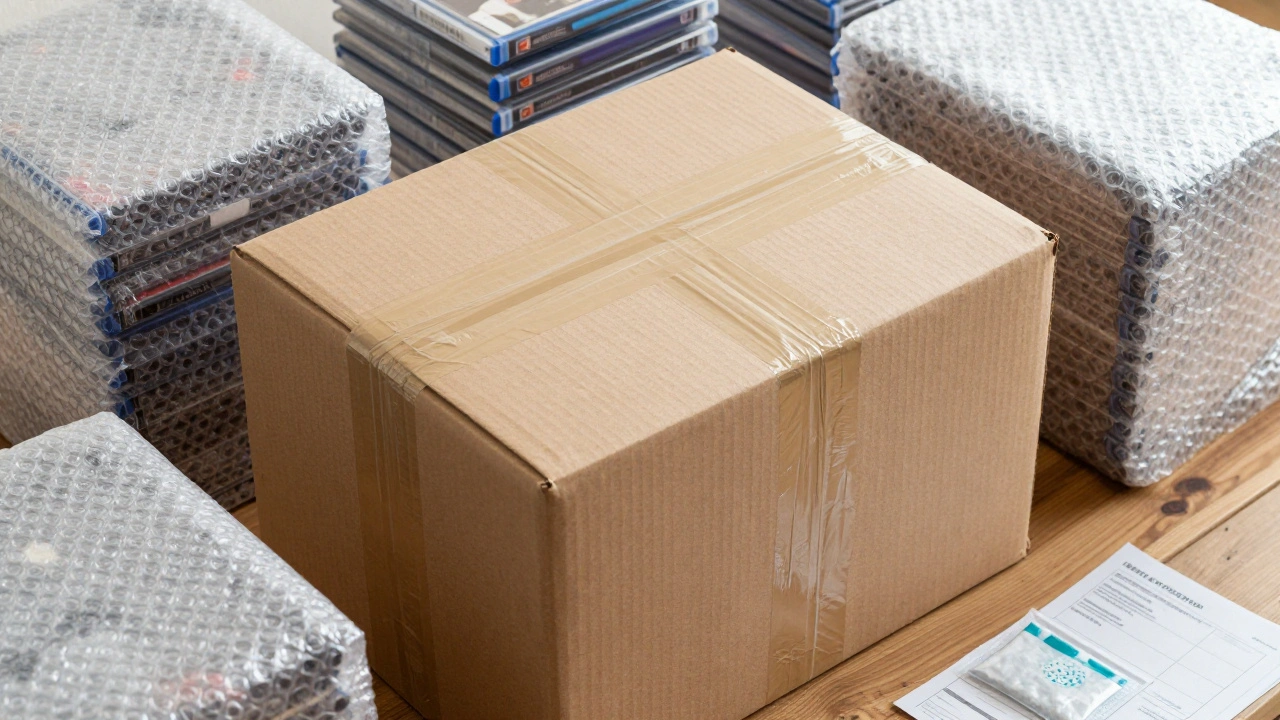
Don’t reuse that flimsy Amazon box just because it’s free. Those boxes are designed for lightweight items like socks or phone chargers-not heavy, fragile game collections. For even a few games, you need a box that can handle pressure. Look for a corrugated box rated at 200-lb test. That means it can withstand 200 pounds of crushing force before collapsing. It’s not just marketing jargon; it’s what professional grading services like VideoGameGraders use. If you’re shipping more than three games, the box should be at least twice the size of your games. Why? So you have room to pad everything properly. A tight box with no breathing room means your games will crush each other during transit.Tape Like Your Profit Depends On It
Packing tape isn’t optional. It’s your first line of defense. One layer? Not enough. Two layers? Barely. The best practice is to apply tape in a cross pattern: one strip down the center of the box’s top and bottom seams, then another going diagonally from corner to corner. This stops the box from splitting open if it gets tossed around in a warehouse. Some people swear by Scotch tape because it peels off cleanly, but that’s only for sealing internal bundles-not the main box. For the outside, use heavy-duty packing tape. It’s cheap. Games aren’t. If you’re shipping internationally, double down. Longer trips mean more handling, more drops, more risk. Tape everything twice.Padding: 2 Inches Minimum, No Excuses
You need at least two inches of padding on the bottom, top, and all sides of the box. That’s not a suggestion-it’s a rule from the people who grade thousands of games every year. Bubble wrap is the gold standard. Avoid packing paper. It crushes. It doesn’t bounce back. It offers zero protection against impacts. For disc games, wrap each case individually in bubble wrap. Don’t just pile them in. Use the "snake method": lay out a long strip of bubble wrap, place the first game on top, fold the wrap over it, then place the next game on top of that, and repeat. This keeps each case separated, so if one gets hit, the others don’t absorb the shock. For cartridges, wrap each one in bubble wrap before slipping it into a padded mailer. If it’s a rare or valuable cartridge, throw in a small silica gel packet. Moisture ruins cartridges over time, especially if they sit in a damp warehouse.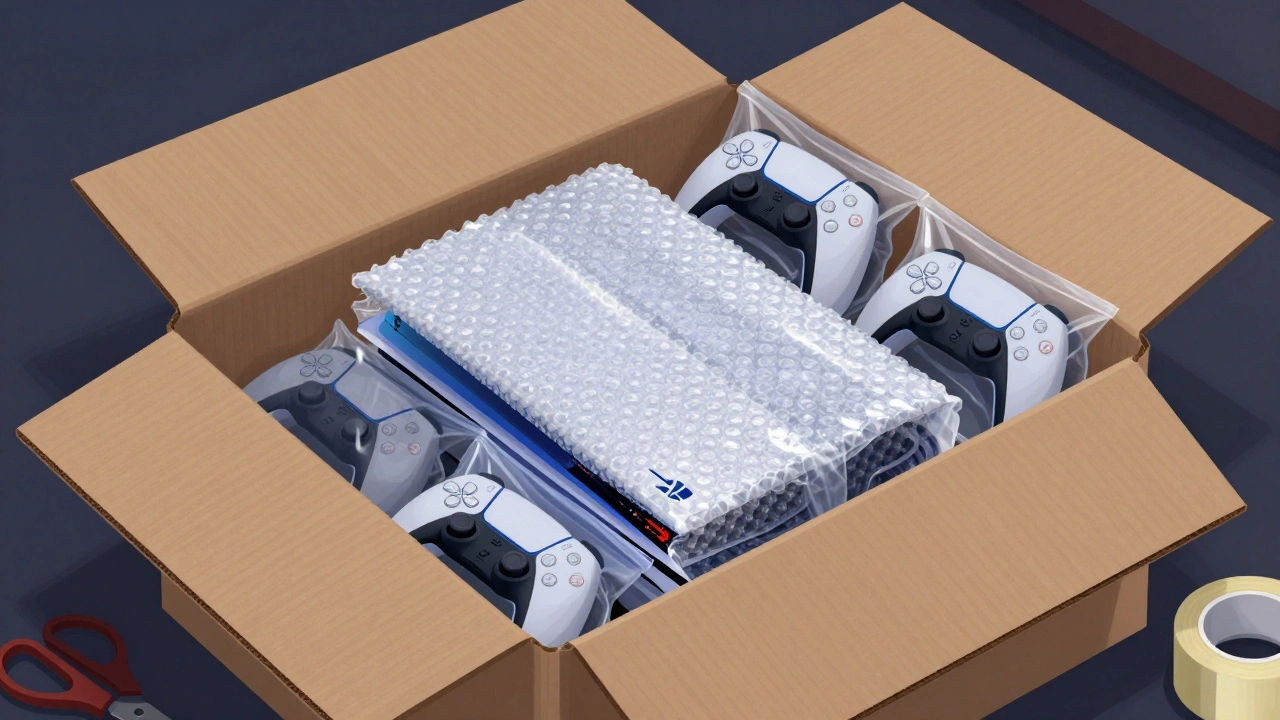
Disc Games Are the Most Fragile
Optical discs are fragile. Not "kinda" fragile. "One sneeze and it’s ruined" fragile. The plastic case can crack. The disc inside can scratch. The spine can snap. Always check the case before shipping. If it’s missing, buy a replacement. They cost less than a dollar. Never ship a disc game without its case. Use a rigid bubble mailer that’s large enough to let you add padding on the outside. Seal it with tape. Then, wrap the whole mailer in another layer of bubble wrap. If you’re shipping multiple disc games, put each one in its own bubble-wrapped sleeve and stack them with padding between. And never, ever ship disc games in a plain bubble mailer without a box. Postal workers don’t treat them gently.Consoles Need More Than Just a Box
Shipping a console isn’t like shipping a game. You’ve got a heavy plastic shell, delicate buttons, fragile ports, and a tangle of cables. Start by wrapping the console itself in at least two layers of bubble wrap. Don’t just slap it on-wrap it like you’re wrapping a gift. Then, take each accessory: controllers, power cables, HDMI cords, memory cards. Put each one in its own small plastic bag and seal it. Why? Moisture. Dust. Tangling. If you toss them all into the box, one loose cable can jab into the console’s port during transit. Tape the bags shut, then place them in the box around the console. Leave at least two inches of padding on all sides. Don’t forget the manual and any included discs. Wrap them separately. And if you’re shipping a brand-new console in its original box? Don’t put tape on it. Ever. Instead, wrap the whole original box in Kraft paper and tape the paper. That way, the buyer gets the pristine box they paid for, and you’ve got a protective layer that’s easy to remove.International Shipping? Think Bigger
Bubble mailers are fine for domestic shipping. For international? Forget them. The postal systems in many countries aren’t built for delicate items. Packages get tossed, stacked, and dragged. Use a sturdy box. Fill it with extra padding. Double-tape the seams. Add a layer of plastic sheeting (like painter’s plastic) around the inside of the box before you pack. It’s cheap-about $2-and it stops moisture from getting in. Always insure international shipments. And always include a printed copy of your order confirmation on top of the games inside the box. That way, if customs opens it, they know exactly what’s inside.
Insurance and Carrier Choice Matter
You can pack perfectly and still have bad luck. A package can get lost. A truck can crash. That’s why shipping with UPS or FedEx is non-negotiable. USPS is fine for small, low-value items. But when you’re shipping a $150 game or a $500 console, you need carriers that track every step and offer real insurance. Don’t skip insurance. It costs $5-$10. A damaged game can cost you $100 or more. Insurance isn’t a luxury-it’s a backup plan. And if you’re selling on eBay, Etsy, or Amazon, your buyer expects it. Skip it, and you’ll get negative feedback faster than you can say "scratched disc."Documentation Is Your Paper Trail
Always include a printed copy of your order confirmation inside the box. Place it on top of the games, right under the lid. This isn’t bureaucracy-it’s clarity. If the package gets opened during transit, the handler knows what’s inside. If there’s a dispute, you’ve got proof of what you shipped. And if you’re shipping a collection, write a quick list: "1x PS5, 1x Xbox Series X, 3x Nintendo Switch games, 2x controllers." Tape the list to the inside of the box. It’s a small step that saves hours of back-and-forth later.Why This All Matters
Video games aren’t just products-they’re memories. A sealed copy of a rare game from 1998? That’s not just worth money. It’s worth nostalgia. A console with all its original parts? That’s worth more than the retail price. When you ship them, you’re not just moving plastic and metal. You’re moving trust. And trust is built on how carefully you protect what’s inside. Tape is cheap. Bubble wrap is cheap. A good box is cheap. The cost of a damaged game? That’s expensive. And it’s not worth risking.Can I ship video games in a bubble mailer?
You can ship single cartridges or small game collections in a padded bubble mailer-only if it’s for domestic shipping. For disc games, consoles, or multiple items, always use a sturdy box. Bubble mailers don’t hold up well under pressure, especially during international transit. They’re fine for lightweight, low-value items, but not for anything you care about.
Should I use silica gel packets for game cartridges?
Yes, especially for valuable or vintage cartridges. Moisture can cause corrosion on the contacts inside the cartridge over time. Silica gel packets absorb humidity and are inexpensive. You can buy them in bulk online for under $10 per 100. Just tuck one into the bubble-wrapped package next to the game.
Do I need to keep the original box for new-in-box games?
Absolutely. Buyers pay a premium for sealed, original packaging. Never put tape, stickers, or labels on the original box. Instead, wrap it in Kraft paper and tape the paper. This keeps the box intact while giving you a safe outer layer to ship. It’s the only way to preserve value and avoid angry customers.
Is it okay to reuse boxes from other shipments?
Only if the box is thick, undamaged, and has no old labels or weak seams. Most Amazon or retail boxes are too thin for games. If you’re shipping more than two items, use a new 200-lb test corrugated box. Reused boxes may collapse under pressure, especially when stacked with other packages in transit.
What’s the best way to ship a Nintendo Switch with games?
Wrap the Switch in two layers of bubble wrap. Put the Joy-Cons in a sealed plastic bag. Wrap each game individually in bubble wrap. Place them all in a box with at least two inches of padding on all sides. Use a 200-lb test box. Tape the seams with two layers of packing tape. Include a printed order confirmation inside. Insure the package. Ship with UPS or FedEx.